Staying active is one of the best things older adults can do to maintain their health, independence, and quality of life. Exercise for seniors offers benefits that extend far beyond physical fitness, helping improve mobility, strengthen muscles and bones, enhance balance, boost mental well-being, and reduce the risk of chronic disease.
The good news is that it’s never too late to start exercising. Whether you’re returning to fitness after years of inactivity or looking to maintain an active lifestyle, the right exercise routine can help you feel stronger, move more confidently, and enjoy everyday activities with greater ease.
Why Is Exercise Important for Seniors?
As we age, our bodies naturally experience changes such as reduced muscle mass, decreased bone density, slower metabolism, and reduced flexibility. Regular physical activity helps slow many of these age-related changes while improving overall health.
Exercise can help seniors:
Maintain independence
Improve balance and coordination
Build strength
Increase flexibility
Support heart health
Maintain a healthy weight
Improve mood
Boost energy levels
Reduce the risk of falls
Strengthen bones
Improve sleep quality
Support brain health
The key is finding activities that are enjoyable, sustainable, and appropriate for your current fitness level.
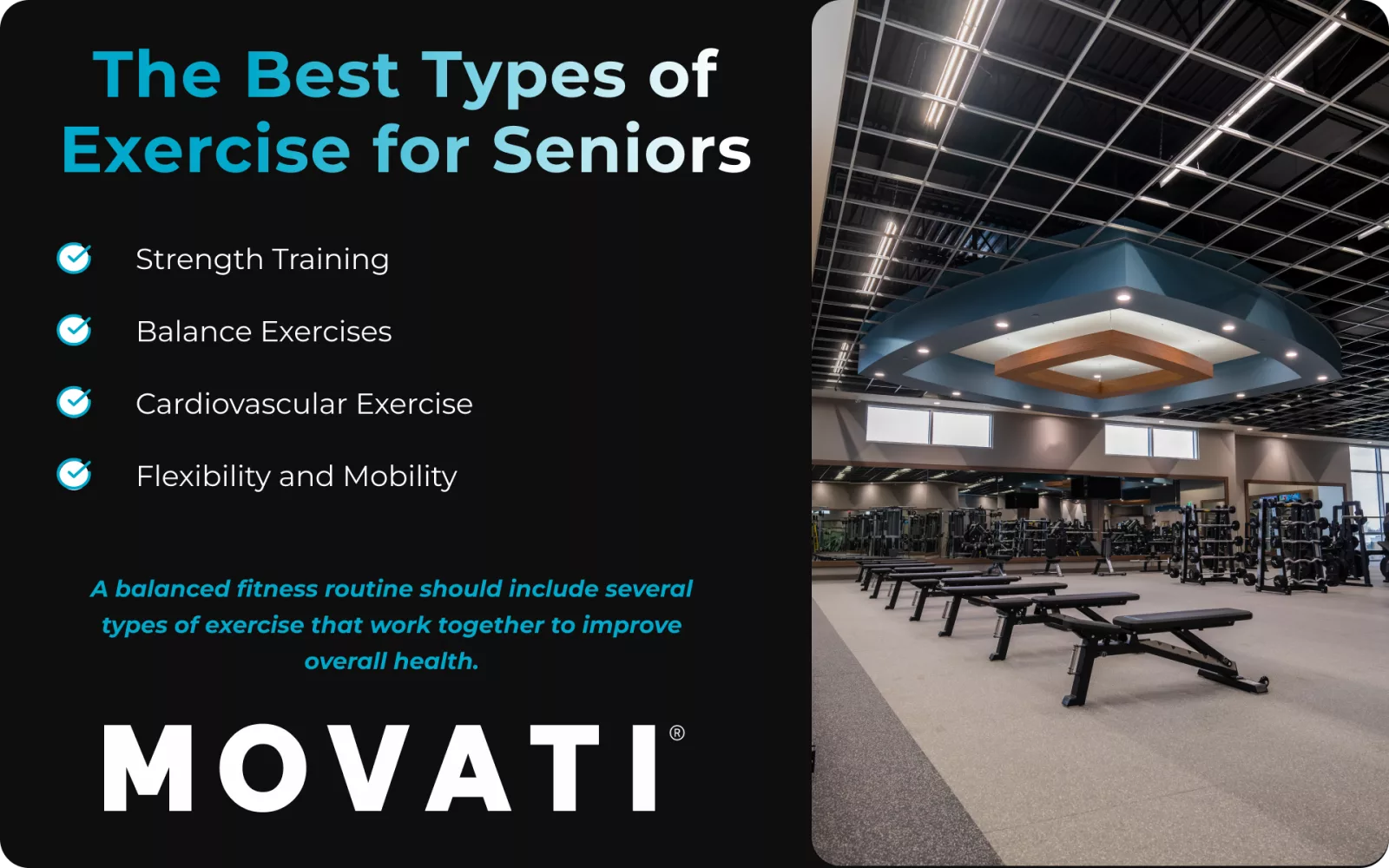
The Best Types of Exercise for Seniors
A balanced fitness routine should include several types of exercise that work together to improve overall health.
Strength Training
Strength training becomes increasingly important with age because adults naturally lose muscle mass over time.
Resistance exercises help:
Build and maintain muscle
Increase bone density
Improve posture
Make daily tasks easier
Support healthy joints
Strength training doesn’t necessarily mean lifting heavy weights. Resistance bands, bodyweight exercises, dumbbells, and weight machines can all be effective.
Beginner exercises may include:
Chair squats
Wall push-ups
Seated shoulder presses
Step-ups
Resistance band rows
Aim to strength train two or three times each week while allowing muscles time to recover between sessions.
Balance Exercises
Falls are one of the leading causes of injury among older adults.
Balance training helps improve stability and confidence while reducing fall risk.
Examples include:
Standing on one leg
Heel-to-toe walking
Side leg raises
Tai Chi
Single-leg balance holds
Practicing balance exercises regularly can make everyday movements feel safer and more controlled.
Cardiovascular Exercise
Cardio supports heart health while improving endurance and energy.
Excellent options include:
Walking
Swimming
Cycling
Water aerobics
Low-impact group fitness classes
Elliptical training
The goal is to raise your heart rate while still being able to carry on a conversation comfortably.
Most health organizations recommend at least 150 minutes of moderate aerobic activity each week.
Flexibility and Mobility
Maintaining flexibility helps keep joints moving comfortably while improving posture and reducing stiffness.
Simple stretching routines may focus on:
Hamstrings
Hips
Shoulders
Chest
Calves
Lower back
Yoga and stretching classes can also improve mobility while encouraging relaxation.
Low-Impact Exercises for Seniors
Low-impact workouts minimize stress on the joints while still providing excellent health benefits.
Popular options include:
Walking
Aquafit
Swimming
Stationary cycling
Pilates
Yoga
Mobility classes
These exercises are especially beneficial for individuals managing arthritis or joint discomfort.
Can Seniors Build Muscle?
Absolutely.
Muscle can be developed at almost any age through consistent resistance training.
Building strength helps seniors:
Stand up more easily
Carry groceries
Climb stairs
Improve balance
Reduce fall risk
Maintain independence
Even small improvements in strength can make daily life significantly easier.
How Often Should Seniors Exercise?
Most healthy older adults should aim for a combination of:
Cardio most days of the week
Strength training two to three days weekly
Balance exercises several times each week
Stretching after workouts or daily
The best schedule depends on your current fitness level, medical history, and personal goals.
Starting slowly and gradually increasing activity often leads to greater long-term success.
Tips for Exercising Safely
Safety should always come first.
Some helpful guidelines include:
Warm up before every workout.
Wear supportive footwear.
Stay hydrated.
Focus on proper technique.
Progress gradually.
Listen to your body.
Rest when needed.
Speak with your healthcare provider before beginning a new exercise program if you have existing medical conditions.
Consistency matters far more than intensity.
My Experience Staying Active
One thing I’ve learned is that fitness isn’t about doing the most difficult workout possible. It’s about moving consistently in ways that make everyday life easier. I’ve seen how regular strength training, mobility work, and group fitness classes improve energy, posture, and overall confidence. Even on busy days, making time for movement leaves me feeling better physically and mentally, reinforcing that small, consistent habits often produce the greatest long-term results.
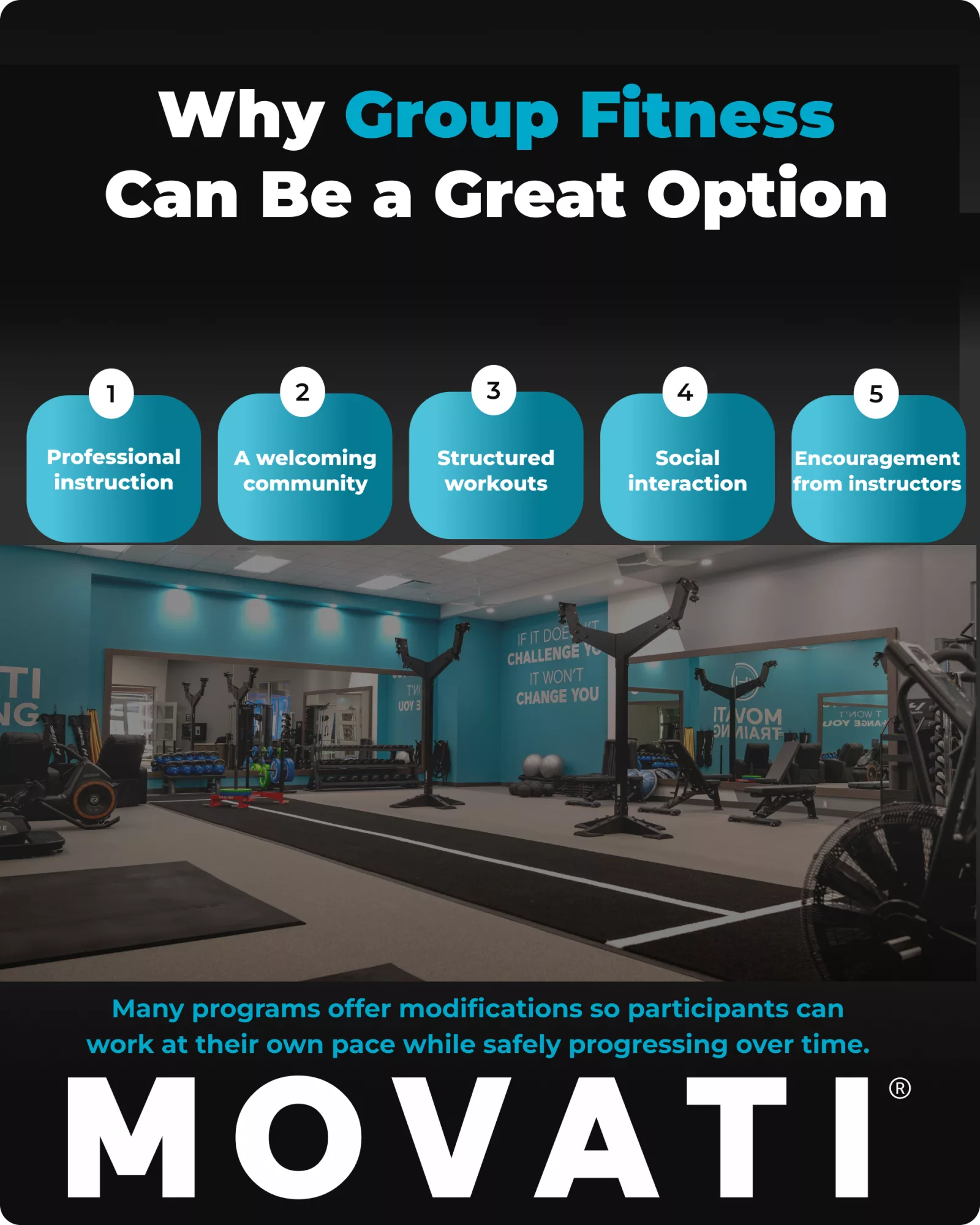
Why Group Fitness Can Be a Great Option
Many seniors find that exercising with others increases motivation and accountability.
Group classes also provide:
Professional instruction
A welcoming community
Structured workouts
Social interaction
Encouragement from instructors
Many programs offer modifications so participants can work at their own pace while safely progressing over time.
The Bottom Line
The best exercise for seniors is the one that you enjoy and can perform consistently. Combining strength training, cardiovascular exercise, balance work, and flexibility exercises creates a well-rounded routine that supports healthy aging and improves quality of life.
Whether your goal is to stay independent, reduce joint stiffness, increase energy, or simply continue doing the activities you love, regular physical activity is one of the most effective investments you can make in your long-term health.
Stay Active at MOVATI Athletic
At MOVATI Athletic, you’ll find a welcoming environment with certified Performance Coaches, beginner-friendly fitness classes, strength training equipment, Aquafit, yoga, stretching programs, and personalized support to help you exercise safely and confidently.
Whether you’re starting your fitness journey or looking to maintain an active lifestyle, our team can help you build a routine that fits your abilities and goals. Visit your nearest MOVATI Athletic location and discover how the right guidance and community can help you enjoy the lifelong benefits of exercise for seniors.
