Best Post Workout Meal: What to Eat for Recovery
What you eat after exercising can play an important role in how your body recovers and prepares for your next workout. The best post workout meal should help replace energy used during exercise while providing your body with nutrients that support muscle repair, hydration, and overall recovery. There isn’t one meal that every person needs to eat after training, though. Your ideal choice can depend on the type and intensity of your workout, when you plan to eat again, and your individual fitness goals. Understanding the basics of post-workout nutrition can make it easier to build meals that support your training without making recovery nutrition unnecessarily complicated.
Why Does Post-Workout Nutrition Matter?
Exercise places demands on both your muscles and your body’s energy stores, so eating after training helps provide the building blocks your body needs to recover. Protein supplies amino acids that support muscle repair and growth, while carbohydrates help replenish glycogen, which is stored carbohydrate used as an energy source during exercise. Fluids also matter because exercise can lead to water and electrolyte losses through sweat.
SportMedBC recommends including both carbohydrates and protein after exercise and suggests having a meal or snack within approximately 60 to 90 minutes after finishing, while continuing to focus on good nutrition throughout the following 24 to 48 hours. That doesn’t mean you’ve missed your opportunity if you don’t have a meal ready the second your workout ends. Recovery is an ongoing process, and what you eat throughout the rest of your day matters too.
What Should the Best Post Workout Meal Include?
A balanced recovery meal doesn’t need to follow a complicated formula. For most people, thinking about a few key components can make planning much easier.
Protein for Muscle Recovery
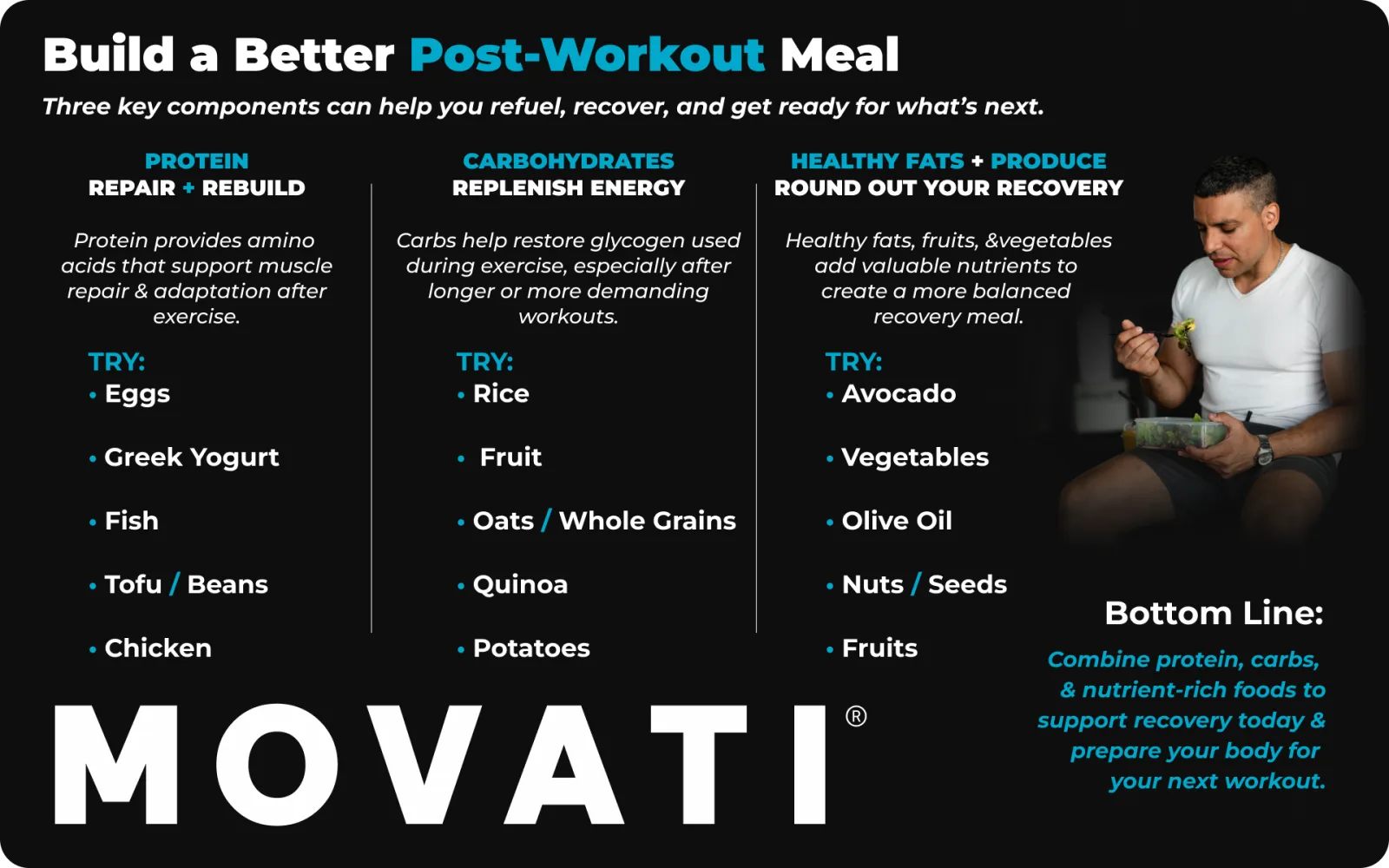
Resistance training and other forms of exercise place stress on your muscles, and protein provides amino acids your body uses as part of the repair and adaptation process. Post-workout protein sources might include eggs, Greek yogurt, cottage cheese, chicken, fish, tofu, tempeh, beans, lentils, or other foods that fit your preferences. MOVATI’s guide to essential macronutrients goes further into the role protein plays alongside carbohydrates and fats throughout your overall diet.
Carbohydrates to Replace Energy
Carbohydrates help replenish the glycogen used during exercise. This can become particularly important after longer or more demanding workouts, or when you plan to train again relatively soon. Useful carbohydrate sources can include rice, potatoes, oats, quinoa, whole-grain bread, pasta, fruit, beans, and other grains or starchy vegetables. SportMedBC also notes that carbohydrates after exercise help replenish glycogen stores and support preparation for future training.
Healthy Fats and Nutrient-Rich Foods
There’s no need to avoid fat after exercising. Foods such as avocado, nuts, seeds, olive oil, and oily fish can all form part of a balanced meal. Adding fruits and vegetables can also provide vitamins, minerals, fibre, and a wider variety of nutrients. Rather than focusing exclusively on protein, think about your post-workout meal as an opportunity to eat a balanced meal that supports your overall nutrition.
Easy Post-Workout Meal Ideas
Once you understand the basic components, building a recovery meal becomes much simpler. Aim to combine a source of protein with carbohydrates and other nutrient-rich foods. Some simple options include:
- Chicken or tofu with rice and vegetables provides protein, carbohydrates, and a variety of vegetables in one simple meal.
- Eggs with whole-grain toast, avocado, and fruit can work well after a morning workout.
- Greek yogurt with oats, berries, and nuts is useful when you want something lighter or don’t have time for a full meal.
- Salmon with potatoes and vegetables combines protein, carbohydrates, and fats in a substantial recovery meal.
- A smoothie with fruit, yogurt, milk, and oats can be convenient when you’re short on time or don’t feel like eating a larger meal immediately after training.
The exact foods matter less than finding combinations that fit your preferences, schedule, and overall nutritional needs.
Does Your Post-Workout Meal Change Based on Your Workout?
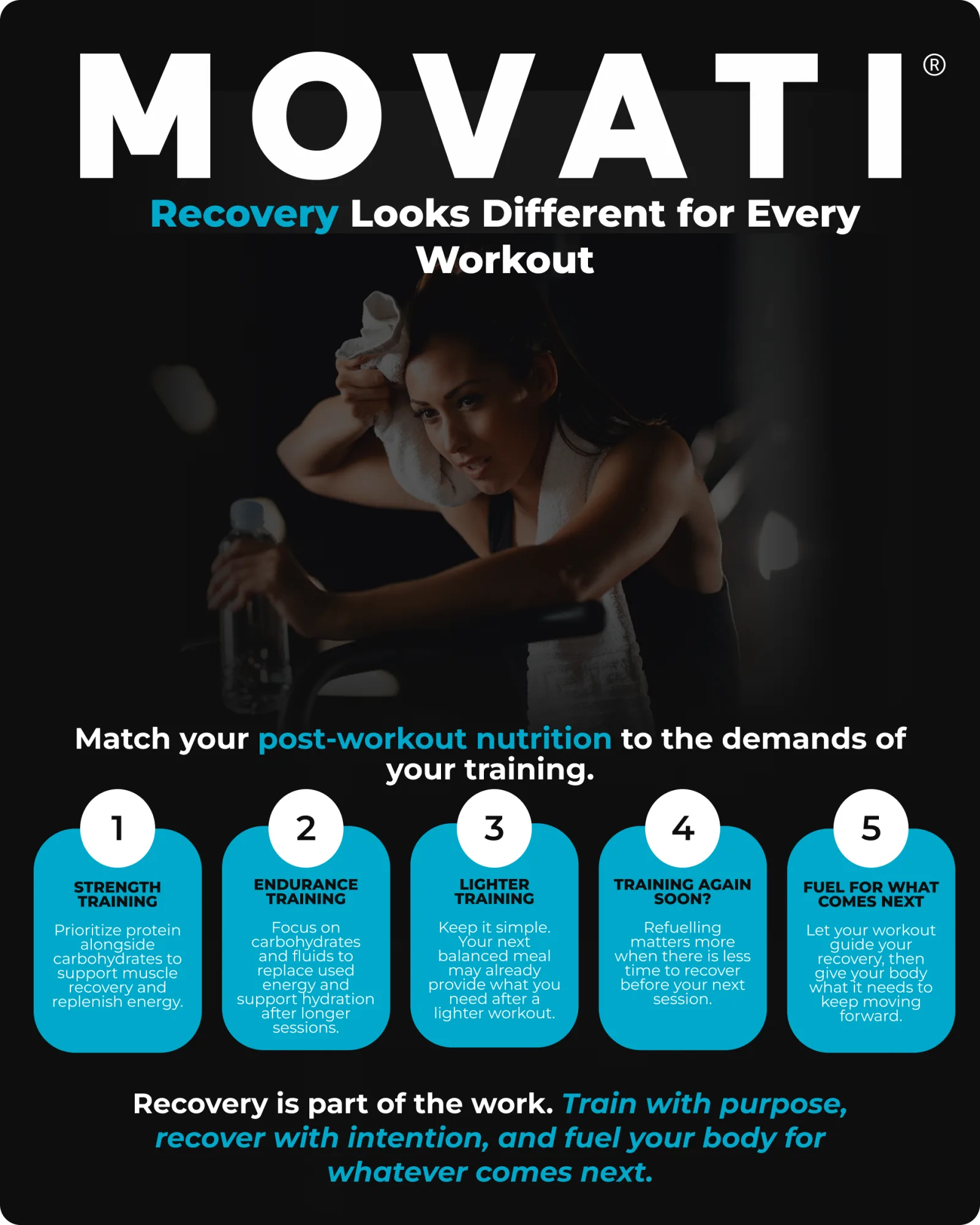
A light yoga class, long run, and heavy strength-training session don’t place identical demands on your body, so recovery nutrition doesn’t necessarily need to look exactly the same after each one. The best post workout meal will often depend on the type and intensity of exercise you’ve completed. Following a demanding strength workout, including a reliable source of protein may be an especially important consideration, while after prolonged endurance exercise, replacing carbohydrates and fluids may become more significant because more glycogen and fluid may have been used during the session.
If you’re completing multiple training sessions in one day, recovery between workouts becomes even more important. SportMedBC specifically notes that athletes with limited recovery time between sessions need to pay closer attention to refuelling than someone who has a full day before training again. For a shorter or easier session, your normal next meal may already provide everything you need.
How Soon Should You Eat After a Workout?
You’ve probably heard of the “anabolic window,” with claims that you must eat within 30 minutes or your workout will somehow go to waste. In reality, post-workout nutrition doesn’t need to be that stressful. Eating reasonably soon after exercise can still be useful, particularly after intense or prolonged activity or when you have another workout coming up.
Canadian guidance from SportMedBC suggests a meal or snack within 60 to 90 minutes after exercise, followed by continued attention to nutrition throughout the rest of the day. If your next regular meal is already coming up soon, that meal can often serve as your recovery meal rather than adding an unnecessary extra snack.
Don’t Forget About Rehydration
Recovery isn’t only about food. Exercise causes fluid loss through sweat, and the amount you lose can vary considerably depending on the workout, temperature, humidity, and your individual sweat rate. Water will be suitable for many everyday workouts, while longer, hotter, or particularly sweaty sessions may require more attention to electrolytes. Rather than trying to replace everything immediately, continue drinking fluids after your workout and throughout the rest of your day.
Frequently Asked Questions
Do I need a protein shake after every workout?
No. A protein shake can be a convenient way to get protein when you’re busy or don’t feel like eating immediately, but it isn’t required. Foods such as eggs, yogurt, tofu, fish, chicken, beans, and lentils can all contribute protein to a post-workout meal.
What if I’m not hungry after exercising?
It’s common for appetite to vary after training. If a full meal doesn’t sound appealing immediately, you could start with something smaller such as yogurt and fruit or a smoothie, then have your regular meal later.
What should I look for in a good recovery meal?
Rather than searching for one perfect food, look for a meal that includes:
- A source of protein
- A source of carbohydrates
- Fruits or vegetables where practical
- Fluids to help replace what you’ve lost
Your portions can then be adjusted based on your appetite, workout, goals, and individual needs.
Do I need to eat differently after strength training and cardio?
Potentially. Both protein and carbohydrates are useful after exercise, but their relative importance may change depending on what you’ve done. Strength training places a particular emphasis on muscle recovery, while longer endurance sessions may use more stored carbohydrate and fluids.
Build a Recovery Routine That Works for You
Post-workout nutrition doesn’t have to involve strict rules or a perfectly timed meal. Pay attention to the type of workout you’ve completed, when you’re eating next, and what your body needs throughout the rest of the day. A balanced combination of protein, carbohydrates, nutrient-rich foods, and fluids can support recovery and help prepare you for your next session. Once you understand those basics, choosing the best post workout meal becomes less about finding one perfect recipe and more about building a recovery routine that fits your training, goals, and lifestyle.
*MOVATI’s trainers and/or consultants are not health care providers, and do not provide any medical diagnosis, treatment or advice, and any trainer and/or consultant tips are not intended to replace the advice of a health care professional.
