
Essential Macronutrients are the nutrients your body needs in the largest amounts to function properly. They provide energy, support growth and recovery, and help maintain everything from brain function to hormone production. The three macronutrients are protein, carbohydrates, and fats, and despite what fad diets may suggest, all three are essential for good health.
While understanding what macronutrients are is an important first step, knowing how much protein, carbohydrates, and fat your body needs can be much more challenging. Factors such as your age, activity level, fitness goals, and overall health all influence the right balance. If you’re looking for personalized guidance, working with a MOVATI Nutritionist can help you develop a nutrition plan tailored to your unique needs, making it easier to fuel your workouts, support recovery, and build sustainable healthy habits.

Understanding how each macronutrient works can help you make smarter food choices, improve your energy levels, and support your fitness and wellness goals.
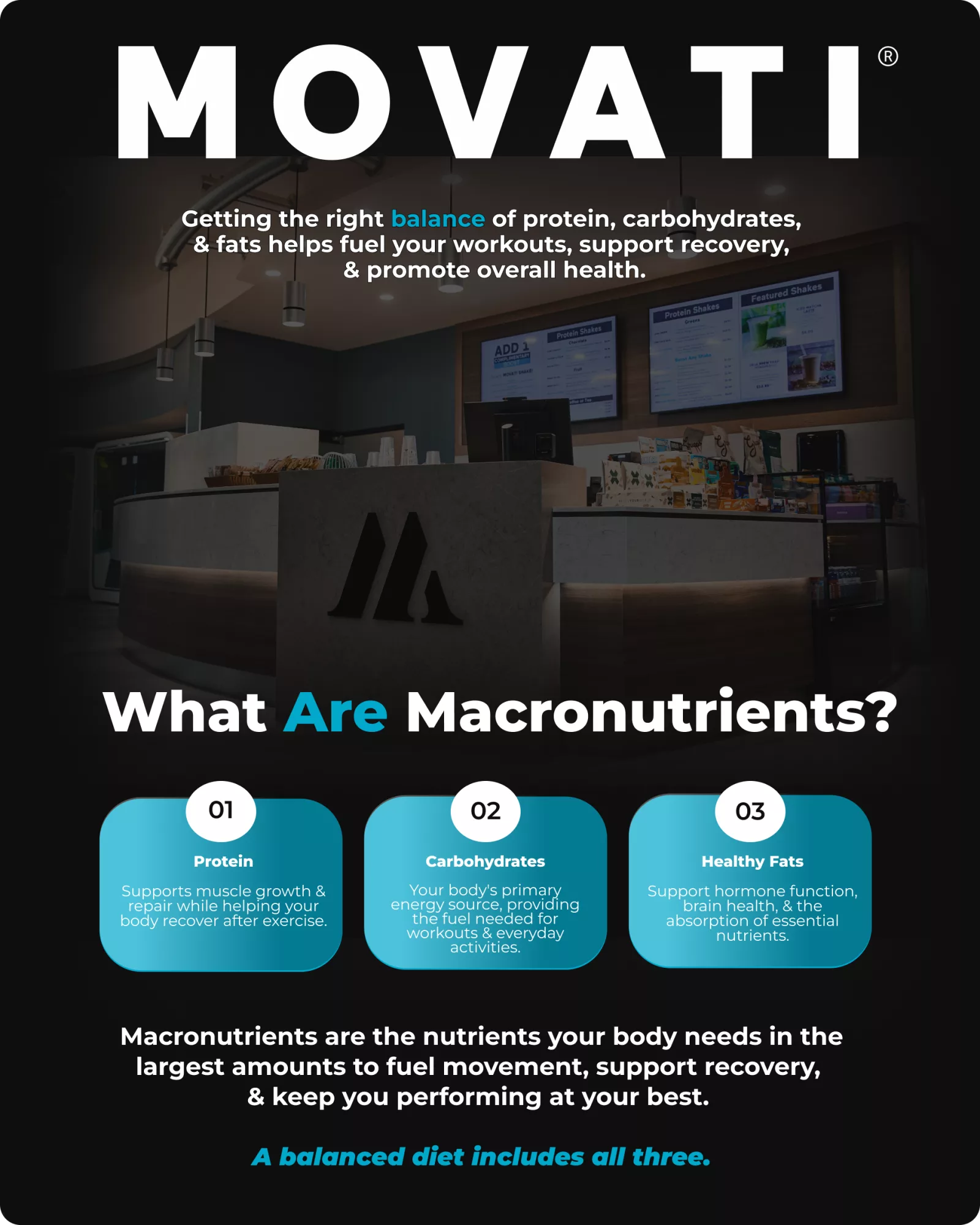
What Are Macronutrients?
Macronutrients are nutrients your body requires in large quantities because they provide calories and fuel your daily activities. Unlike vitamins and minerals, which are needed in smaller amounts, macronutrients supply the energy your body needs to move, think, exercise, and recover.
The three macronutrients are:
Protein, which supports muscle growth and repair.
Carbohydrates, which provide your body’s primary source of energy.
Fats, which support hormone production, brain health, and nutrient absorption.
A healthy diet includes all three in the right balance.
Why Are Macronutrients Important?
Every cell in your body relies on macronutrients to function properly. They work together to provide energy, maintain muscle, support organ function, and keep your body performing at its best.
Without enough protein, your body struggles to repair tissues. Without carbohydrates, your energy levels can drop. Without healthy fats, important processes like hormone production and vitamin absorption become less efficient.
Rather than focusing on eliminating one macronutrient, most nutrition experts recommend eating a balanced combination of all three.
What Does Protein Do?
Protein is often associated with building muscle, but its role goes far beyond the gym.
Protein helps:
Build and repair muscles and tissues
Support immune function
Produce hormones and enzymes
Maintain healthy skin, hair, and nails
Keep you feeling full between meals
Protein is made up of amino acids, which are often referred to as the building blocks of life. Some amino acids are produced naturally by the body, while others must come from food.
Excellent protein sources include chicken, turkey, fish, eggs, greek yogurt, cottage cheese, beans, lentils, tofu, tempeh, and edamame.
Including protein with every meal can also help stabilize blood sugar and reduce hunger throughout the day.
Why Are Carbohydrates Important?
Carbohydrates are your body’s preferred source of energy. When you eat carbohydrates, your body converts them into glucose, which fuels your muscles, brain, and other organs.
Despite the popularity of low-carb diets, carbohydrates are an essential part of a healthy eating pattern for most people.
The key is choosing high-quality carbohydrates.
Whole grains, fruits, vegetables, legumes, and oats provide complex carbohydrates that digest more slowly and deliver steady energy. They’re also rich in fiber, vitamins, and minerals that support overall health.
Refined carbohydrates, such as sugary drinks, candy, pastries, and highly processed snacks, are digested much more quickly. While they can provide a temporary energy boost, they’re often followed by an energy crash and contribute fewer nutrients.
For sustained energy throughout the day, focus on whole-food carbohydrate sources whenever possible.
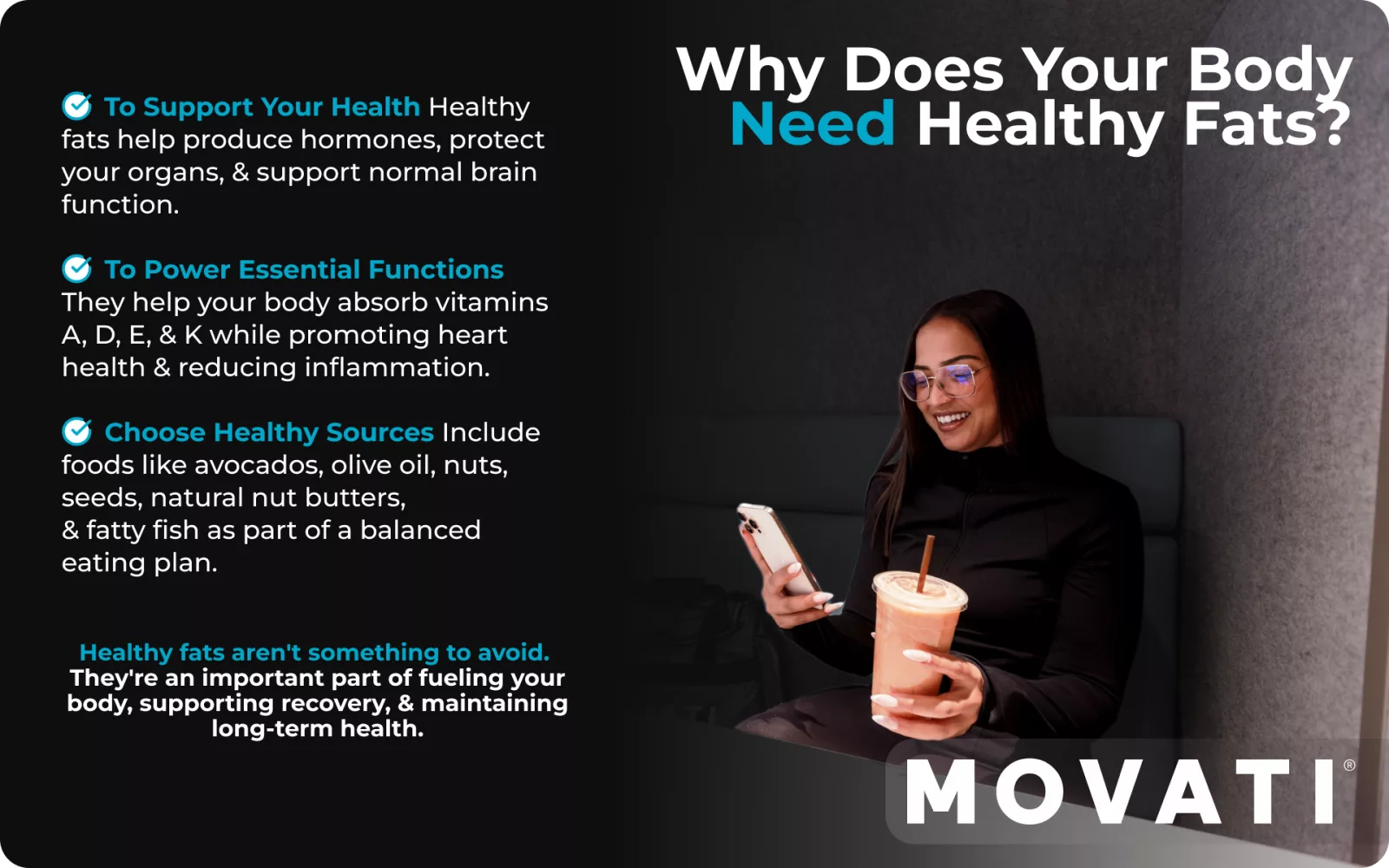
Why Does Your Body Need Healthy Fats?
For many years, fat was unfairly viewed as something to avoid. Today, research shows that healthy fats are an essential part of a balanced diet.
Healthy fats help:
Support brain function
Produce hormones
Protect organs
Absorb vitamins A, D, E, and K
Promote heart health
Reduce inflammation
Some of the best sources of healthy fats include avocados, olive oil, nuts, seeds, natural nut butters, and fatty fish like salmon and trout.
While healthy fats are more calorie-dense than protein or carbohydrates, they provide numerous health benefits when eaten in appropriate portions.
How Many Macronutrients Do You Need?
There isn’t one perfect macronutrient ratio that works for everyone.
The ideal balance depends on several factors, including your:
Age
Activity level
Health goals
Medical conditions
Lifestyle
For example, someone training for a marathon may require more carbohydrates to support endurance, while someone focused on building muscle may benefit from a higher protein intake. Most healthy eating plans focus less on exact percentages and more on choosing nutrient-dense foods from all three macronutrient groups.
If you’re unsure where to start, a registered dietitian or qualified nutrition professional can help determine an approach that’s appropriate for your individual needs.
Can You Lose Weight Without Cutting Out Carbohydrates?
Yes. One of the biggest misconceptions about nutrition is that carbohydrates cause weight gain.
In reality, weight management is influenced by your overall eating habits, activity level, sleep, stress, and total calorie intake over time.
Choosing whole-food carbohydrates, balancing them with protein and healthy fats, and practicing portion control can support healthy weight management without eliminating an entire food group.
Many people find this approach more sustainable than restrictive diets that completely remove carbohydrates.
How to Build Meals with the Right Balance of Macronutrients
Instead of focusing on hitting exact macro numbers, start by creating balanced meals.
A simple approach is to include a source of lean protein, a serving of complex carbohydrates, plenty of vegetables, and a small amount of healthy fat at each meal.
For example:
Breakfast might include Greek yogurt with berries, oats, and almonds.
Lunch could feature grilled chicken with quinoa, roasted vegetables, and avocado.
Dinner may consist of baked salmon, brown rice, steamed broccoli, and a drizzle of olive oil.
This approach naturally provides a healthy balance of nutrients without making eating feel overly complicated.
Common Questions About Macronutrients
Which macronutrient is the most important?
All three are essential. Protein, carbohydrates, and fats each perform unique functions that support your body’s overall health. Eliminating one entirely can make it more difficult to meet your nutritional needs.
Should I count my macros?
Macro tracking can be helpful for some individuals with specific fitness or performance goals, but it isn’t necessary for everyone. Many people can improve their nutrition simply by eating balanced meals made up of mostly whole foods.
Are healthy fats good for weight loss?
Yes. Healthy fats help increase feelings of fullness and support hormone health, making them an important part of a balanced eating plan. Portion size still matters because fats contain more calories per gram than protein or carbohydrates.
Can vegetarians get enough protein?
Absolutely. Foods like lentils, beans, tofu, tempeh, edamame, Greek yogurt, eggs, and dairy products provide excellent sources of protein for vegetarian diets.
My Experience Learning About Macronutrients
One of the biggest lessons I’ve learned is that nutrition became much easier once I stopped thinking of foods as “good” or “bad.” Instead of avoiding carbohydrates or trying to eat high-protein meals all the time, I started focusing on balance. Including protein, complex carbohydrates, and healthy fats in each meal helped me feel more satisfied, maintain steadier energy throughout the day, and avoid the afternoon energy slump that often came from eating meals made up mostly of refined carbohydrates. It reinforced that consistency and balance are far more sustainable than following restrictive diet trends.
The Bottom Line
Understanding macronutrients doesn’t mean you have to count every gram of protein, carbohydrate, or fat you eat. Instead, it means recognizing that each plays an important role in supporting your overall health.
By choosing mostly whole, nutrient-dense foods and building balanced meals that include protein, healthy carbohydrates, and healthy fats, you can support your energy levels, improve recovery, maintain muscle, and create eating habits that are realistic to follow long term.
The best nutrition plan isn’t the most restrictive. It’s the one that provides your body with the nutrients it needs while fitting into your everyday lifestyle.
