
Zone 2 cardio is steady aerobic exercise performed below the point where breathing becomes strained and conversation breaks down. It is often easy enough to feel restrained, yet purposeful enough to build endurance when repeated consistently. For many people, brisk walking, comfortable cycling, easy jogging, swimming, or an elliptical session can all fit the description.
The name suggests a precise heart-rate number, but training-zone systems vary. Your second zone on a five-zone model may not match another app, watch, or laboratory’s definition. Instead of chasing a universal percentage, use several signals—breathing, perceived effort, heart rate, and how well you recover—to identify an intensity you can sustain.
What should Zone 2 cardio feel like?

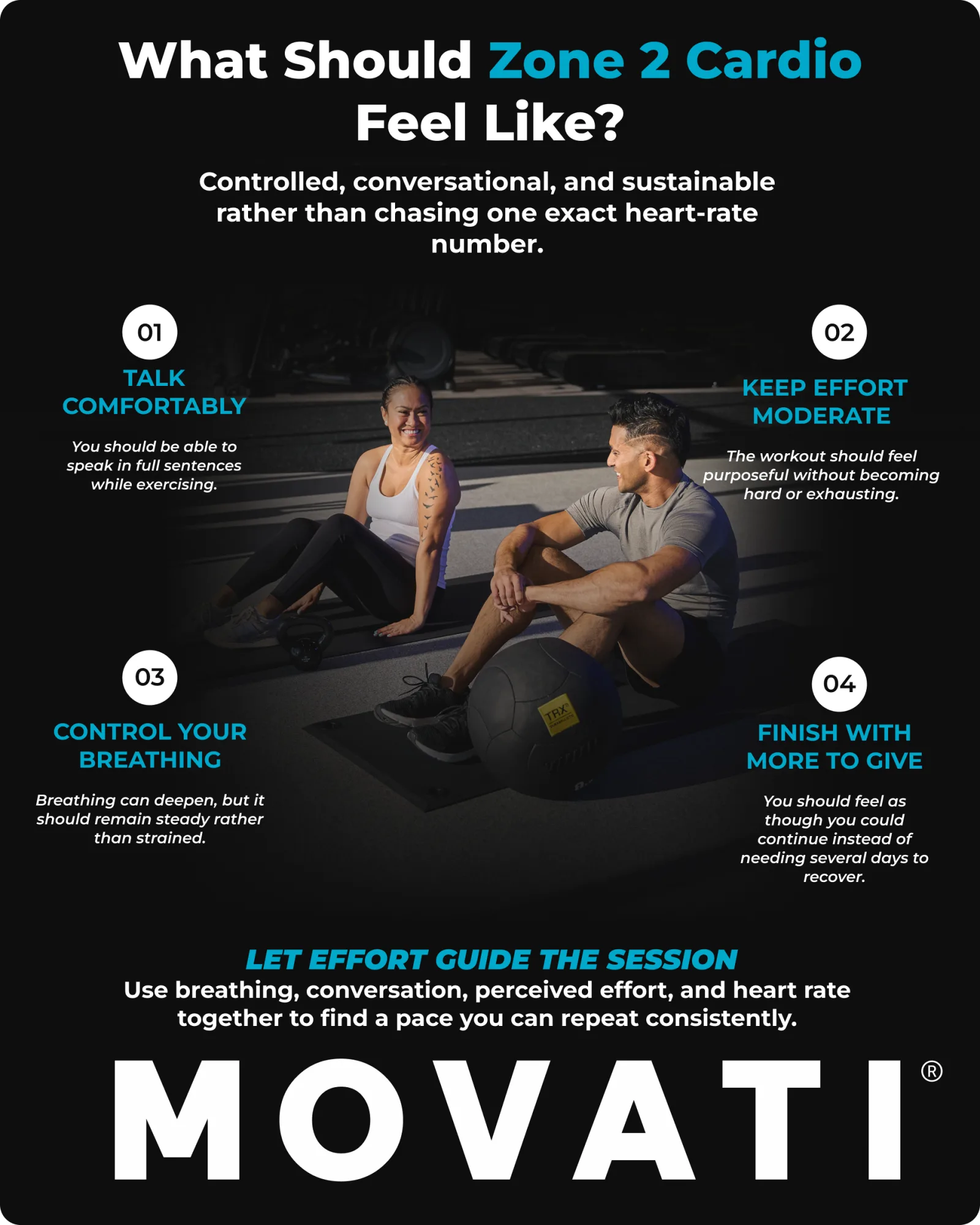
The effort should feel controlled and repeatable. You are working, but you are not counting the minutes until you can stop. Your breathing is deeper than at rest, yet generally rhythmic, and you can speak in full sentences rather than isolated words.
- Talk test: You can hold a conversation, although the other person can tell you are exercising.
- Perceived effort: The session feels easy to moderate rather than hard.
- Breathing: Your breath remains controlled without frequent gasping.
- Recovery: You finish feeling as though you could have continued, and the session does not disrupt the next several days of training.
These cues are practical, not diagnostic. Heat, dehydration, hills, fatigue, medication, caffeine, and stress can all affect heart rate and perceived effort. If the same pace suddenly feels much harder, slow down instead of forcing the number on your device.
Why do heart-rate zones look different across devices?
Some systems estimate zones from age-predicted maximum heart rate. Others use measured maximum heart rate, heart-rate reserve, or physiological thresholds. Those methods can produce different boundaries for the same person. Wrist-based sensors can also be affected by movement, fit, temperature, and the activity being performed.
A heart-rate monitor is useful for observing trends, but its display should not overrule how your body is responding. If you want precise zones for performance training, a qualified exercise professional can help interpret a field or laboratory assessment. Most recreational exercisers can begin effectively with the talk test and an honest effort rating.
What are the main benefits?
It builds an aerobic foundation
Steady aerobic work helps the body become better prepared to produce energy with oxygen. Over time, this supports the ability to continue moving at a sustainable pace. That foundation matters for endurance events, but it also supports hiking, court sports, group classes, and everyday activities that keep you on your feet.
It adds training without the cost of constant high intensity
Hard intervals can be valuable, but they are demanding. Lower-intensity aerobic sessions can expand your weekly activity while usually creating less fatigue than repeated all-out work. This makes them easier to combine with strength training, sport practice, and higher-intensity sessions.
Easy does not mean effortless or unnecessary. It means the intensity is matched to the purpose: accumulating quality aerobic work without turning every session into a test.
It helps you learn pace control
Many people begin cardio sessions too quickly, then slow dramatically. Zone 2 cardio encourages patience. You learn how terrain, temperature, sleep, and previous training affect your effort, and you practise adjusting before fatigue forces the decision.
It can support recovery between harder efforts
A controlled aerobic session can keep you moving on a day when intense training would be excessive. However, a long “easy” workout can still create fatigue, especially for beginners. Recovery depends on duration and total workload as well as intensity.
Does it burn more fat?
At lower aerobic intensities, a greater proportion of the energy used during the session may come from fat compared with harder exercise. That does not mean this intensity automatically produces greater fat loss. Body-composition changes depend on the broader pattern of activity, nutrition, sleep, health, and consistency.
Choose this training because it develops sustainable aerobic capacity and fits well within a balanced plan—not because a watch labels it a magical fat-burning zone.
Which activities work best?
The best option is one that lets you control the effort and repeat the session comfortably. Suitable choices can include:
- Brisk or incline walking
- Easy running or a walk-run combination
- Stationary or outdoor cycling
- Swimming or pool exercise
- Rowing at a controlled pace
- Elliptical or stair-climbing exercise
Heart rate can differ between activities, so do not expect an identical number on a bike, in the pool, and while running. Use activity-specific experience alongside the talk test.
How long should a session be?
Begin with a duration that suits your current capacity. A person new to structured cardio may benefit from a short, manageable session or a series of walking intervals. Someone with an endurance background may comfortably continue longer. The correct starting point is one you can recover from and repeat.
Increase duration gradually rather than adding time, frequency, and intensity at once. If technique changes, discomfort builds, or the session stops feeling controlled, shorten it. Consistency across weeks is more useful than one heroic day.
How does it fit into a balanced week?
Use steady aerobic work around the demands that matter most to you. If strength is the priority, place longer cardio where it will not repeatedly compromise your best lifting sessions. If an endurance event is the goal, easy sessions can make up much of your aerobic work while selected workouts address faster paces.
A simple week might include one or more controlled aerobic sessions, strength training, and—when appropriate for your experience—some higher-intensity work. Rest and lighter days still matter. There is no universal schedule because training history, goals, health, and available time differ.
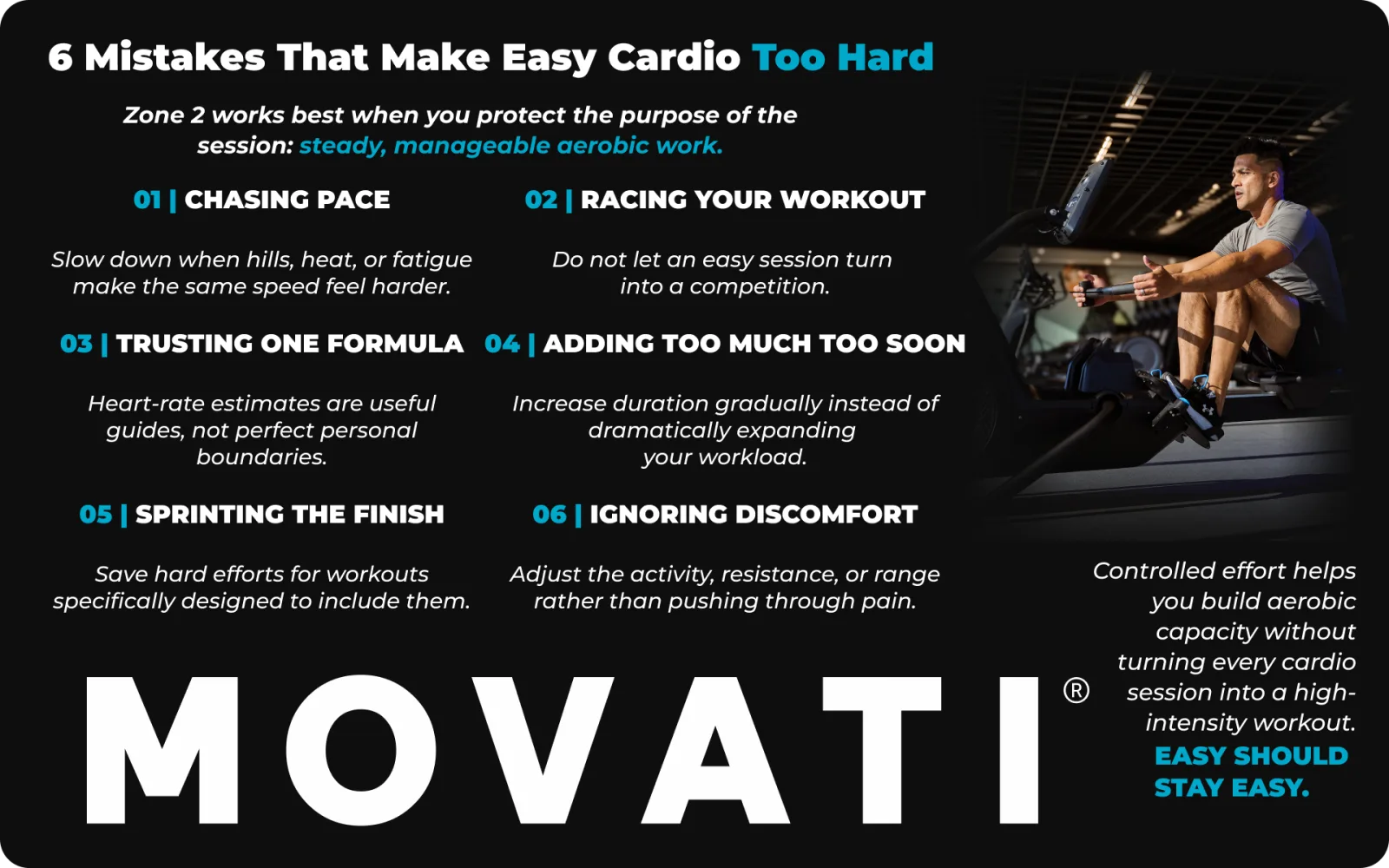
What mistakes make easy cardio too hard?
- Following pace instead of effort: Slow down on hills, in heat, or when fatigue is elevated.
- Letting competition take over: An easy group session can become a race. Choose partners who respect the intended intensity.
- Relying on one formula: Estimated heart-rate zones are starting points, not personal laboratory results.
- Adding duration too quickly: Low intensity still creates workload. Progress in small steps.
- Turning every finish into a sprint: Save hard efforts for sessions designed to include them.
- Ignoring discomfort: Adjust the activity, resistance, or range rather than pushing through pain.
How will you know it is working?
Look for trends rather than a single workout. At a similar perceived effort, you may gradually move a little faster, cover more distance, or use a higher resistance. A familiar route may require less effort, and you may recover more comfortably after sessions.
Progress will not be perfectly linear. Weather, sleep, stress, and accumulated training can obscure improvement from day to day. Review several weeks and consider both performance and recovery.
Who should get guidance before starting?
If you have a cardiovascular, respiratory, or metabolic condition; take medication that affects heart rate; are pregnant; or are returning after a significant illness or long break, ask an appropriate health professional how to begin. Stop exercising and seek medical attention for warning signs such as chest pain, fainting, or unusual severe shortness of breath.
Zone 2 cardio works best as a repeatable practice, not a rigid number. Keep the effort conversational, choose an activity you can control, progress the workload gradually, and leave room for strength, higher-intensity work, and recovery according to your goals.
