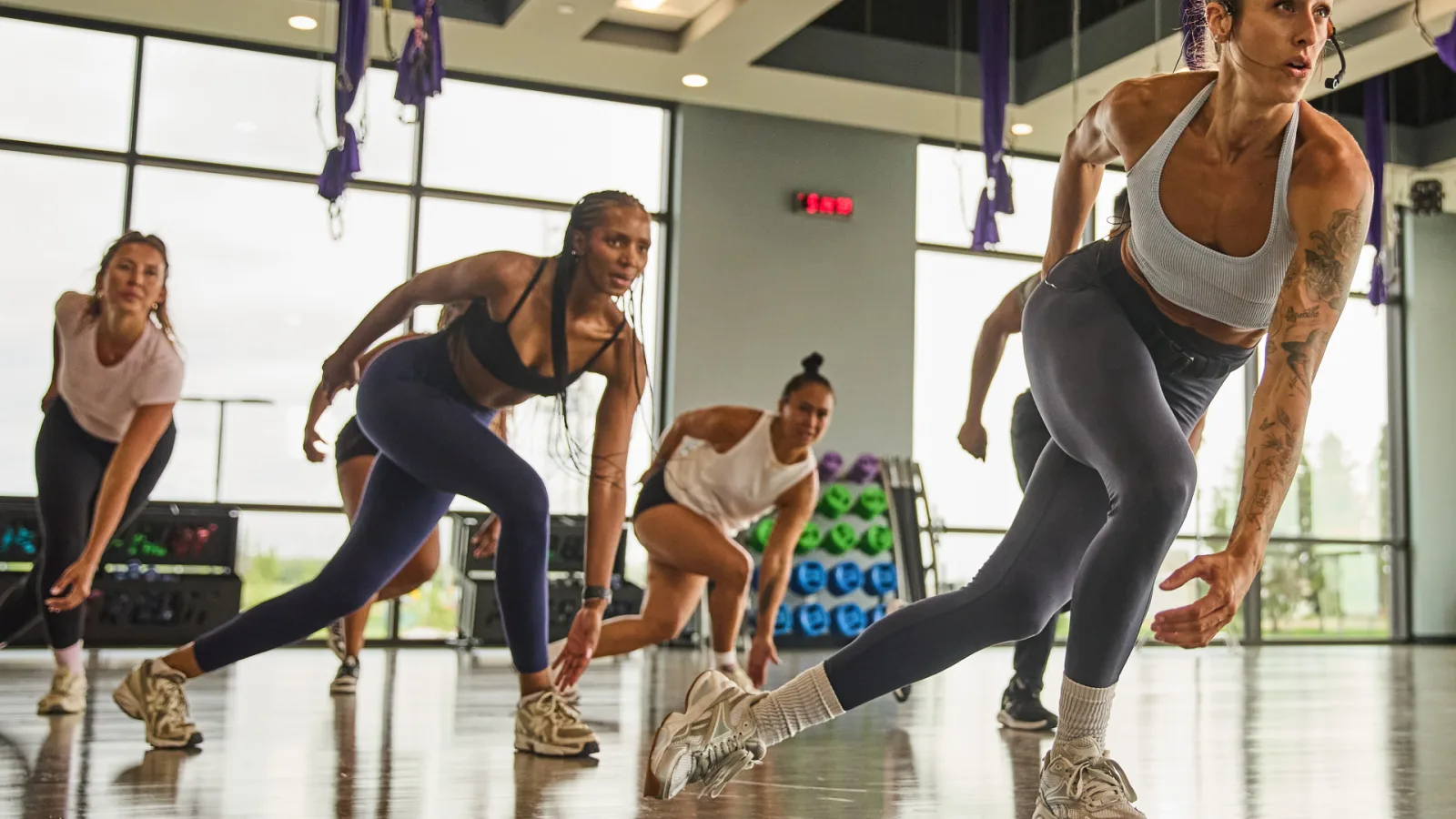
Lower body strength supports nearly everything you do on your feet, from climbing stairs and carrying groceries to running, cycling and playing sport. A productive routine does not need dozens of exercises. It needs a few well-chosen movements performed with control, appropriate resistance and steady progression.
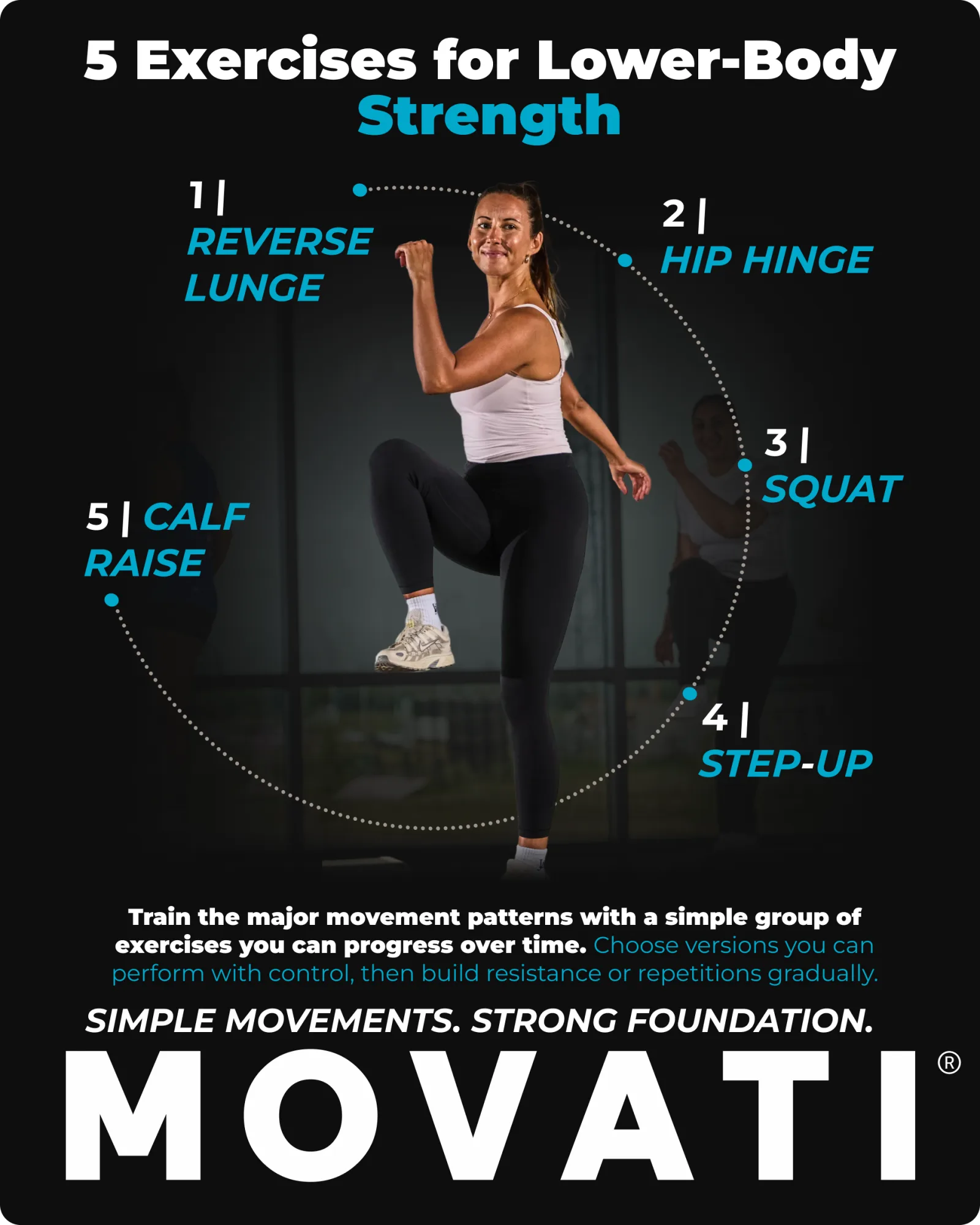
The following five exercises train the major movement patterns of the hips, knees and ankles. Begin with a variation you can perform confidently, then add resistance or repetitions as your technique improves.
Why does lower-body training matter?
Your quadriceps, hamstrings, glutes and calves work together to produce force and keep you stable. Training these muscles can make everyday movement feel easier and improve your capacity for recreational activity. It can also help you build the control needed to change direction, decelerate and manage uneven surfaces.
Good training is individual. Your comfortable range of motion may differ from someone else’s, and it can change as you gain mobility and experience. Quality repetitions matter more than forcing a particular depth or lifting a particular weight.
1. Squat for knee and hip strength
The squat trains the quadriceps and glutes while asking your trunk to remain steady. Start with a bodyweight squat or hold a dumbbell at your chest for a goblet squat.
- Set your feet in a comfortable stance and keep the whole foot connected to the floor.
- Brace your midsection, then bend at the hips and knees together.
- Lower only as far as you can while maintaining control.
- Drive through your feet to stand tall without rushing the movement.
If balance is a challenge, squat to a bench or box. The target gives you a consistent depth and lets you practise sitting back with confidence.
2. Hip hinge to train the posterior chain
A Romanian deadlift or dumbbell hip hinge emphasizes the hamstrings and glutes. Unlike a squat, most of the motion comes from sending the hips backward while the knees remain softly bent.
- Hold the weights close to your thighs.
- Keep your spine in a comfortable, neutral position as your hips travel back.
- Stop when you feel tension in the hamstrings or can no longer maintain position.
- Press the floor away and bring the hips forward to stand.
Learn the pattern with a dowel or very light weights before increasing the load.
3. Reverse lunge for single-leg control
Reverse lunges train each side independently, which makes them useful for balance and coordination. Step one foot back, lower under control, then push through the front foot to return. Keep the front knee tracking in the same general direction as the toes.
Use a stable support if needed. You can also shorten the range of motion or perform a split squat without stepping between repetitions.
4. Step-up for practical strength
Step-ups resemble a movement you already use on stairs. Choose a platform low enough that you can keep the working foot planted and avoid pushing excessively from the trailing leg.
- Place your full foot on the platform.
- Lean slightly forward and drive through the elevated leg.
- Stand tall at the top without losing balance.
- Lower slowly, then complete your repetitions before changing sides.
5. Calf raise for ankle strength
Calf raises train the muscles that help propel you forward when walking and running. Stand near a support, rise onto the balls of your feet, pause briefly, then lower with control. Begin with both legs and progress to a single-leg version when ready.
How can you combine these exercises?
After a gradual warm-up, try two or three sets of each movement. Choose a repetition range that allows every rep to look consistent and leaves you feeling that you could complete a little more. Rest long enough to regain control before the next set.
- Goblet squat
- Dumbbell Romanian deadlift
- Reverse lunge
- Step-up
- Standing calf raise
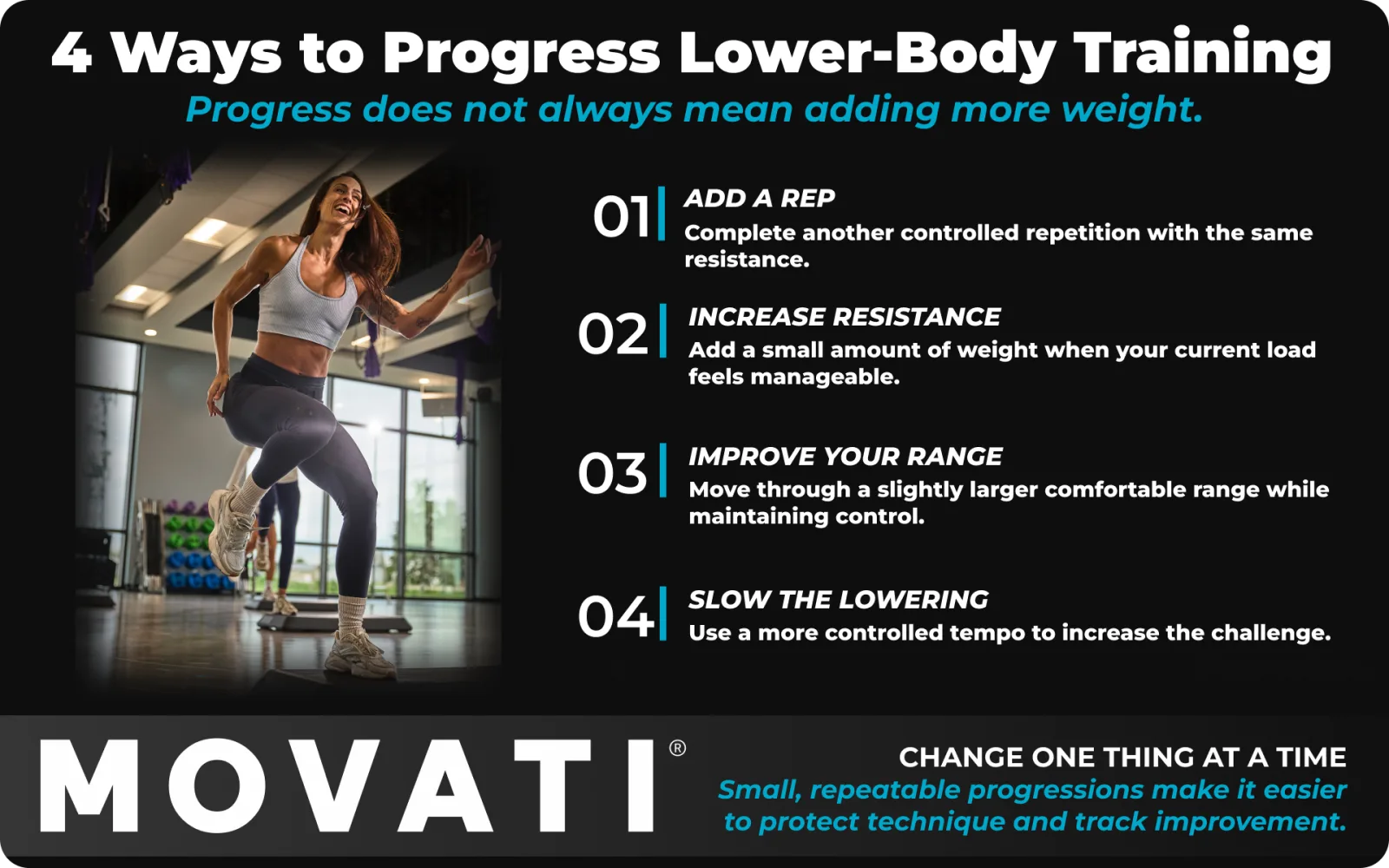
Progress one variable at a time: add a repetition, use slightly more resistance, improve your range of motion or slow the lowering phase. Recording your exercises and loads makes progress easier to see.
Build strength with a technique-first approach
Consistency and sound movement are more valuable than an aggressive start. If an exercise causes sharp pain, stop and choose a comfortable alternative. A MOVATI Athletic trainer can help you select suitable variations, learn equipment and build a plan that reflects your experience and goals.
