Yoga has long been celebrated as a practice that nurtures both the body and mind. Rooted in ancient traditions, it has evolved over centuries while maintaining its core principles of mindfulness, movement, and self-awareness. As we move through 2026, yoga continues to adapt to changing lifestyles, technological advancements, and shifting wellness priorities. The result is a vibrant and diverse yoga landscape that appeals to practitioners of all ages, backgrounds, and experience levels.
The latest yoga trends reveal a growing emphasis on accessibility, mental well-being, sustainability, and innovation. From virtual classes and wearable technology to eco-conscious practices and inclusive communities, yoga is becoming more personalized and relevant than ever before.
Whether you’re a seasoned yogi or someone considering their first class, understanding these emerging developments offers valuable insight into the future of one of the world’s most popular wellness practices.
The Evolution of Yoga in a Modern World
Yoga has grown from a niche wellness activity into a widely embraced practice that supports both physical and mental well-being. While many people begin yoga to improve flexibility and strength, its benefits extend far beyond physical fitness.
More Than a Workout
For me, yoga has become an important part of maintaining balance in daily life. It helps reduce stress, improve mobility, and create a sense of calm during busy days. The combination of movement, breathing, and mindfulness leaves me feeling both refreshed and focused.
Supporting Overall Wellness
Regular yoga practice has helped me improve flexibility, reduce muscle tension, and recover from other workouts more effectively. It has also encouraged me to prioritize self-care and be more mindful of my overall health.
A Practice That Continues to Evolve
Today’s yoga offerings include a variety of class styles, wellness-focused programs, and on-demand options that make the practice more accessible than ever. By blending traditional teachings with modern approaches, yoga continues to help people build healthier, more balanced lifestyles.
For me, yoga is more than exercise. It is a valuable tool for supporting both physical health and mental well-being.
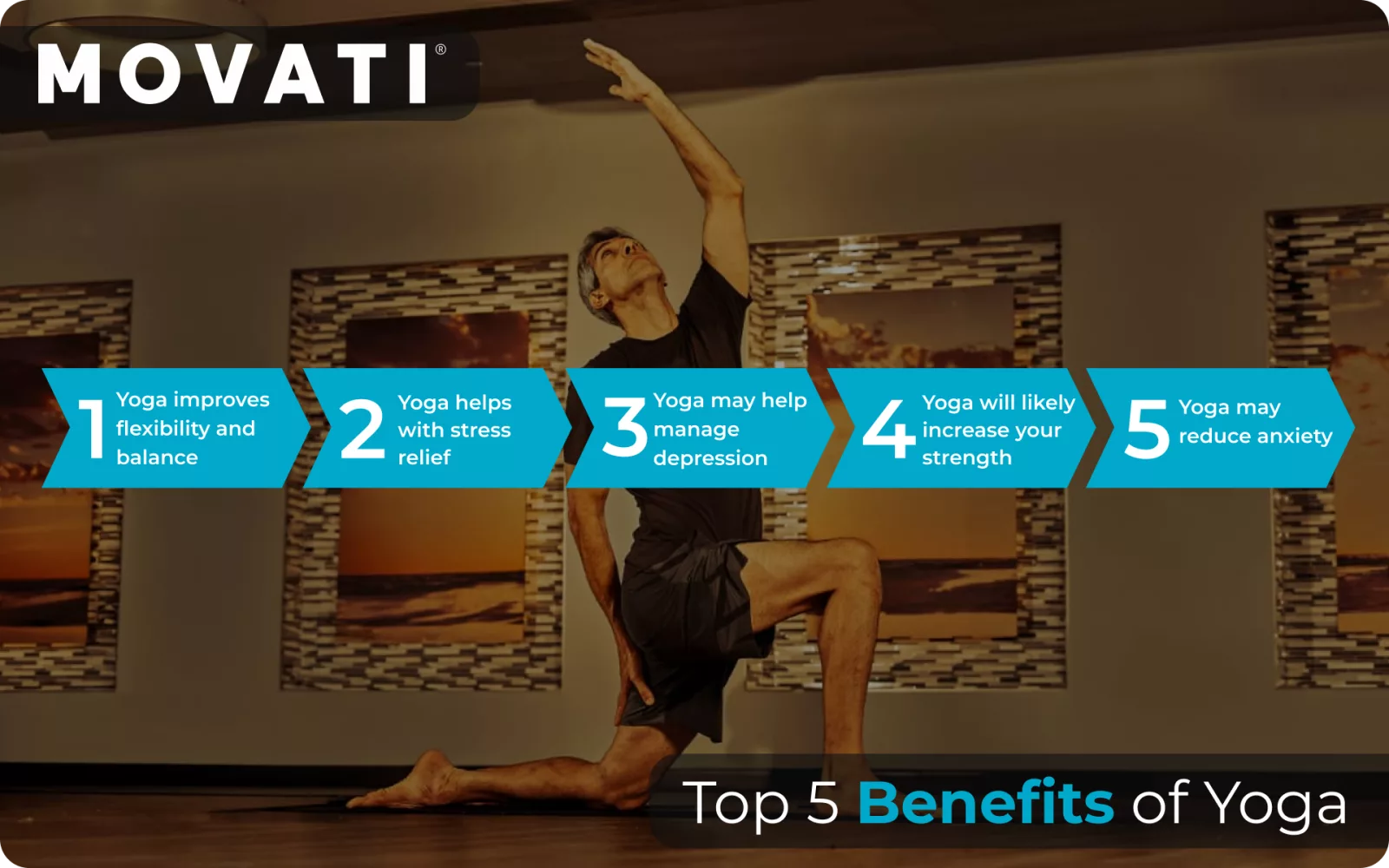
According to Healthline, the top 5 benefits of Yoga are:
Top 5 Benefits of Yoga
1. Yoga improves flexibility and balance
2. Yoga helps with stress relief
3. Yoga may help manage depression
4. Yoga will likely increase your strength
5. Yoga may reduce anxiety
Citation https://www.healthline.com/nutrition/13-benefits-of-yoga#flexibility-and-balance
Technology Is Transforming the Yoga Experience
One of the most significant developments in recent years has been the integration of technology into yoga practice.
1. Virtual Yoga Classes and On-Demand Access
Digital wellness platforms have expanded significantly in recent years, making it easier than ever to access yoga and mindfulness-based workouts. While many online platforms offer live-streamed and pre-recorded classes, MOVATI members can take advantage of MOVATI OnDemand, which provides access to a variety of instructor-led wellness and fitness content, including yoga and Power & Flow workouts.
2. Wellness That Fits Your Schedule
One of the biggest advantages of on-demand fitness is flexibility. Whether I have a busy workday or simply cannot make it to the club, MOVATI OnDemand allows me to maintain consistency by accessing workouts whenever it is convenient. Having yoga and recovery-focused content available at any time makes it easier to prioritize wellness and stay committed to healthy habits.
The Benefits of Yoga and Power & Flow
Among the classes available, I particularly appreciate the yoga and Power & Flow workouts. These sessions combine movement, flexibility, balance, and breathwork to create a well-rounded wellness experience. The Power & Flow format is especially effective because it builds strength and mobility while encouraging mindfulness and focus through intentional breathing.
For me, these workouts provide both physical and mental benefits. They help relieve stress, improve flexibility, increase body awareness, and create a sense of balance that extends beyond the gym.
Supporting Long-Term Wellness
The convenience of on-demand yoga offers several benefits:
Flexible scheduling
Personalized workout selection
Greater consistency in wellness routines
Improved accessibility to guided instruction
Opportunities to focus on recovery and mindfulness
As wellness continues to become a greater priority within the fitness industry, resources like MOVATI OnDemand are helping individuals create sustainable routines that support both physical and mental well-being. For many people, including myself, access to yoga and Power & Flow workouts has become a valuable part of maintaining a balanced and healthy lifestyle.
Wearable Technology and Performance Tracking
Technology is also enhancing the quality of yoga practice through wearable devices and smart fitness tools.
Modern wearables can monitor:
Heart rate
Breathing patterns
Recovery metrics
Sleep quality
Stress levels
These insights help practitioners better understand their bodies and make informed decisions about recovery, intensity, and overall wellness.
As wearable technology continues to advance, it is becoming an important component of the latest yoga trends, particularly among health-conscious consumers who value data-driven wellness approaches.
A Growing Focus on Mental Health and Mindfulness
Mental health has become a central topic within the global wellness conversation, and yoga is uniquely positioned to support emotional and psychological well-being.
While physical postures remain an important aspect of practice, many individuals are increasingly drawn to yoga’s mindfulness and stress-management benefits.
The Rise of Restorative Yoga
Restorative yoga has emerged as one of the most popular styles among people seeking relaxation and recovery. This gentle practice uses supportive props and extended poses to encourage deep relaxation and nervous system regulation.
Benefits of restorative yoga include:
Reduced stress
Improved sleep quality
Lower anxiety levels
Enhanced emotional resilience
Better recovery from physical exertion
As modern lifestyles become increasingly fast-paced, restorative practices are providing a valuable counterbalance.
Meditation and Breathwork Integration
Many studios are expanding beyond traditional asana-based classes by incorporating meditation, breathwork, and mindfulness workshops into their schedules.
Practices such as:
Guided meditation
Breath awareness techniques
Mindful movement
Yoga nidra
Visualization exercises
These developments demonstrate how the latest yoga trends are emphasizing mental fitness alongside physical health.
Sustainability Becomes a Core Yoga Value
Environmental awareness continues to influence consumer choices across industries, and the yoga community is no exception.
Many practitioners are seeking ways to align their wellness routines with environmentally responsible practices.
Eco-Friendly Yoga Equipment
Manufacturers are responding with products made from sustainable materials, including:
Natural rubber yoga mats
Cork yoga blocks
Organic cotton straps
Recycled fabric apparel
Biodegradable accessories
Consumers are increasingly choosing brands that prioritize ethical production and environmental stewardship.
Sustainable Yoga Studios
Studios are also adopting greener practices by:
Using renewable energy sources
Reducing single-use plastics
Implementing energy-efficient lighting
Offering reusable water stations
Supporting local sustainability initiatives
These efforts reflect a broader commitment to conscious living that resonates strongly with modern practitioners.
Inclusivity and Diversity Are Reshaping Yoga Communities
Historically, yoga has often been portrayed through a narrow lens. Today, one of the most meaningful shifts in the industry is the movement toward greater inclusivity and representation.
The latest yoga trends emphasize creating welcoming environments where people of all backgrounds feel comfortable participating.
Body Positivity and Representation
Yoga instructors, wellness brands, and influencers are increasingly promoting diverse representations of practitioners, including people of different:
Ages
Body sizes
Ethnic backgrounds
Fitness levels
Gender identities
This broader representation helps challenge outdated stereotypes and encourages more individuals to explore yoga without feeling excluded.
Adaptive and Accessible Yoga
Adaptive yoga programs are becoming more widely available, making the practice accessible to individuals with physical disabilities, chronic conditions, or mobility limitations.
These classes may include:
Chair yoga
Seated yoga
Therapeutic yoga
Modified poses
Specialized instruction
By removing barriers to participation, adaptive yoga is helping expand the reach and impact of the practice.
Community-Centered Yoga Experiences
Many yoga organizations are prioritizing community-building initiatives that foster connection and support. Workshops, wellness retreats, discussion groups, and charitable events are helping practitioners build meaningful relationships both on and off the mat.
This focus on belonging and inclusion is becoming a defining feature of modern yoga culture.
Personalized Yoga Practices Continue to Grow
Consumers increasingly expect wellness experiences tailored to their individual needs, and yoga is following the same trend.
Personalized yoga programs may take into account:
Fitness goals
Stress levels
Physical limitations
Lifestyle habits
Recovery needs
Mental wellness objectives
Through digital platforms and personalized coaching, practitioners can access customized routines that align with their unique circumstances and goals.
This individualized approach enhances engagement and encourages long-term commitment to the practice.
The Future of Yoga
The future of yoga appears both innovative and deeply rooted in its traditional foundations. While technology, personalization, and sustainability continue to influence the industry, the core principles of mindfulness, self-awareness, and holistic wellness remain unchanged.
As yoga evolves, practitioners can expect:
More advanced digital experiences
Greater accessibility worldwide
Increased integration of mental wellness practices
Continued emphasis on sustainability
More inclusive and diverse communities
Personalized wellness journeys
These developments ensure that yoga remains relevant in a rapidly changing world while preserving the timeless benefits that have attracted practitioners for generations.
Conclusion
The latest yoga trends reveal a practice that is evolving to meet the needs of modern life without losing sight of its ancient roots. Technology is making yoga more accessible, mindfulness is strengthening its role in mental health, sustainability is encouraging environmentally conscious choices, and inclusivity is helping create welcoming communities for all.
As the wellness landscape continues to change, yoga remains a powerful tool for supporting physical health, emotional resilience, and personal growth. Whether practiced in a studio, at home, outdoors, or through a virtual platform, yoga continues to offer meaningful benefits that extend far beyond the mat.
For both experienced practitioners and newcomers alike, the future of yoga promises to be more accessible, innovative, and transformative than ever before.
