Preparing for your first HYROX competition is an exciting challenge, but one of the most common questions athletes ask is simple: How much time do I need to get ready? The answer depends on your current fitness level, running endurance, strength, and experience with functional exercise. For some individuals, eight to twelve weeks of focused training may provide sufficient preparation. Others may benefit from four to six months or longer to develop the conditioning needed to compete confidently.
The good news is that HYROX prep doesn’t require you to be an elite athlete before getting started. With realistic goals, consistent training, and access to the right equipment and professional guidance, you can progressively build the strength, endurance, and confidence needed for race day. At MOVATI Athletic, members can take advantage of strength training facilities, cardiovascular equipment, group fitness opportunities, and available personal training services to support their preparation.

Your First Promise: A Realistic Timeline Based on Your Fitness Level
One of the biggest mistakes individuals make when preparing for a fitness competition is following a training schedule that doesn’t reflect their current abilities.
HYROX combines eight 1-kilometre runs with eight functional workout stations, including sled pushes, rowing, burpee broad jumps, farmer’s carries, sandbag lunges, and wall balls. Preparing for these demands requires both cardiovascular conditioning and muscular endurance.
Your preparation timeline should reflect your starting point rather than an arbitrary race date.
How Long Should You Train Before HYROX?
| Current Fitness Level | Suggested Preparation Time | Primary Focus |
|---|---|---|
| Experienced hybrid athlete | 6–8 weeks | Race-specific conditioning and pacing |
| Regular gym-goer or recreational runner | 8–12 weeks | Balancing running and functional strength |
| Active beginner | 12–16 weeks | Building endurance, strength, and technique |
| Returning after prolonged inactivity | 16–24+ weeks | Gradual conditioning and movement confidence |
These are general planning estimates, not guarantees of race readiness. Your training history, health, recovery, and competition goals may require a different timeline.
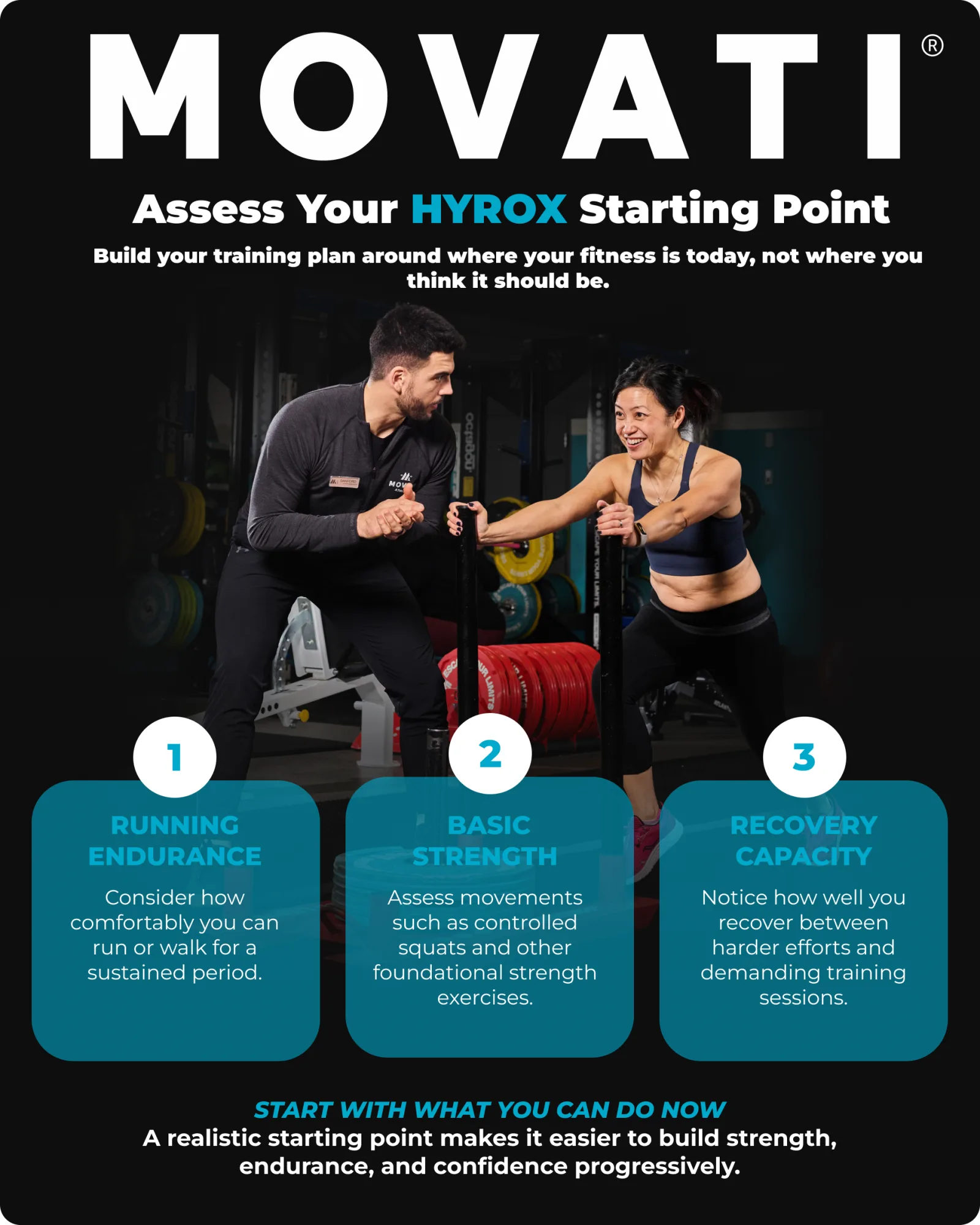
Assess Your Starting Point
Before establishing a training schedule, consider your ability to run continuously, perform basic strength exercises, and recover between demanding workouts.
You don’t need to complete a full HYROX simulation immediately. Instead, begin with manageable assessments such as a comfortable run or walk, controlled bodyweight squats, and short rowing intervals.
A MOVATI personal trainer can help you evaluate your current fitness and establish realistic training goals based on your abilities.
Your Second Promise: Build Strength and Endurance Without Guesswork
Successful HYROX preparation requires more than simply working out harder. It involves developing the physical qualities needed to complete repeated running segments and demanding functional movements.
A balanced training program should combine aerobic conditioning, strength development, and race-specific exercises.
Build Your Running Endurance
Running represents a significant portion of HYROX, with participants completing 8 kilometres throughout the competition.
Developing aerobic endurance helps you sustain repeated efforts and manage fatigue between workout stations.
Begin with comfortable running sessions appropriate for your fitness level. Gradually introduce longer runs, interval workouts, and sessions that combine running with functional exercises.
For beginners, walking and jogging intervals can provide an effective foundation before progressing to continuous running.
Develop Functional Strength
HYROX stations challenge multiple muscle groups, making compound strength exercises particularly valuable.
Squats, lunges, deadlifts, rows, and loaded carries can help develop the strength required for race-specific movements.
As your conditioning improves, introduce exercises that resemble the competition stations, including sled movements, rowing, farmer’s carries, and wall balls where suitable equipment is available.
Train for the Transitions
One of the most challenging aspects of HYROX is returning to running after completing a demanding exercise station.
Practicing these transitions can help you become more comfortable moving under fatigue.
For example, a training session might include a 500-metre run, followed by rowing or walking lunges, and then another short run.
Begin with manageable distances and gradually increase the workload as your endurance improves.
How MOVATI Can Help
MOVATI Athletic provides a fitness environment where members can combine strength and cardiovascular training as part of a structured routine.
Depending on your club’s facilities and available equipment, you may be able to incorporate treadmill running, rowing, resistance training, and functional movements into your preparation.
Personal training services can also provide guidance on exercise selection, technique, and progression, helping you develop a program suited to your experience and goals.
Your Third Promise: Make Every Week of Training Count
Consistency is more valuable than occasional extreme workouts.
A structured schedule allows you to develop different aspects of fitness while providing adequate time for recovery.
For someone with an established fitness foundation, a typical training week might look like this:
| Day | Training Focus | Example Activity |
|---|---|---|
| Monday | Strength | Lower-body exercises and functional movements |
| Tuesday | Running | Steady aerobic conditioning |
| Wednesday | Hybrid training | Running combined with rowing or carries |
| Thursday | Recovery | Mobility, walking, or rest |
| Friday | Running intervals | Controlled speed and endurance training |
| Saturday | Functional conditioning | Race-specific exercise practice |
| Sunday | Rest | Recovery and preparation for the next week |
Beginners may need fewer sessions and additional recovery days.
Prioritize Nutrition and Recovery
HYROX preparation places significant demands on the body. Proper nutrition, hydration, and rest help support adaptation to training.
A balanced diet containing adequate carbohydrates, protein, and healthy fats provides energy for workouts and supports muscle recovery.
Sleep is equally important. Consistently training while fatigued can interfere with performance and make it more difficult to maintain progress.
Active recovery activities such as gentle cycling, walking, or mobility exercises can also be incorporated between demanding sessions.
Track Your Improvements
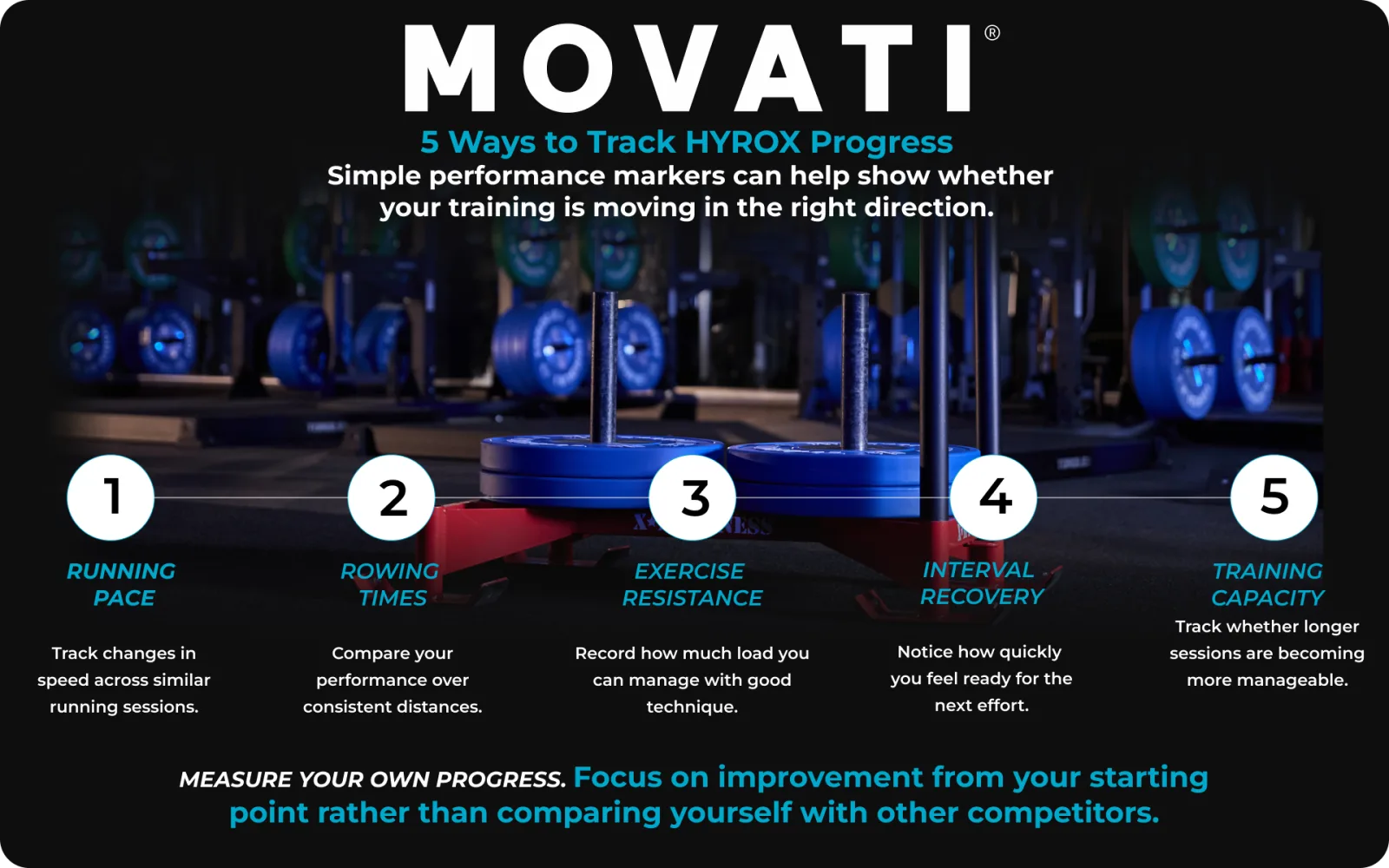
Monitoring your progress helps determine whether your training plan is working.
Useful measurements include running pace, rowing times, exercise resistance, recovery between intervals, and your ability to complete longer training sessions comfortably.
Rather than comparing yourself with other competitors, focus on improvements relative to your own starting point.
MOVATI’s training environment can support this process by providing access to a variety of equipment and opportunities to work with fitness professionals.
Your Fourth Promise: Arrive at Race Day Prepared and Confident
The final stage of HYROX preparation should focus on applying the fitness you’ve developed.
As race day approaches, incorporate sessions that resemble competition demands, including running between functional exercises and practicing movement efficiency under fatigue.
You don’t need to complete a full race simulation every week. Shorter combinations can provide valuable preparation without creating unnecessary training stress.
Practice Your Race Strategy
Develop a realistic pacing plan based on your training performance.
Starting too aggressively can create fatigue that affects later stations, particularly sandbag lunges and wall balls.
Practice maintaining consistent effort during running segments and learn how to manage your breathing when transitioning between exercises.
Reduce Training Fatigue Before Competition
During the final week or two, many athletes benefit from reducing training volume while maintaining some familiar movement and intensity.
This approach, commonly called tapering, allows accumulated fatigue to decrease before competition.
Avoid introducing unfamiliar exercises or attempting major fitness improvements immediately before race day.
Build Confidence Through Preparation
Confidence comes from knowing you’ve practiced the movements, developed your endurance, and followed a realistic training plan.
Working with a qualified trainer can provide additional guidance, particularly when refining technique or preparing for your first competition.
At MOVATI Athletic, members can explore personal training and fitness options that complement their individual HYROX goals. Available services and equipment vary by location, so check with your local club when planning race-specific sessions.
Can You Prepare for HYROX in Just Eight Weeks?
For individuals who already run regularly and have a solid strength-training foundation, eight weeks may be enough to develop greater familiarity with the workout stations and improve race-specific conditioning.
However, someone who is relatively new to exercise may require significantly more time.
Trying to compress several months of physical development into a short training period can create unnecessary fatigue and increase the risk of overuse injuries.
The most effective timeline is one that allows you to progress consistently while maintaining proper technique and adequate recovery.
Start Your HYROX Preparation With MOVATI Athletic
Preparing for HYROX is about more than completing a demanding fitness race. It’s an opportunity to improve cardiovascular health, develop functional strength, and establish a more consistent approach to physical activity.
Whether you’re preparing for your first competition or working toward a faster finish time, having access to suitable training facilities and professional guidance can make the process more manageable.
MOVATI Athletic offers members opportunities to develop strength, improve endurance, and incorporate a variety of training methods into their fitness routines.
From cardiovascular conditioning and resistance training to personal training support, MOVATI can be part of your preparation as you work toward your individual goals.
Conclusion
The ideal timeline for HYROX prep depends on your starting fitness level, training experience, and competition objectives. While experienced athletes may prepare in six to eight weeks, many recreational participants benefit from eight to sixteen weeks, and beginners or those returning from prolonged inactivity may need considerably longer.
By establishing realistic expectations, following a balanced training program, prioritizing recovery, and monitoring your progress, you can build the strength and endurance required for this demanding competition.
Ready to begin your HYROX journey? Explore the training facilities and personal training options available at your local MOVATI Athletic club and start building a fitness routine that supports your race-day goals.
*MOVATI’s trainers and/or consultants are not health care providers, and do not provide any medical diagnosis, treatment or advice, and any trainer and/or consultant tips are not intended to replace the advice of a health care professional.
