
Hybrid Training combines endurance work and strength training within the same program. The challenge is not fitting both into a calendar; it is arranging them so that one does not repeatedly undermine the quality or recovery of the other.
You do not need a perfectly equal split. A runner who wants to become stronger, a lifter preparing for a fitness race, and someone pursuing balanced general fitness all need different versions. Decide which outcome matters most, protect the sessions that drive it, and use the second discipline to expand your capacity.
Why can running and lifting interfere with each other?

Both create fatigue. A demanding run can reduce the quality of heavy lower-body lifting later that day. A high-volume leg session can change running mechanics for several days. When hard sessions pile up, the issue is often scheduling and total workload rather than an inherent conflict between cardio and strength.
Interference is more likely when every session is long or intense, food and sleep are inadequate, and weekly volume rises too quickly. It can be managed by setting priorities, separating key sessions, and keeping easy work genuinely easy.
What should you prioritize?
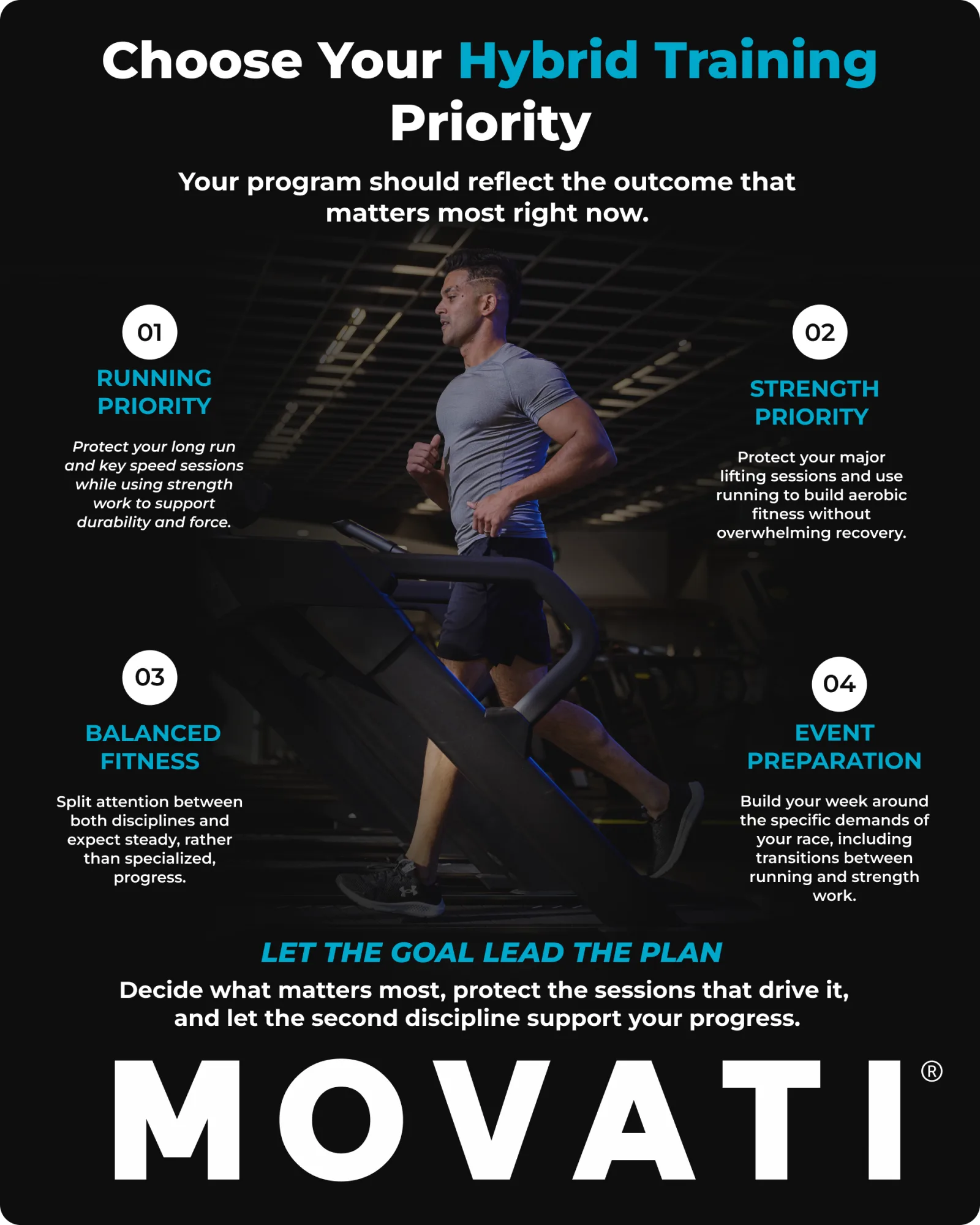
Choose a primary goal for the current phase:
- Running priority: Protect the long run and key speed or threshold session. Strength work supports force, durability, and general capacity.
- Strength priority: Protect the major lifting sessions. Running develops aerobic fitness without repeatedly compromising leg recovery.
- Balanced fitness: Split attention more evenly and accept that progress in each quality may be steadier than in a specialized program.
- Event preparation: Match the plan to the demands of the race, including transitions between running and functional work.
Priorities can change across the year. You might emphasize running before an event, then return to a strength-focused phase afterward.
How many hard sessions should you schedule?
Think in terms of total stress rather than labels. Intervals, hills, long runs, heavy lower-body lifting, and high-volume circuits can all be demanding. Placing several of them back to back may exceed your ability to recover even if each looks reasonable alone.
Start with fewer hard sessions than you think you can tolerate, then add workload only when performance and recovery remain stable. Easy runs, technique lifting, and lower-volume sessions help fill the week without making every day a test.
Should you run and lift on the same day?
You can. Combining sessions may create more complete recovery days elsewhere in the week. If possible, separate demanding sessions by several hours. When they must be completed together, perform the discipline tied to your primary goal first.
A strength-focused athlete might lift before an easy run. A runner might complete important intervals before a short supporting strength session. Avoid placing two maximal efforts together simply for convenience.
What could a Hybrid Training week look like?
Three-session foundation
- Session 1: Full-body strength
- Session 2: Easy run with relaxed faster strides
- Session 3: Full-body strength followed by short easy cardio, or a mixed session at controlled effort
This structure suits a beginner or a busy schedule. Alternate sessions with rest or easy movement and build consistency before adding days.
Four-session balanced week
- Session 1: Full-body strength with a lower-body emphasis
- Session 2: Easy aerobic run
- Session 3: Full-body strength with an upper-body emphasis
- Session 4: Longer easy run or controlled quality run, depending on experience
This arrangement gives each discipline two focused exposures. Place the harder run away from the more demanding leg session when possible.
Five-session running-priority week
- Session 1: Easy run
- Session 2: Full-body strength
- Session 3: Quality run
- Session 4: Short supporting strength session or easy run
- Session 5: Long easy run
These are templates, not prescriptions. Your experience, injury history, schedule, and event demands determine appropriate frequency and volume.
Which strength exercises support running?
A useful plan covers major patterns without unnecessary complexity:
- Squat or step pattern
- Hip hinge
- Single-leg exercise such as a split squat
- Upper-body push and pull
- Calf-strengthening movement
- Carry or trunk exercise
Use controlled ranges and loads that let you progress. Strength work does not need to imitate running to support it. General force capacity and tissue tolerance are valuable, while event-specific training can be added when required.
Which runs belong in the plan?
Easy running builds aerobic capacity with a relatively manageable recovery cost. A longer easy run can develop endurance, while selected faster work can improve speed and pace control. Beginners do not need all run types immediately.
Introduce one demand at a time. Establish comfortable, consistent running before adding frequent intervals or rapidly extending distance. A walk-run approach is a legitimate way to begin.
How should you progress two disciplines at once?
Avoid increasing running distance and lifting volume aggressively in the same week. Choose one main progression while holding the other relatively steady. For example, add a small amount to the long run while keeping lower-body lifting unchanged, or increase a primary lift while maintaining running volume.
Use several measures to evaluate the response:
- Performance in key sessions
- Easy-run effort
- Lifting technique and bar speed
- Soreness and recurring discomfort
- Sleep, appetite, and motivation
One poor workout is not a crisis. A downward pattern across several areas suggests that the plan needs less stress or more recovery.
What common mistakes stall progress?
- Making every run moderate or hard: This creates fatigue without a clear purpose.
- Turning strength work into cardio: Rushing every set can limit load and technique.
- Copying two complete programs: A full running plan plus a full lifting plan may be far more work than either coach intended.
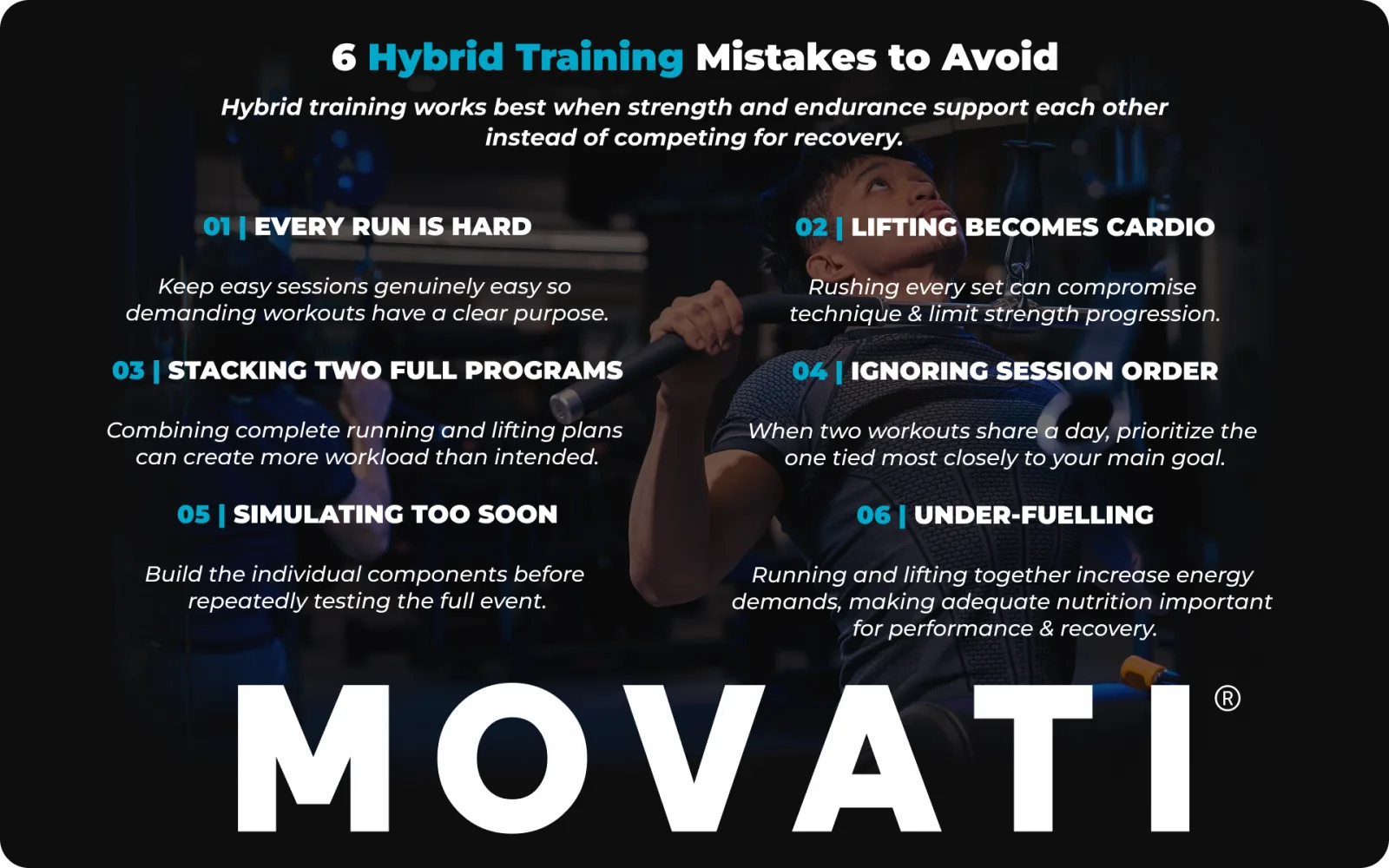
- Ignoring exercise order: Protect the session linked to your priority.
- Adding race simulations too soon: Build the components before repeatedly testing the whole.
- Under-fuelling: Combining disciplines increases energy demands; restrictive eating can impair performance and recovery.
How should you recover?
Sleep and adequate nutrition support adaptation. Include protein in regular meals and enough carbohydrate to fuel demanding running and lifting. Hydration needs vary with the person, environment, and workload, so practise a routine that fits your training rather than following a universal volume.
Rest days can include easy walking or mobility, but they should reduce stress. Persistent pain, unusual fatigue, or a sustained performance decline deserves attention. Modify training and seek qualified guidance when needed.
Build a plan in which both qualities can improve
Effective Hybrid Training is not a contest between running and lifting. Set a priority, count total hard sessions, separate competing demands where possible, and progress one major variable at a time. When the schedule respects recovery, endurance and strength can become complementary parts of the same capable body.
