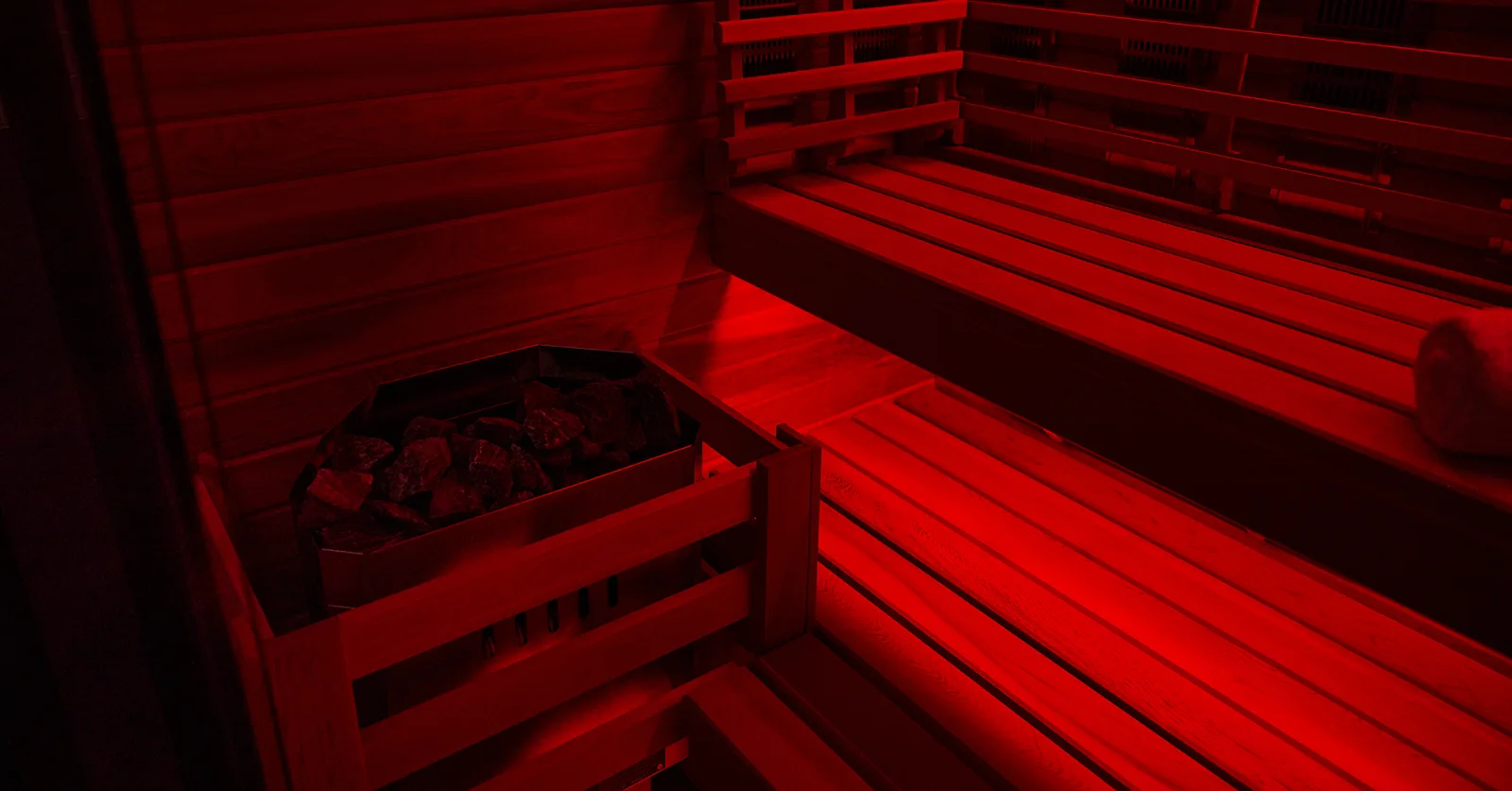
Feeling the buzz around infrared saunas lately? There is good reason they have become a popular addition to fitness and wellness routines.
An infrared sauna offers a warm, quiet environment where you can step away from training, slow down, and dedicate time to recovery. Unlike a traditional sauna, which primarily heats the air around you, an infrared one uses infrared energy to warm the body more directly while operating at a lower overall temperature.
At MOVATI, the infrared sauna gives members another way to recharge after a challenging workout or simply create intentional downtime within a busy week. It is not a replacement for sleep, hydration, balanced nutrition, movement, or rest, but it can be an enjoyable addition to a broader recovery routine.
What Is an Infrared Sauna?
An infrared sauna uses infrared energy to produce heat. Traditional saunas primarily heat the surrounding air, which then warms the body, while infrared saunas direct infrared energy toward the body and can therefore operate at lower ambient temperatures.
Infrared saunas temperatures commonly fall around 110 to 135°F, or approximately 43 to 57°C. For some people, that lower-temperature environment feels more comfortable than the intense air temperature associated with a traditional sauna while still providing a distinctly warm experience.
At MOVATI Albany, our sauna provides a calm, dry-heat environment where members can step away from their workout, slow down, and give themselves dedicated recovery time.
How Does an Infrared Sauna Feel?
Your experience will depend partly on how accustomed you are to heat. Rather than experiencing an immediate blast of very hot air, you may notice yourself warming gradually as the session continues.
As your body responds to the heat, you may begin to sweat more and notice your heart rate increase. Some people find infrared heat easier to tolerate because the surrounding air is generally cooler than in a traditional sauna, but the experience can still become intense.
This is especially important if you are using theinfrared sauna after a demanding workout, when your body may already be warm and your heart rate elevated. Start gradually, stay hydrated, and pay attention to how you feel throughout the session.
4 Ways an Infrared Sauna Can Support Your Recovery and Wellness Routine
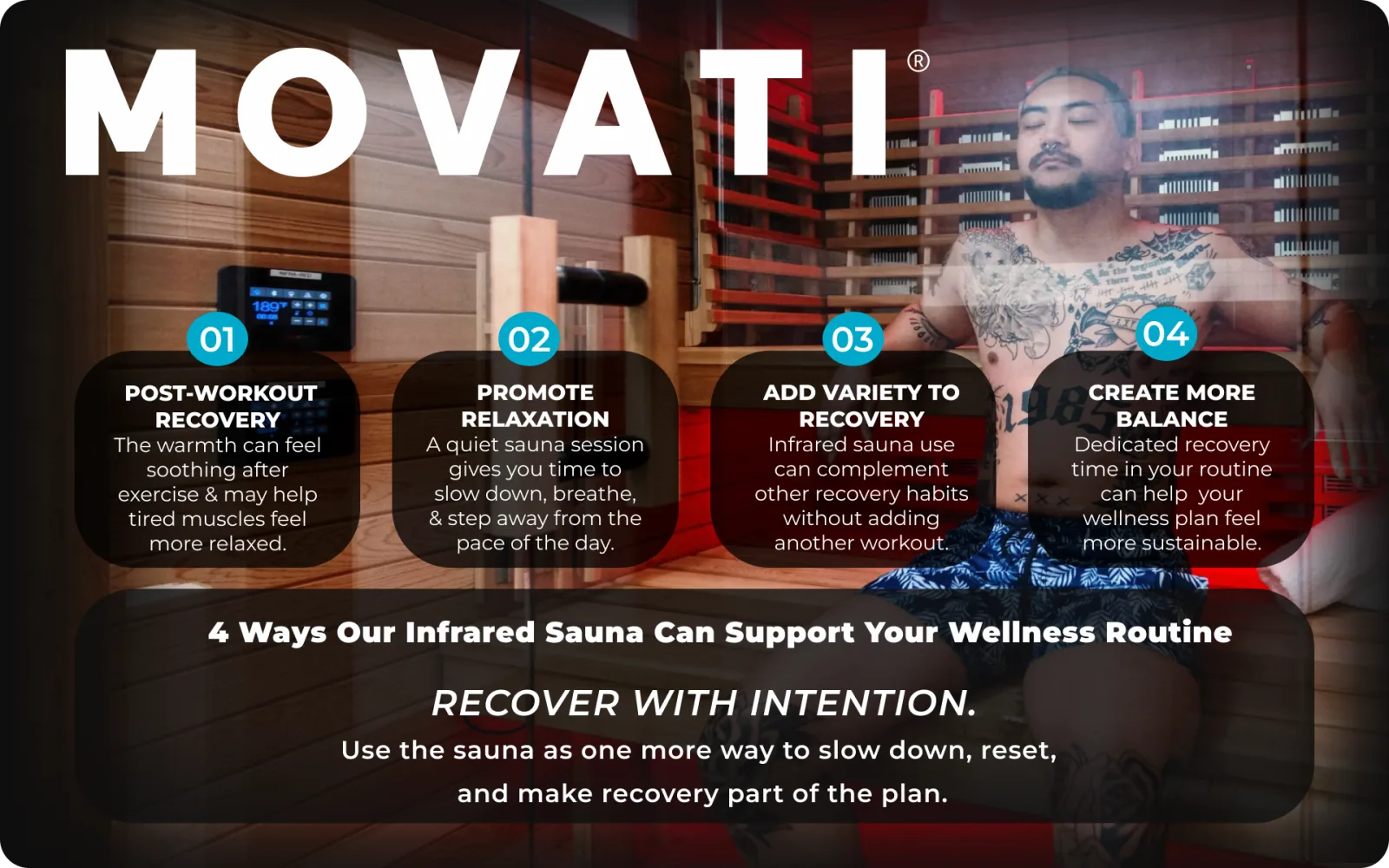
1. Create a Relaxing Post-Workout Transition
After strength training, running, cycling, or another demanding workout, it can be tempting to finish and immediately move on with the rest of your day. A sauna gives you a reason to slow down.
The warmth can feel comforting when your muscles are tired, while sitting quietly provides an opportunity for your breathing and overall effort level to settle after exercise.
Think of the sauna as part of the transition from training into recovery rather than something that needs to actively “fix” the workout you just completed.
2. Provide Soothing Warmth for Tired Muscles
Heat can feel relaxing after physical activity, particularly when the body feels tight or fatigued. Sitting in a warm environment may help tired muscles feel more comfortable and provide a general sense of relaxation.
That subjective feeling can be valuable even without making stronger claims that sauna use dramatically speeds muscle recovery or eliminates soreness.
If you are significantly sore or fatigued, adequate rest and recovery should still take priority.
3. Make Recovery Feel More Intentional
Recovery can easily become something you plan to do later and then never actually make time for. A sauna session creates a defined period where slowing down is the activity.
You can use that time to breathe, sit quietly, step away from notifications, and simply let your body transition out of workout mode.
For some people, that dedicated pause is one of the most useful aspects of the experience.
4. Add Variety to Your Wellness Routine
A balanced fitness routine does not need to revolve entirely around doing more.
Movement, sleep, hydration, nutrition, stress management, and rest all contribute to overall well-being. A sauna gives you another option for the quieter side of that routine.
You may use it after a workout, on a lighter training day, or simply when you want time to unwind. The goal is not to build the most complicated recovery routine possible. It is to find habits that feel useful enough to maintain.
What Does Heat Do to the Body?
When you are exposed to heat, your body responds by increasing blood flow toward the skin and producing sweat to help regulate body temperature. Your heart rate may also increase as your cardiovascular system responds to the warmer environment.
That is why a sauna can feel physically noticeable even though you are sitting still.
It is also why hydration and heat awareness matter. Heat exposure places additional demands on the body’s temperature-regulation systems, particularly when you have already been exercising.
Health Canada recommends staying hydrated during heat exposure and paying attention to symptoms such as dizziness, nausea, weakness, headache, unusual thirst, or rapid breathing and heartbeat. If those symptoms occur, move to a cooler environment and allow your body to recover.
Infrared Sauna and Stress
For many people, one of the most immediate benefits of a sauna is simply how the experience feels.
A warm, quiet environment creates an opportunity to step away from screens, work, notifications, and the constant feeling that there is another task waiting. You can sit quietly, focus on breathing, or simply enjoy a few minutes without needing to accomplish anything.
That mental pause can make the session feel like both physical downtime and a break from the pace of the day.
A sauna should not be presented as a treatment for stress or mental health conditions, but creating intentional periods of quiet and relaxation can still be a meaningful part of a broader wellness routine.
Can You Combine an Infrared Sauna and Cold Plunge?
Some people enjoy alternating heat and cold as part of their recovery routine. Moving from the sauna to a cold plunge creates a dramatic temperature contrast that can feel energizing and invigorating.
There is no requirement to combine the two, and more extreme temperature changes are not automatically better for recovery.
If you enjoy both experiences, approach them as optional wellness tools. Start conservatively, especially if you are new to heat or cold exposure, and give your body time to adjust between temperature changes.
Anyone with a medical condition that may affect their response to temperature extremes should speak with an appropriate healthcare professional before combining hot and cold exposure.
Tips for Your Infrared Sauna Session
Hydrate Before and After
Sauna use increases sweating, which means fluid loss increases during the session. Hydrate before you enter and replace fluids afterward.
Health Canada recommends drinking water before, during, and after physical activity in hot conditions and notes that dehydration can occur even before you feel noticeably thirsty.
If you have already completed a long or particularly sweaty workout, your hydration needs may be higher.
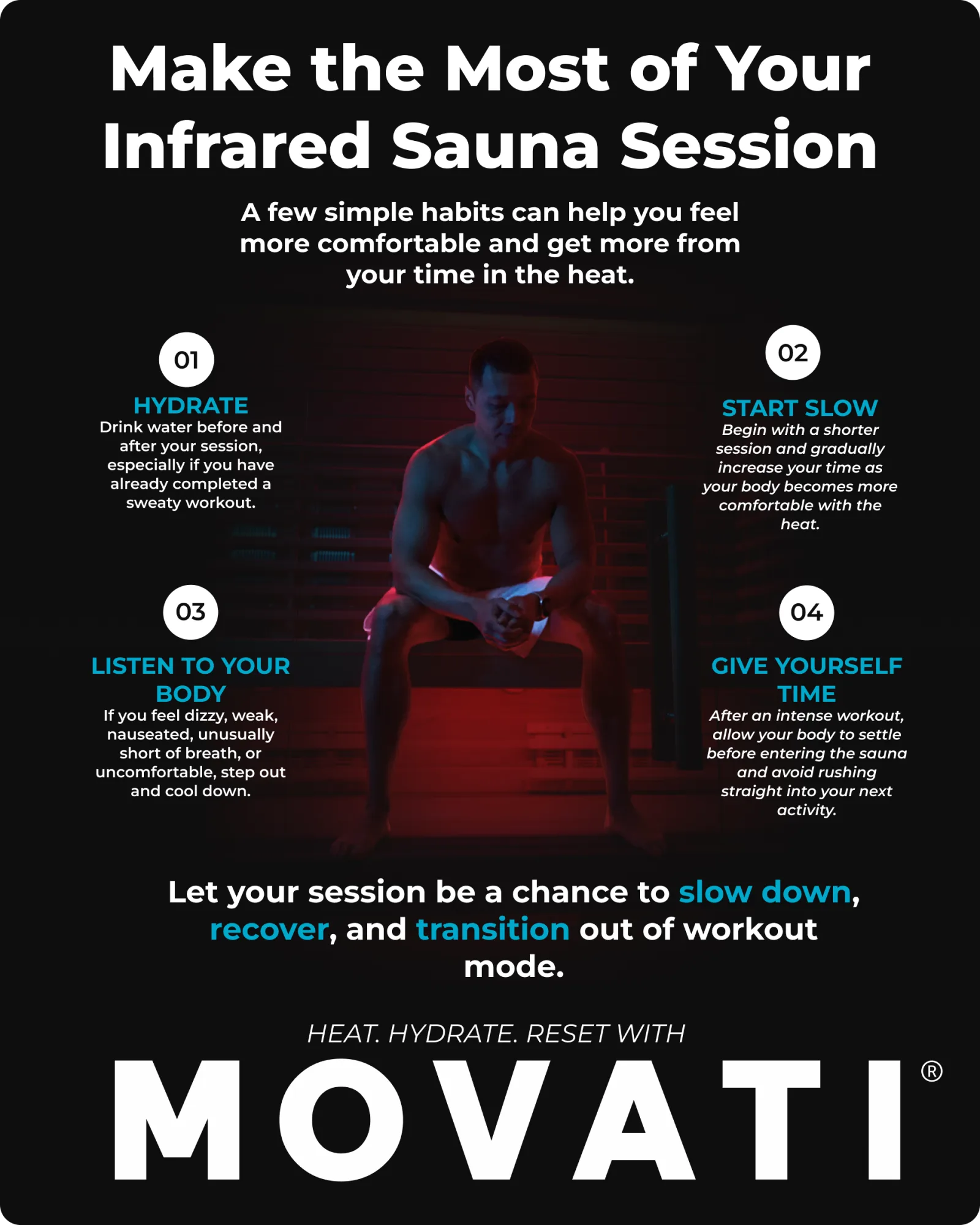
Start Slowly
If infrared sauna use is new to you, there is no need to begin with a long session.
Starting with approximately 10 to 15 minutes gives you an opportunity to see how your body responds to the heat before gradually increasing your time according to the equipment guidelines and your comfort.
Heat tolerance differs significantly from one person to another, so someone else’s preferred session length does not need to become yours.
Listen to Your Body
Do not treat staying in the sauna longer as a fitness challenge.
Health Canada lists symptoms such as dizziness or fainting, nausea, headache, extreme thirst, weakness, heavy sweating, and rapid breathing or heartbeat among signs associated with heat illness.
If you begin feeling dizzy, weak, nauseated, unusually short of breath, confused, faint, or simply unwell, leave the sauna and move somewhere cooler.
Give Yourself Time After Exercise
Immediately after an intense workout, your body may already be managing an elevated heart rate and body temperature. Allow yourself time to transition before adding additional heat exposure.
A few minutes of lower-intensity movement, hydration, and cooling down may feel more comfortable than moving directly from a very demanding workout into the sauna.
Keep Recovery Simple
Time in the sauna does not need to become part of an elaborate recovery system. Use it when it feels useful, hydrate appropriately, and continue prioritizing the fundamentals that support recovery throughout the rest of your week.
How Long Should You Use a Sauna?
There is no single perfect session length for everyone.
For someone new to sauna use, approximately 10 to 15 minutes can be a reasonable starting point for assessing heat tolerance. More experienced users may choose longer sessions depending on the posted guidelines for the specific equipment and how they feel.
The sauna itself commonly operates within a temperature range of approximately 43 to 57°C, or 110 to 135°F, so even a relatively short session still exposes the body to significant warmth.
Always follow MOVATI’s posted sauna guidelines, and leave the sauna if the experience becomes uncomfortable.
When Should You Use an Infrared Sauna?
There is no universal best time.
Some members may enjoy using the sauna after strength training or cardio as a way to transition into recovery. Others may prefer it on a lighter training day or during a visit when relaxation is the main goal.
If you have just finished a demanding workout, allow yourself time to cool down and hydrate before entering.
Ultimately, the best timing is the one that fits comfortably into your routine and allows you to use the sauna safely.
Who Should Be Careful With Infrared Sauna Use?
Heat exposure is not appropriate for everyone.
Health Canada notes that people with certain health conditions can be more vulnerable to the effects of heat, including those with heart conditions, breathing difficulties, hypertension, and kidney problems. Some medications can also affect the body’s response to heat or hydration.
Speak with a healthcare professional before using a infrared sauna if you have a condition that may affect your response to heat, are pregnant, take medications that influence hydration or blood pressure, or have previously been advised to avoid heat exposure.
Avoid sauna use if you are dehydrated, acutely ill, or have consumed alcohol.
If you experience chest discomfort, fainting, confusion, difficulty breathing, severe dizziness, or another concerning symptom, leave the sauna immediately and seek appropriate medical care.
What Should You Bring?
Preparing for an infrared sauna session can be simple. Bring water so you can hydrate before and after your session and wear whatever clothing is appropriate under MOVATI Albany’s facility guidelines.
You may also want to leave a few minutes afterward to cool down and rehydrate instead of immediately rushing into your next activity.
Recovery does not need to be rushed.
Personal Experience: Making Recovery Feel Intentional
One thing I’ve learned about recovery is that I am much more likely to prioritize it when I treat it as an actual part of my workout rather than something I will “get to later.” Setting aside even a short period of time after training to slow down, hydrate, stretch, or use heat makes the transition out of workout mode feel much more intentional.
The biggest benefit for me is often simply giving myself permission to stop moving for a few minutes and let recovery be part of the plan.
Experience the Infrared Sauna at MOVATI Albany
At MOVATI Albany, recovery does not have to end when your workout does. Our sauna gives members another way to build relaxation and intentional downtime into their wellness routine, whether that means unwinding after strength training, slowing down after cardio, or simply setting aside time to reset.
Sauna use should not replace the foundations of a healthy recovery routine. Sleep, hydration, balanced nutrition, appropriate movement, and rest continue to matter most.
Instead, think of this sauna as one more option you can use when warmth, quiet, and dedicated recovery time sound exactly like what you need.
Recharge. Recover. Reset.
Experience the Benefits at MOVATI Albany
At MOVATI Albany, we’re bringing next-level recovery and relaxation to your wellness routine. Whether you’re looking to relieve sore muscles, manage stress, or simply take time for yourself, infrared sauna therapy offers a natural way to restore balance from the inside out.
Recharge more. Recover better. Exclusively at MOVATI Albany.
Story Credit: Milad Emadi, Director, Performance Coaching, MOVATI Athletic
*MOVATI’s trainers and/or consultants are not health care providers, and do not provide any medical diagnosis, treatment or advice, and any trainer and/or consultant tips are not intended to replace the advice of a health care professional.
Join MOVATI Today and get Started with this Special Offer. Already a member? Get customized programming, experience the infrared sauna, and improve your mobility and recovery by consulting with one of our Performance Coaches in club and complete your Game Plan Session or join seminars with one of our fitness professionals.
