

Healthy eating habits are the foundation of good health. Every meal and snack provides an opportunity to fuel your body with the nutrients it needs to support physical performance, mental focus, immune function, and long-term well-being. While nutrition advice often changes with the latest trends, the fundamentals of healthy eating have remained remarkably consistent.
Developing sustainable eating habits isn’t about following strict rules or eliminating entire food groups. Instead, it’s about making consistent choices that prioritize nutrient-rich foods, balanced meals, and moderation. Small improvements made over time often produce better results than dramatic dietary changes that are difficult to maintain.
Why Healthy Eating Habits Matter
The foods you eat affect nearly every system in the body. Good nutrition provides the energy needed for daily activities, supports muscle recovery, regulates hormones, strengthens the immune system, and helps maintain healthy bones, organs, and tissues.
Research consistently shows that healthy eating is associated with a lower risk of many chronic conditions, including
- Heart disease
- Type 2 diabetes
- High blood pressure
- Certain cancers
- Obesity
- Osteoporosis
Nutrition also influences cognitive performance. A balanced diet rich in whole foods helps support concentration, memory, and mood while reducing large fluctuations in blood sugar that can contribute to fatigue and decreased focus.
Understanding the Basics of Good Nutrition
A nutritious eating pattern includes a variety of foods that provide the body with essential macronutrients and micronutrients.
Carbohydrates: Your Primary Energy Source
Carbohydrates supply glucose, the body’s preferred fuel for the brain and muscles. Choosing high-quality carbohydrates also increases fiber intake, which supports digestive health and helps regulate blood sugar.
Healthy carbohydrate sources include:
- Whole grains
- Oats
- Brown rice
- Sweet potatoes
- Beans and lentils
- Fruits
- Vegetables
Highly processed carbohydrates and foods high in added sugars can still fit occasionally, but they should not make up the majority of your diet.
Protein: Supporting Growth and Recovery
Protein plays a vital role in building and repairing muscle, producing enzymes and hormones, and supporting immune function.
Good protein choices include:
- Fish
- Poultry
- Lean beef
- Eggs
- Greek yogurt
- Cottage cheese
- Tofu
- Beans
- Lentils
- Edamame
Distributing protein throughout the day may be more beneficial than consuming most of it in a single meal, particularly for active adults.
Healthy Fats: Essential for Overall Health
Dietary fat is often misunderstood. Healthy fats support hormone production, brain function, nutrient absorption, and heart health.
Focus on sources such as:
- Avocados
- Olive oil
- Nuts
- Seeds
- Natural nut butters
- Fatty fish like salmon, trout, and sardines
Limiting foods high in trans fats and reducing excessive saturated fat intake can contribute to better cardiovascular health.
Don’t Overlook Vitamins and Minerals
Micronutrients are required in smaller amounts but are essential for normal body function.
Important vitamins and minerals help support:
- Bone health through calcium and vitamin D
- Oxygen transport through iron
- Muscle and nerve function through magnesium and potassium
- Immune health through vitamins A, C, and zinc
Eating a wide variety of colorful fruits and vegetables is one of the easiest ways to increase micronutrient intake naturally.
Simple Strategies for Building Healthier Eating Habits
Creating lasting change is often easier when focusing on realistic, repeatable behaviors rather than strict dietary rules.
Build Balanced Meals
Aim to include several food groups at each meal.
A balanced plate generally includes:
- Half vegetables and fruit
- One-quarter lean protein
- One-quarter whole grains or other high-fiber carbohydrates
- A serving of healthy fat
This approach naturally improves nutrient intake while promoting fullness and stable energy.
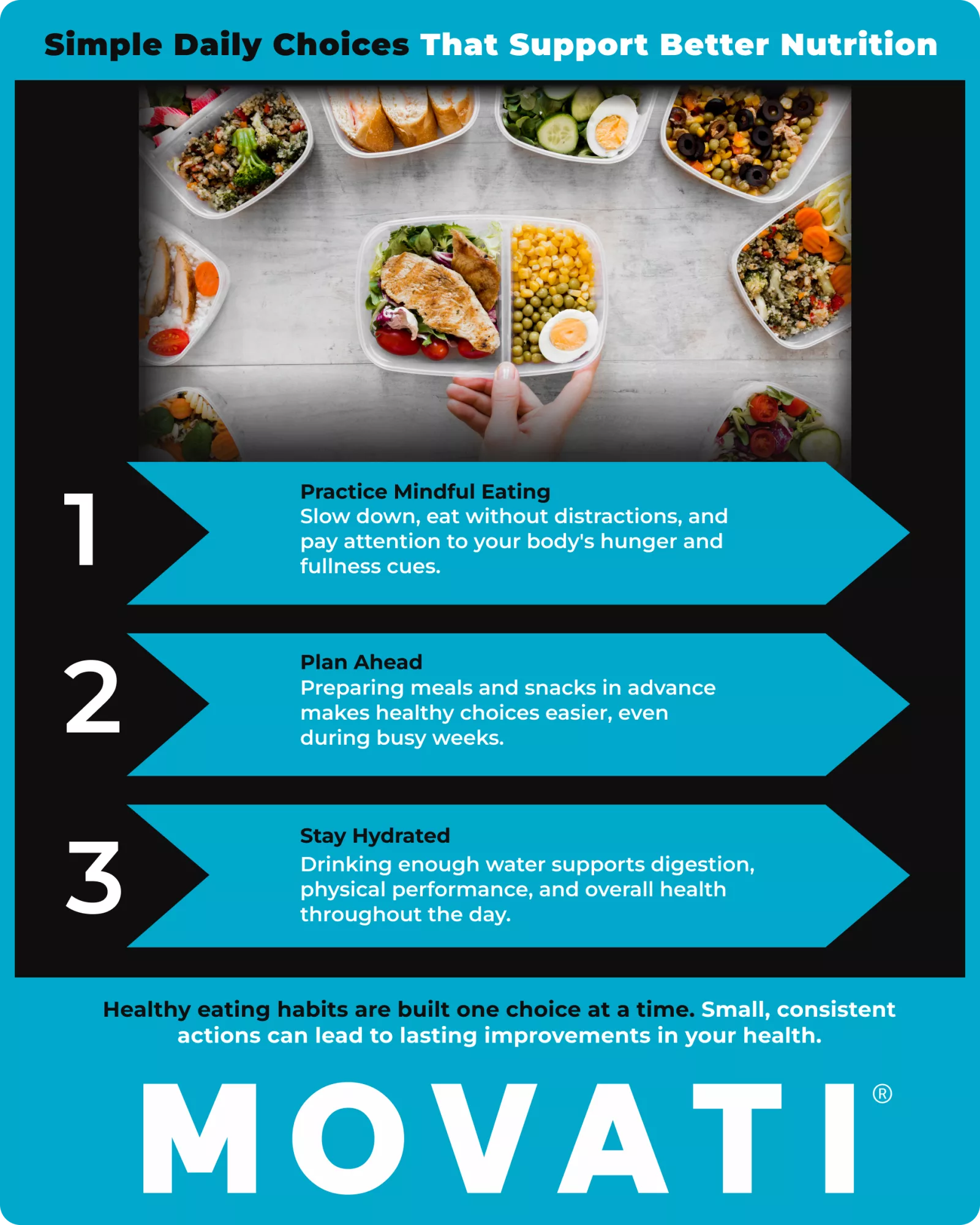
Plan Ahead
Meal planning removes much of the guesswork from healthy eating.
Simple planning can help you:
- Reduce reliance on takeout
- Save time during busy weeks
- Control portion sizes
- Lower food waste
- Make healthier choices consistently
Preparing ingredients in advance, such as washing vegetables or cooking proteins in batches, makes nutritious meals easier to assemble.
Cook More Meals at Home
Restaurant meals are often higher in sodium, calories, and added fats than home-cooked meals.
Preparing food yourself allows you to:
- Choose higher-quality ingredients
- Control cooking methods
- Adjust portion sizes
- Experiment with healthier recipes
Cooking doesn’t have to be complicated. Even simple meals built around lean protein, vegetables, and whole grains can provide excellent nutrition.
Practice Mindful Eating
Mindful eating encourages paying attention to hunger, fullness, and the overall eating experience.
Helpful habits include:
- Eating without distractions
- Slowing down between bites
- Chewing thoroughly
- Recognizing true hunger versus emotional eating
- Stopping when comfortably satisfied rather than overly full
Many people find that eating more slowly improves satisfaction while naturally helping regulate portion sizes.
Stay Hydrated
Hydration is an important but often overlooked part of healthy nutrition.
Water supports:
- Digestion
- Nutrient transport
- Temperature regulation
- Joint health
- Physical performance
Even mild dehydration can contribute to fatigue, headaches, and reduced concentration. Water should be the primary beverage throughout the day, while sugary drinks are best consumed sparingly.
Making Healthy Choices When Life Gets Busy
Busy schedules often make convenience foods appealing. Fortunately, healthy eating doesn’t require preparing every meal from scratch.
Nutritious options for busy days include:
- Fresh fruit
- Mixed nuts
- Greek yogurt
- Pre-cut vegetables
- Hummus
- Hard-boiled eggs
- Whole grain wraps
- Rotisserie chicken
- Frozen vegetables
- Low-sodium canned beans
Keeping healthy foods readily available reduces the temptation to rely on highly processed alternatives.
Building Healthier Eating Habits That Last
Sustainable nutrition focuses on consistency rather than perfection.
Helpful long-term habits include:
- Eating regular meals instead of skipping them
- Including vegetables with most meals
- Choosing whole grains more often than refined grains
- Reading nutrition labels when appropriate
- Limiting highly processed foods without eliminating favorite treats
- Allowing flexibility for special occasions
A healthy lifestyle leaves room for enjoyment. Foods traditionally considered indulgences can still fit within an overall balanced eating pattern when enjoyed in moderation.
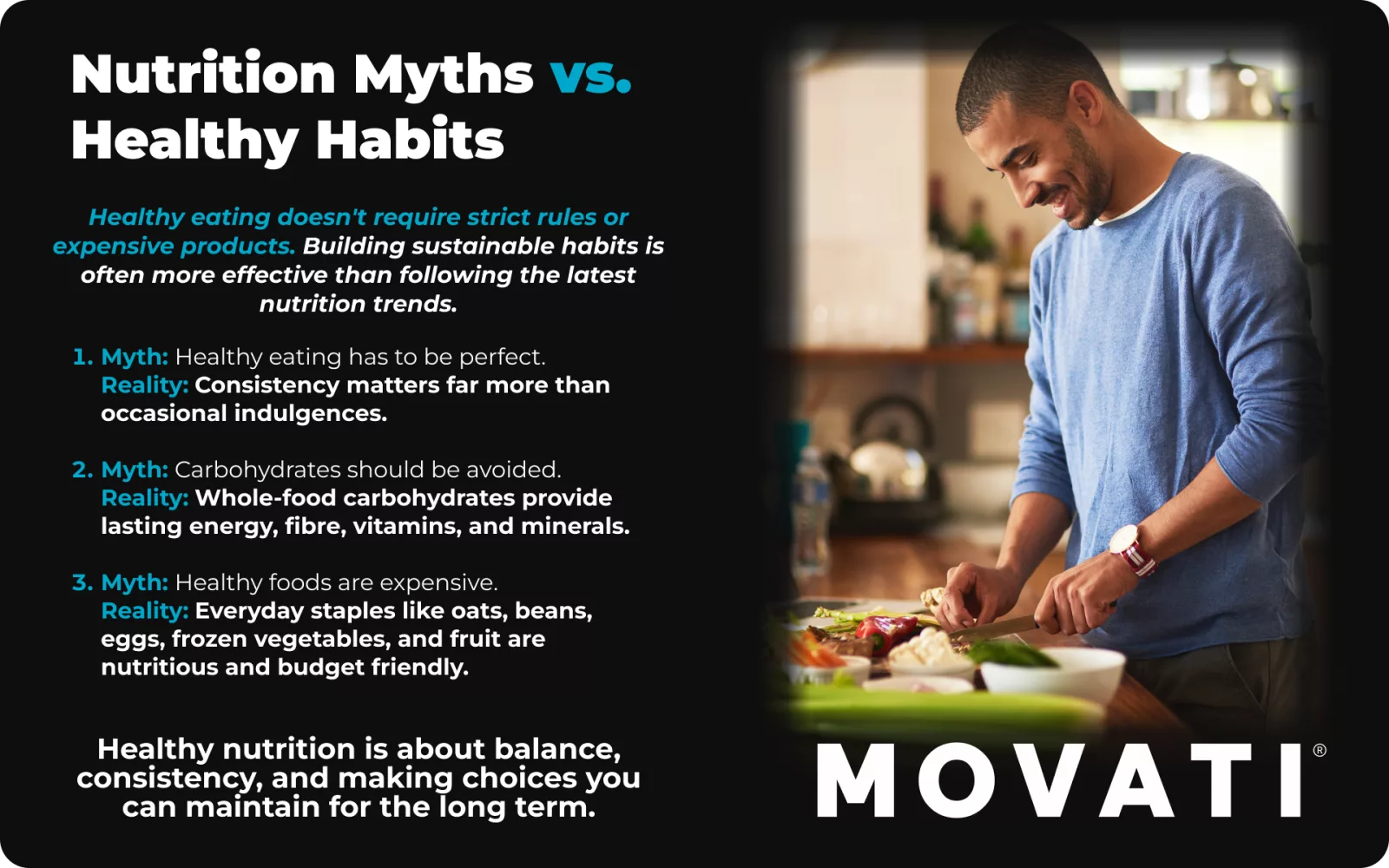
Common Nutrition Myths
Nutrition misinformation is common. A few evidence-based facts can help simplify healthy eating.
Myth: Carbohydrates are unhealthy.
Fact: Whole-food carbohydrates provide fiber, vitamins, minerals, and long-lasting energy.
Myth: Fat should be avoided.
Fact: Healthy fats are essential for hormone production, brain function, and heart health.
Myth: You need expensive superfoods to eat well.
Fact: Everyday foods like oats, beans, frozen vegetables, eggs, and apples are highly nutritious and budget friendly.
Myth: Healthy eating requires perfection.
Fact: Long-term consistency matters far more than occasional indulgences.
The Bottom Line
Building healthy eating habits is a long-term investment in your physical and mental well-being. By choosing whole foods more often, eating balanced meals, staying hydrated, and developing routines that fit your lifestyle, you create a nutritional foundation that supports better energy, improved performance, and overall health.
Rather than chasing the latest diet trend, focus on simple habits you can maintain for years. Small, consistent improvements often lead to the greatest long-term results, helping you build a healthier relationship with food while supporting every aspect of your well-being.
