Start with the two essential patterns
Hamstring exercises should train the muscles in their two main roles: extending the hip and bending the knee. Combining a hinge with a curl pattern creates a more complete approach than relying on one movement alone.
Hip hinge
Romanian deadlifts, good mornings and cable pull-throughs train the hamstrings as the hips move backward. Keep the spine steady, soften the knees and stop when you reach the end of the range you can control.
Knee flexion
Seated, lying and stability-ball curls train the hamstrings by bending the knee. Keep the hips stable and avoid using momentum to finish repetitions.
Beginner options
Bridge walkout
Begin in a glute bridge, then take small heel steps away from the body and back. Keep the range short until you can prevent the hips from dropping.
Light Romanian deadlift
Hold dumbbells close to the thighs and push the hips back. Think about closing a car door behind you rather than squatting straight down.
Machine leg curl
Set the machine to align comfortably with your knee and move through a pain-free range. Control both the curl and return.
Intermediate progressions
Single-leg Romanian deadlift
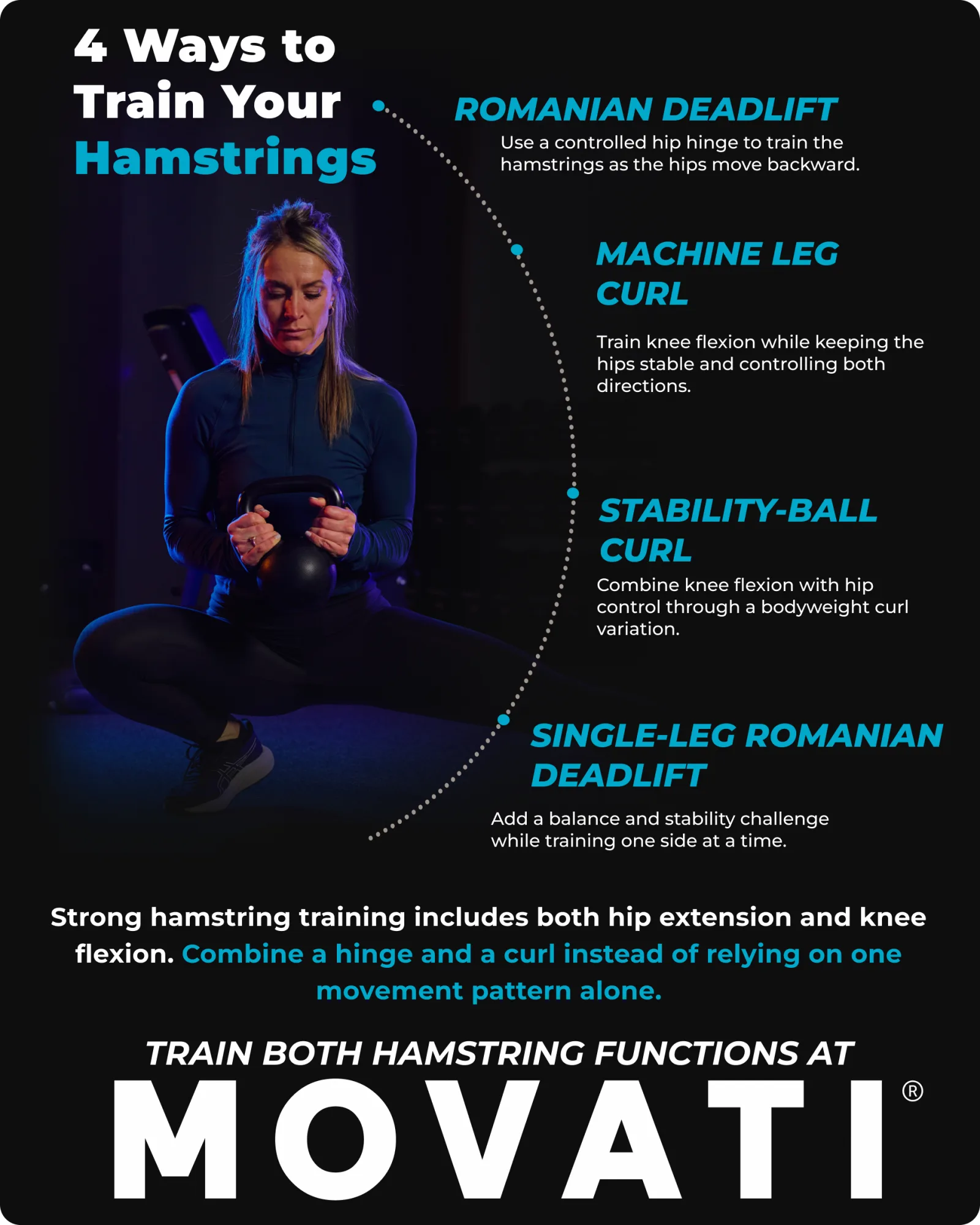
Use a wall or rack for balance if needed. Square the hips toward the floor and move only as far as you can without rotating.
Stability-ball curl
Lift the hips, pull the ball toward you and extend the legs slowly. Reduce the range if the lower back begins to take over.
Barbell Romanian deadlift
Add load only after the hinge pattern is consistent. Keep the bar close and end the repetition before spinal position changes.
Advanced options
Slider curl
With heels on sliders, extend the legs from a bridge and pull them back in. Begin with partial repetitions or alternate legs to manage the difficulty.
Nordic curl progression
Anchor the ankles securely and lower forward under control, using the hands to assist. This demanding movement should be progressed gradually.
How to program hamstring training
Choose one hinge and one curl for two or three sets each. Train once or twice per week, accounting for other lower-body work, sport and running. Beginners can start with moderate effort and focus on repeating the same technique.
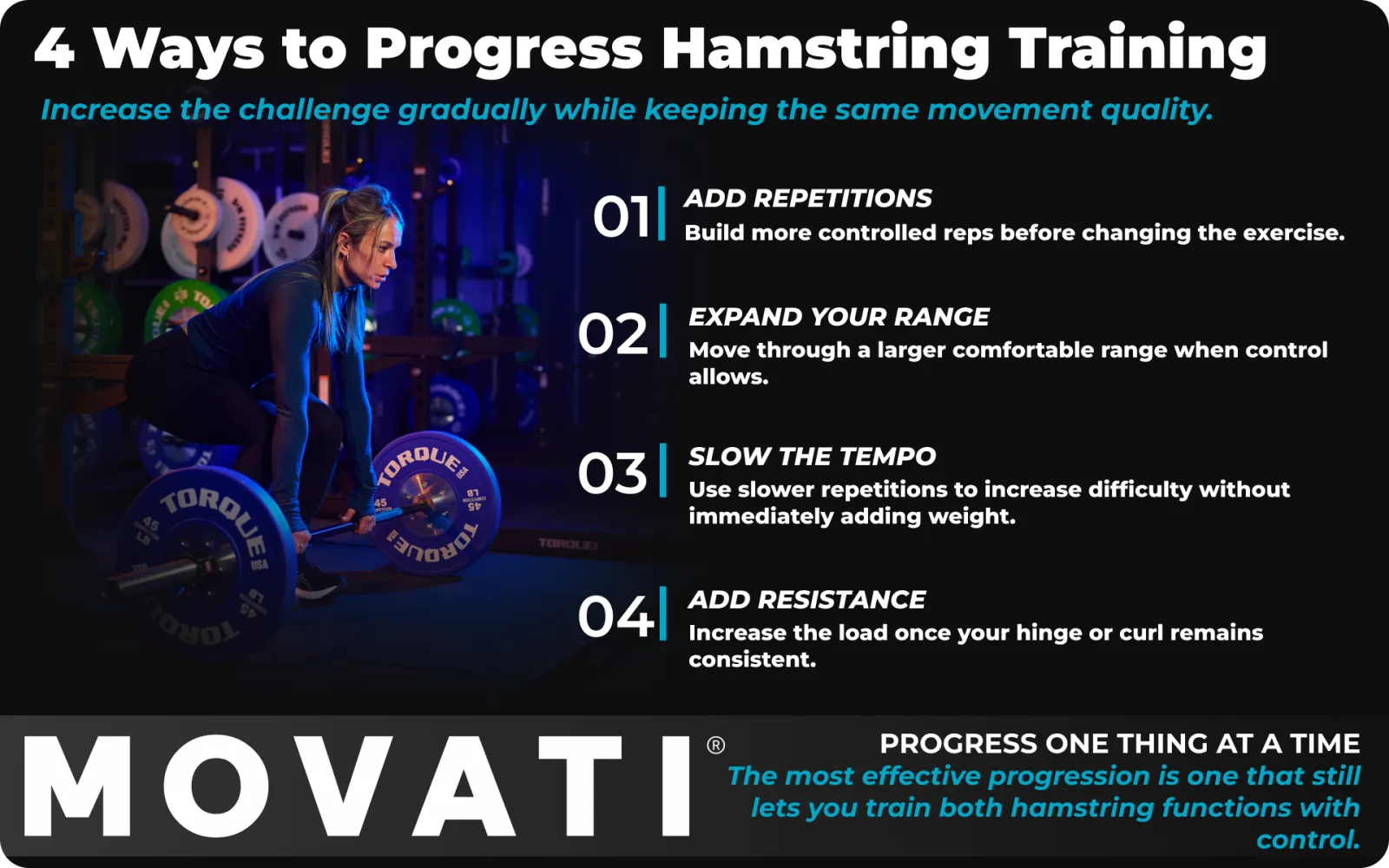
Progress one element at a time: repetitions, range, tempo or resistance. Sudden pain, bruising or a pulling sensation during activity may indicate an injury and should not be trained through.
The most effective plan is not the most advanced one. It is the plan that lets you train both hamstring functions with control, recover and return stronger.
