Best Pre Run Snacks: What to Eat Before Your Run
What you eat before running can influence your energy, comfort, and overall experience during your workout. While there isn’t one food that works for every runner, the best pre run snacks can provide useful energy while giving your body enough time to digest before you start moving.
Your ideal choice can depend on when you’re eating, how long you’re planning to run, and how your body responds to different foods. Rather than searching for one perfect snack, understanding the basics of pre-run nutrition can help you find an approach that works for your training and your body.
Why Does Pre-Run Nutrition Matter?
Carbohydrates are an important source of energy during exercise, which is why carbohydrate-rich foods are commonly included in pre-run snacks. However, what you eat is only part of the equation. The amount you eat and how much time you have to digest it can also affect how comfortable you feel once you start running.
If you’re eating shortly before a run, a smaller and simpler snack may be more comfortable than something heavy. With a couple of hours before exercising, you have more flexibility to include protein, fat, and fibre alongside carbohydrates. SportMedBC recommends carbohydrate-rich foods before exercise and notes that small amounts of protein can be included when eating two to four hours beforehand. Your needs can also change depending on the workout, as fueling for a longer or more intense training session may look different from preparing for a short, easy jog.
Best Pre Run Snacks Based on Timing
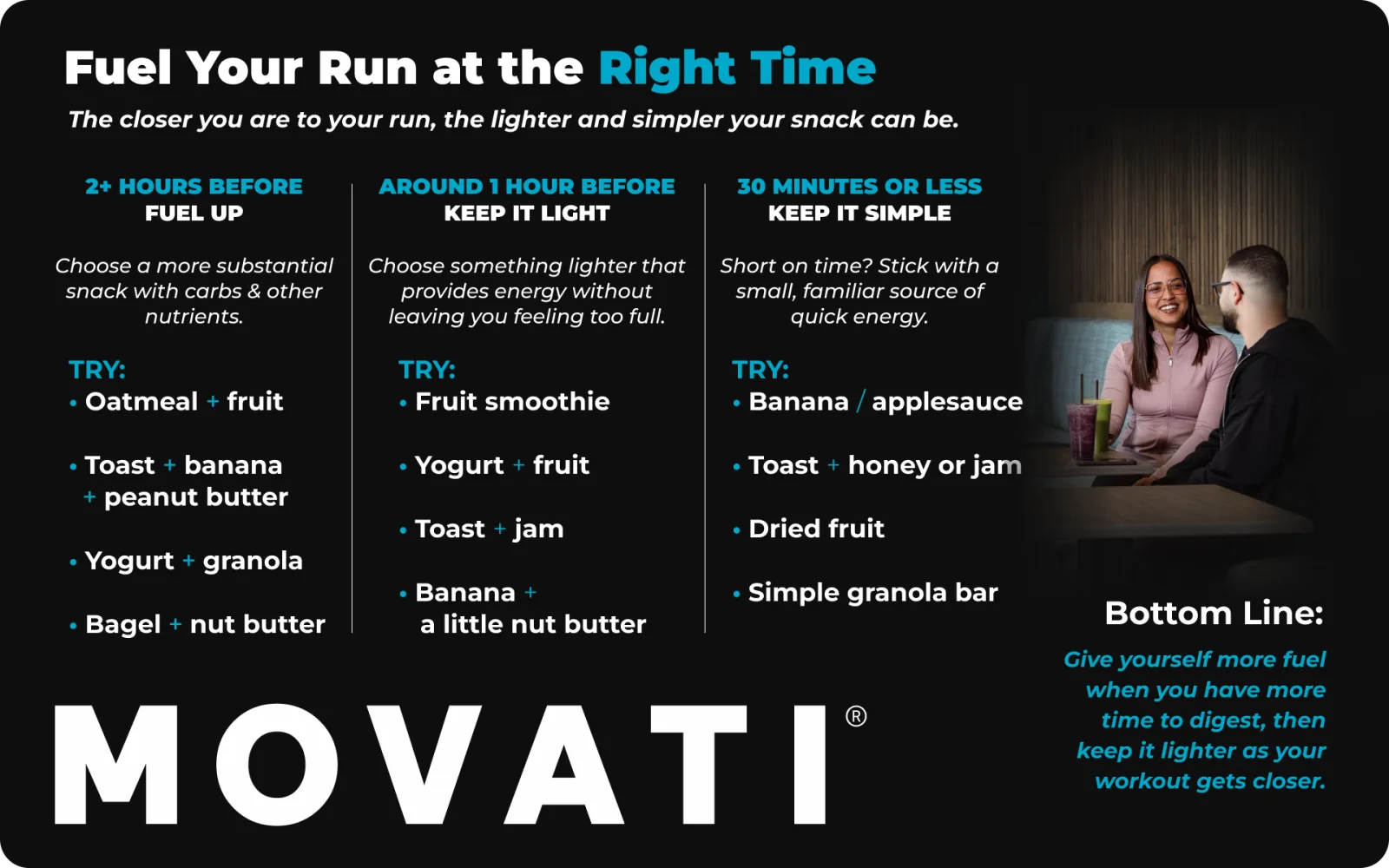
One of the easiest ways to narrow down your options is to consider how much time you have before running. Generally, the further away your workout is, the more time your body has to digest a substantial snack.
Two or More Hours Before Running
With a couple of hours available for digestion, you can choose something more filling. Whole-grain toast with banana and peanut butter, oatmeal topped with fruit, yogurt with granola, or a bagel with nut butter are all options that combine carbohydrates with other nutrients.
Having more time before your run gives your body an opportunity to digest these foods before you start moving, making this a good window for a more substantial snack.
Around One Hour Before Running
As your workout gets closer, you may prefer something lighter. A fruit-based smoothie can be a convenient option, while yogurt with fruit, toast with jam, or a banana with a small amount of nut butter are other possibilities.
The goal is to get some energy without eating so much that you feel overly full when it’s time to run.
30 Minutes or Less Before Running
If you’re almost ready to head out, keeping things small and simple may be more comfortable. This is where quick, convenient foods can be especially useful. Some options to consider include:
- A banana or applesauce
- A small piece of toast with honey or jam
- A handful of dried fruit
- A simple granola bar
Whatever you choose, stick with foods you already know work for you. If you’d like something you can prepare at home, MOVATI’s pre- and post-run snack recipes include options for different timing windows, including a peanut butter banana sandwich, chocolate banana smoothie, and homemade granola bar.
Do You Need a Snack Before Every Run?
Not every run requires the same fueling strategy. If you’ve eaten recently and you’re heading out for a short, comfortable run, you may already feel adequately fueled without adding another snack. If several hours have passed since your last meal, you’re hungry, or you’re preparing for a longer or more demanding workout, eating beforehand may become more important.
Instead of automatically reaching for a snack, consider when you last ate, how hungry you currently feel, how long you’re planning to run, and how demanding the workout will be. Paying attention to how you felt during similar runs can also help you determine whether eating beforehand works better for you.
Should You Eat Differently Before a Longer Run?
A short jog and a long training run place different demands on your body, so your approach to fueling may change. The best pre run snacks for longer sessions may be more substantial and eaten further in advance to allow more time for digestion. According to the Canadian Sport Institute Ontario, the body stores about 90 minutes’ worth of carbohydrate energy, and athletes completing sessions longer than one hour may need to pay closer attention to carbohydrate intake. Use your regular training sessions to experiment with different foods and timing, especially if you’re preparing for a race, so you already know what works well for your body.
What If Eating Before Running Upsets Your Stomach?
Digestive discomfort is one reason pre-run nutrition is so individual. If eating before running regularly leaves you feeling uncomfortable, try changing one factor at a time. You could eat earlier, reduce your portion size, or choose simpler foods as your workout gets closer.
Large meals and foods particularly high in fat or fibre take longer to digest and may be less comfortable for some runners immediately before exercise. Individual tolerance matters as well. Keeping track of what you ate, when you ate it, and how you felt during your run can help you identify patterns and develop a routine that works for you.
Don’t Forget About Hydration
Food is only one part of preparing for a run. Staying hydrated throughout the day can help ensure you’re not trying to make up for a lack of fluids immediately before exercising. Your individual hydration needs can vary depending on the length and intensity of your run, temperature and humidity, and how much you typically sweat.
Longer workouts or running in warmer conditions may require additional attention to fluids and electrolytes. Just like food, your hydration strategy is something you can adjust during regular training based on how your body responds.
Frequently Asked Questions
How can I tell if my pre-run snack is working for me?
A good pre-run snack should help you feel energized without leaving you overly full or uncomfortable once you start moving. Since digestion and energy needs vary from person to person, pay attention to how you feel during your training rather than assuming a particular food will work for everyone.
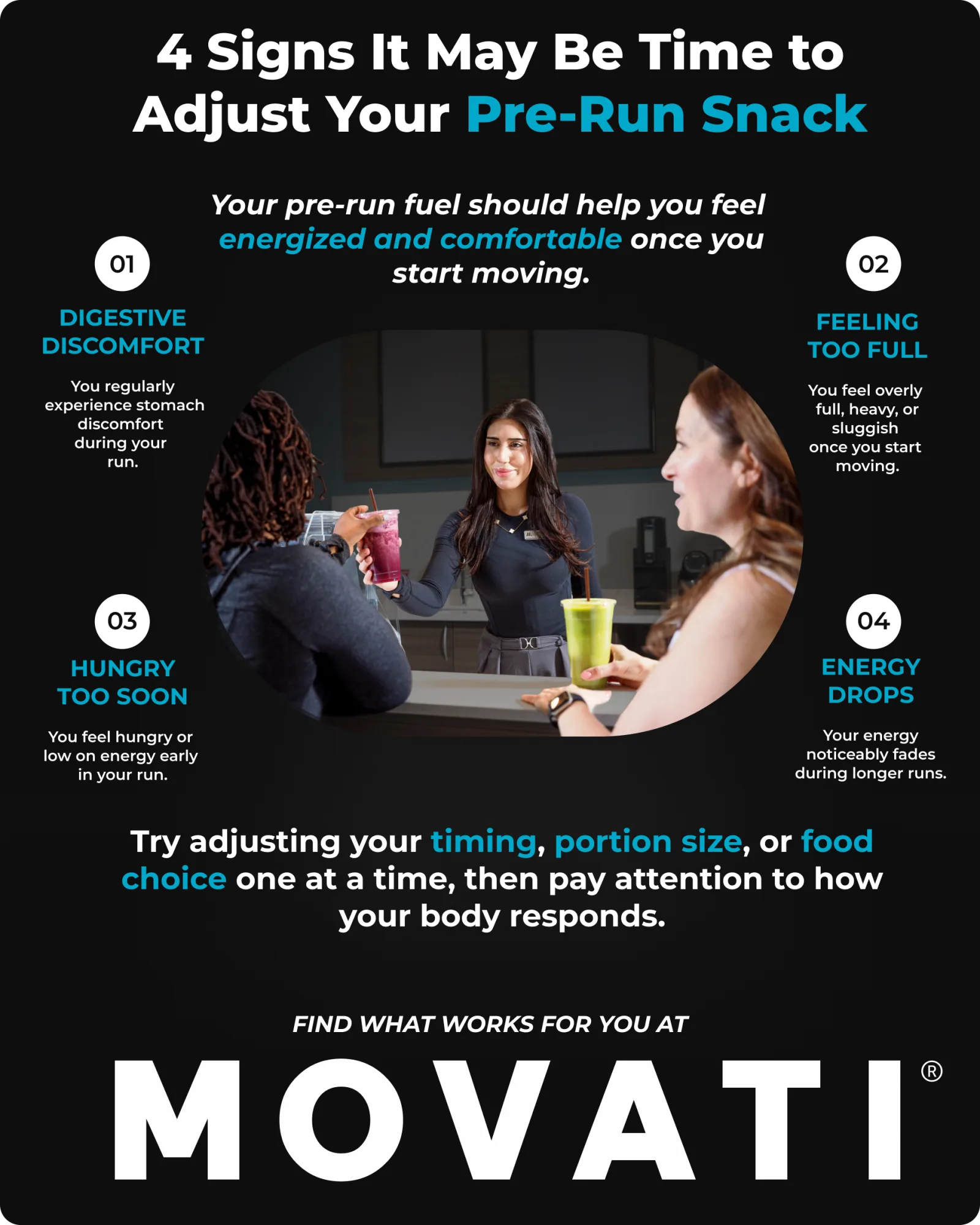
Signs you may want to adjust your pre-run routine include:
- Feeling hungry or low on energy early in your run
- Feeling overly full or sluggish after starting
- Experiencing recurring digestive discomfort
- Finding your energy drops noticeably on longer runs
If something doesn’t feel right, experiment with the timing, portion size, or type of food one at a time. This can make it easier to figure out what actually makes a difference.
Is a banana good before a run?
A banana can be a convenient option because it provides carbohydrates and requires little preparation. It can be eaten by itself when you’re short on time or paired with something like peanut butter when you have longer to digest before exercising.
Is it okay to run on an empty stomach?
Some people are comfortable completing shorter or easier runs without eating immediately beforehand, particularly if they’ve eaten recently. Others find they have better energy after a snack. Consider when you last ate, how demanding your workout will be, and how your body typically responds.
How long should you wait to run after eating?
There isn’t one waiting period that works for everyone. A small snack may be comfortable relatively close to your workout, while a larger meal will generally need more time to digest. The amount and type of food you eat and your individual digestion all play a role, so regular training is a good opportunity to find the timing that works for you.
Find the Right Pre-Run Fuel for You
Choosing the right pre-run fuel ultimately comes down to your workout, timing, and personal preferences. You may prefer a more substantial snack when you have a few hours before exercising and something simpler when you’re heading out the door. Pay attention to how your body responds and experiment with different foods, portions, and timing during your training. Once you understand what works consistently for you, choosing the best pre run snacks becomes a much easier part of preparing for your next run.
*MOVATI’s trainers and/or consultants are not health care providers, and do not provide any medical diagnosis, treatment or advice, and any trainer and/or consultant tips are not intended to replace the advice of a health care professional.
