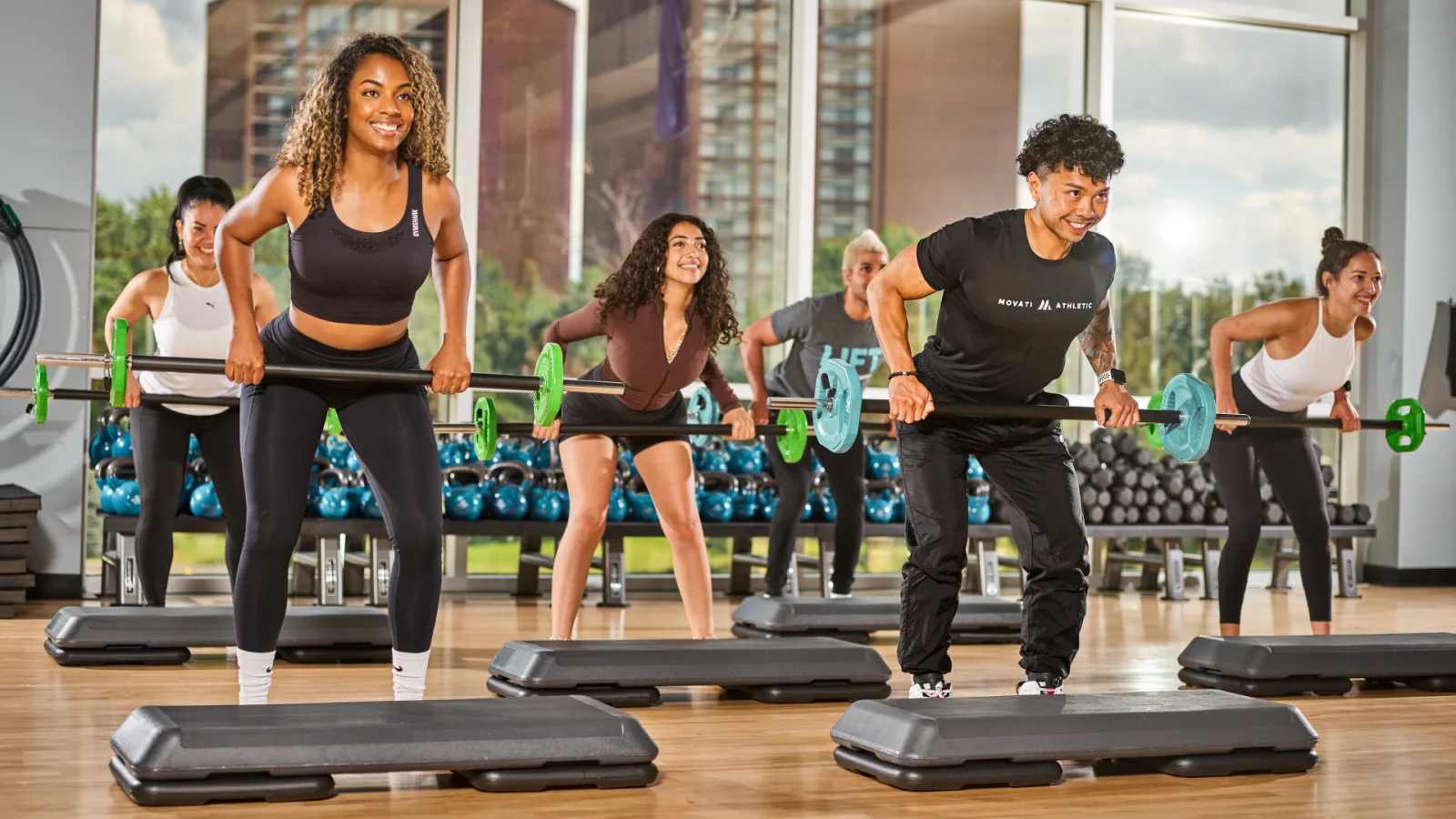
A balanced leg and back workout trains the lower body and pulling muscles without asking the lower back to stabilize every exercise. The key is to distribute effort across squat, hinge, single-leg, vertical-pull and horizontal-pull patterns while managing fatigue.
Build the session around movement patterns
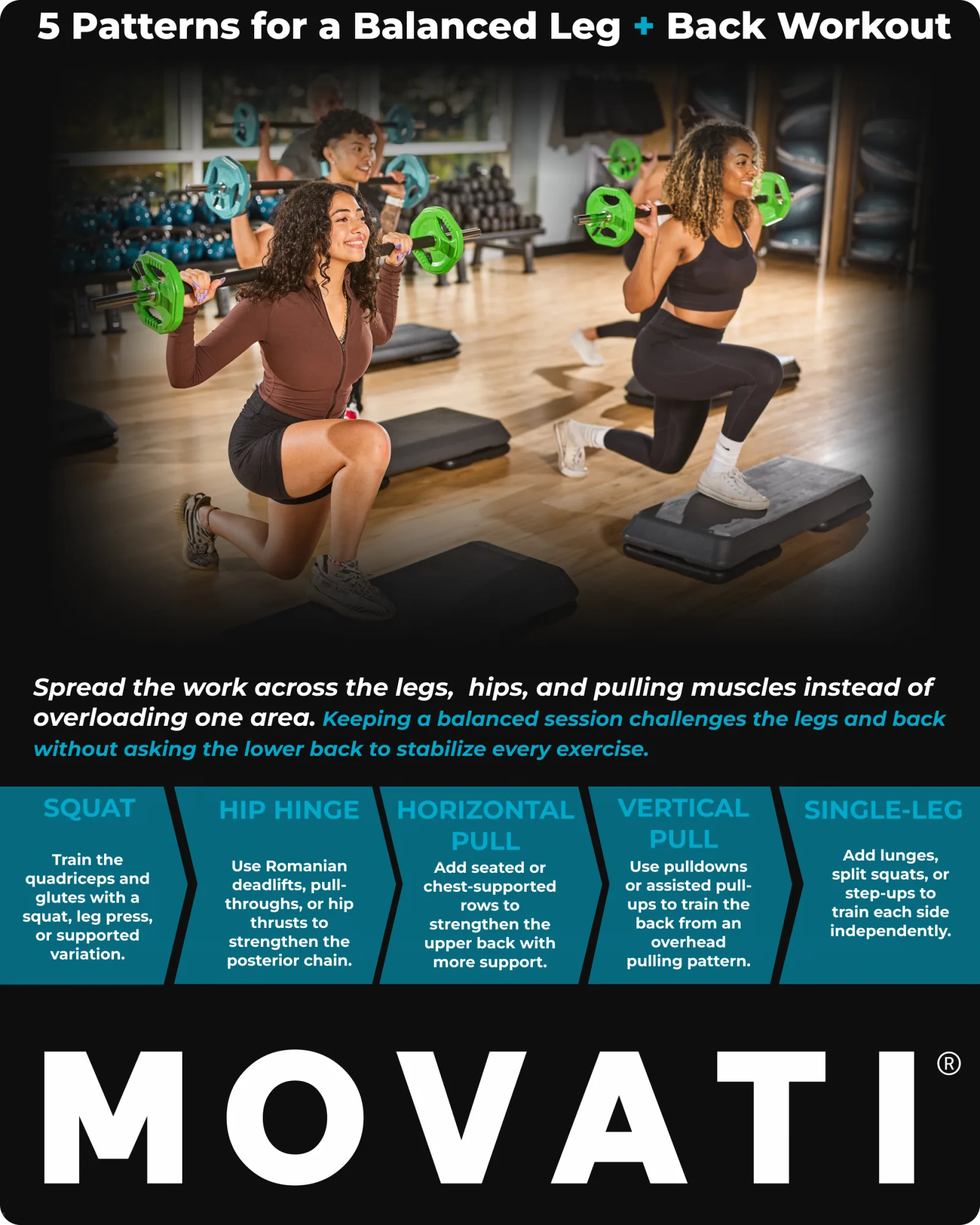
Choose one exercise from each major category rather than collecting several variations that do the same job.
- Squat: goblet squat, leg press or box squat
- Hip hinge: Romanian deadlift, cable pull-through or hip thrust
- Single-leg: reverse lunge, split squat or step-up
- Vertical pull: lat pulldown or assisted pull-up
- Horizontal pull: seated cable row or chest-supported row
Chest-supported and seated exercises can reduce the amount of continuous bracing required from the lower back, which is useful after a demanding hinge.
Put demanding exercises first
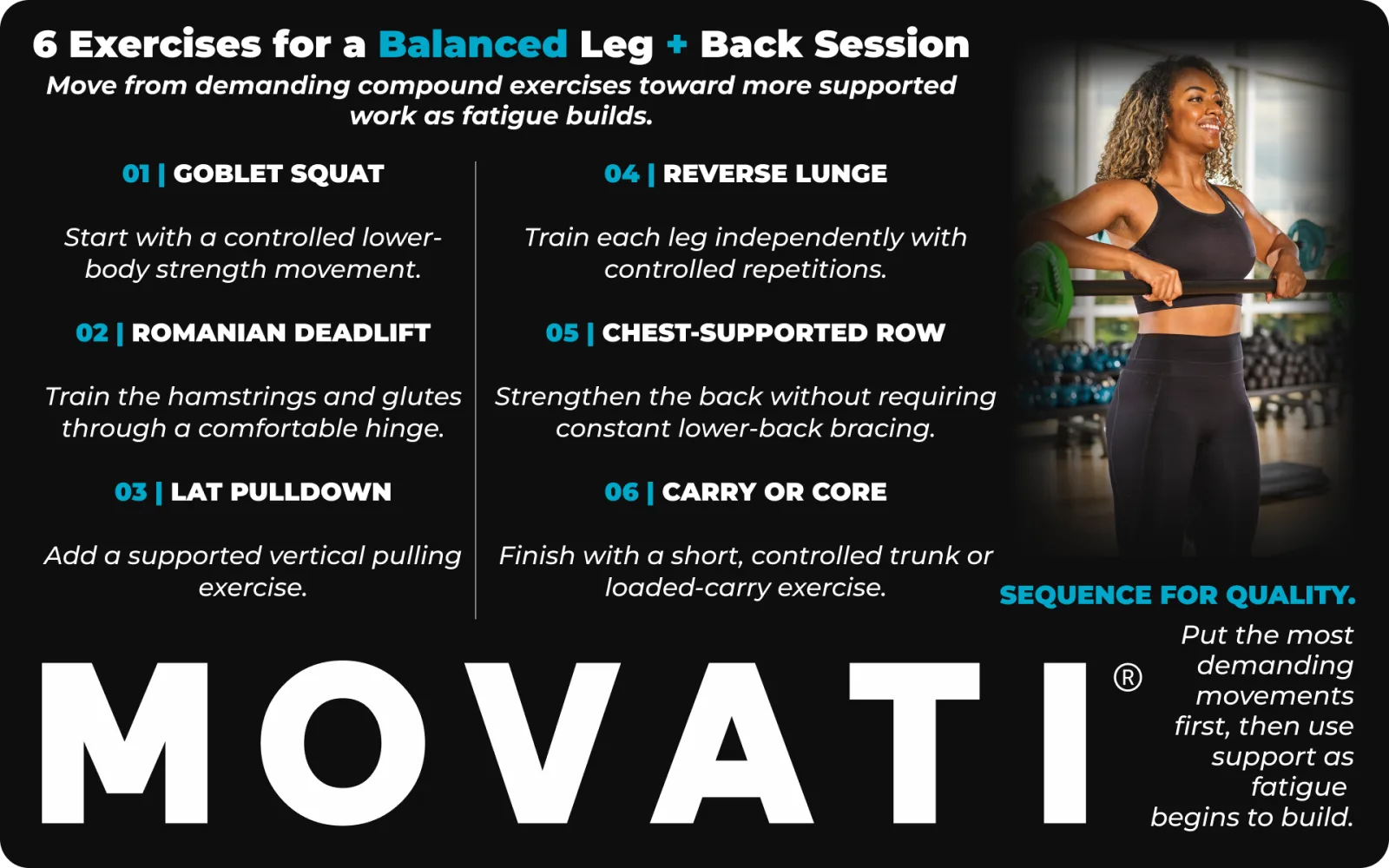
Begin with the movement that requires the most skill and concentration. For many people, that is a squat or hinge. Follow with the other main lift, then use supported pulling and single-leg work. Smaller accessories belong near the end.
A sample balanced session
- Goblet squat: three controlled sets
- Romanian deadlift: three sets with a comfortable range
- Lat pulldown: three sets
- Reverse lunge: two or three sets per side
- Chest-supported row: three sets
- Optional carry or core exercise: two short sets
Select a resistance that lets you finish with consistent technique and one or more good repetitions still available. Beginners can start with two sets per exercise and add volume only when recovery is reliable.
Protect technique as fatigue builds
During squats and hinges, keep the load close, brace before moving and use a range you can control. During rows and pulldowns, avoid turning each repetition into a full-body swing. If your lower back becomes the limiting factor, switch to a supported variation or end the set.
How often should you use this workout?
One or two sessions per week can fit well within a broader routine. If you train these muscle groups twice, vary the emphasis: use a squat-led session one day and a hinge-led session on the other. Avoid simply repeating a high-volume workout before soreness and performance have returned to normal.
Adjust the plan to your goal
For general strength, keep the routine compact and work on gradual improvements in load, repetitions or control. For muscular endurance, use lighter resistance and somewhat longer sets. For technique development, keep effort moderate and prioritize high-quality practice.
A balanced routine should leave you challenged, not structurally exhausted. Thoughtful exercise selection and sequencing allow the legs and back to get stronger together while making recovery easier to manage.
