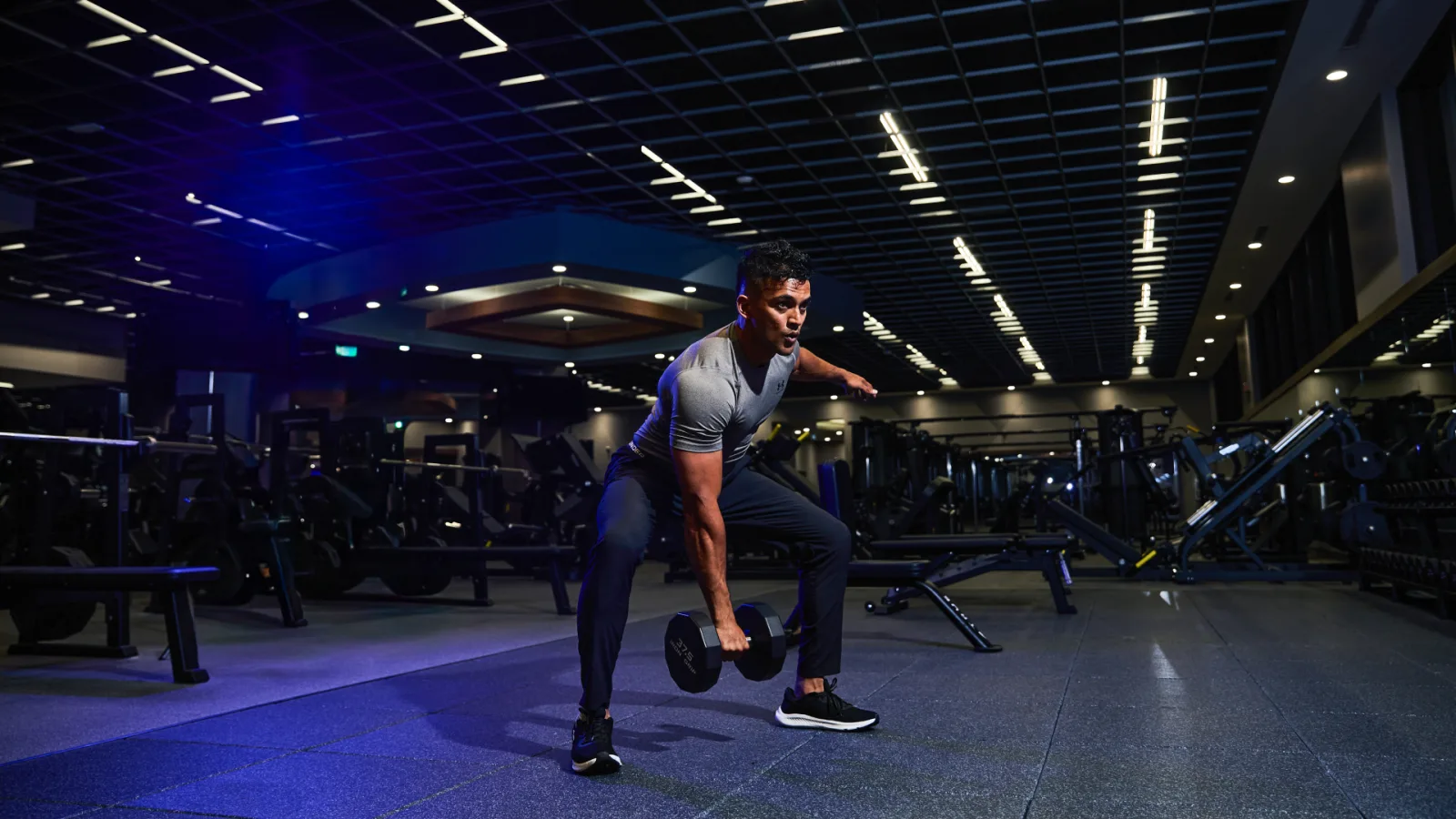
Exercise trends 2024 introduced new tools, formats and language, but the most useful ideas were not shortcuts. The approaches with staying power made proven strength-training principles easier to personalize, measure and sustain. Looking back, several themes remain relevant for leg, back and glute training.
Trend 1: Strength training became more accessible
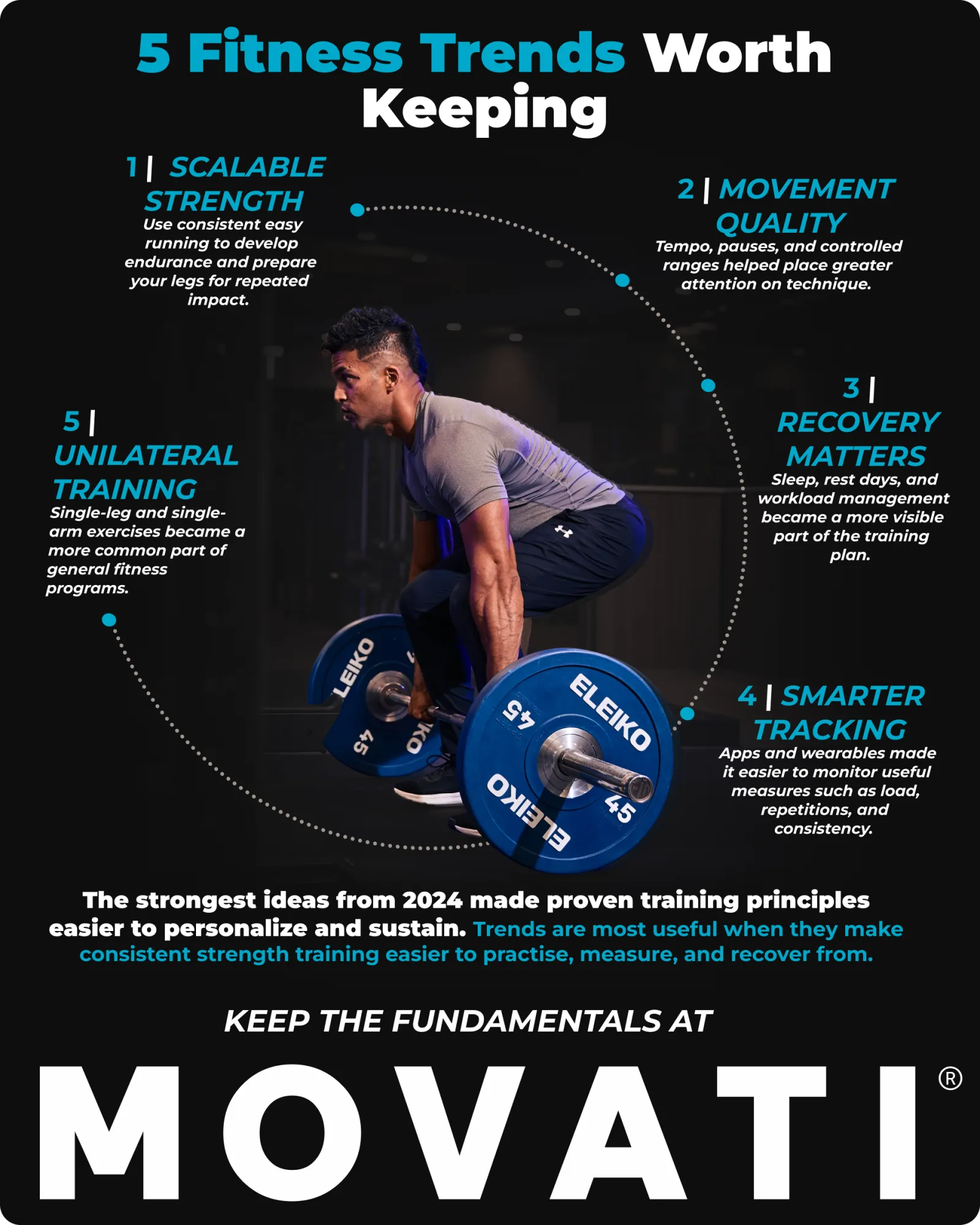
More programs offered scalable versions of squats, hinges, rows, lunges and hip extensions. That matters because an exercise does not need to look advanced to be effective. A supported split squat or machine row can build strength just as purposefully as a more complex alternative when it matches the person performing it.
Trend 2: Movement quality gained attention
Tempo repetitions, pauses and controlled ranges became common programming tools. Used well, they help people feel the target muscles and maintain position. They are not magic techniques, but they can make a moderate load productive and reveal where control is lost.
Trend 3: Unilateral training moved into the mainstream
Single-leg Romanian deadlifts, step-ups, split squats and one-arm rows appeared in more general fitness plans. Unilateral exercises challenge balance and allow each side to work independently. They complement bilateral lifts; they do not need to replace them.
Trend 4: Technology improved feedback
Wearables and fitness apps made it easier to record sessions, repetitions and recovery habits. The useful part is not the volume of data but the decisions it supports. Tracking a few meaningful measures—load, repetitions, effort and consistency—can show whether a program is moving forward.
Trend 5: Recovery became part of the program
Sleep, rest days and workload management received more attention. That shift is valuable because training creates the stimulus, while recovery allows adaptation. No recovery metric replaces common sense: declining performance, persistent soreness and low motivation can all signal that the plan needs adjustment.
What was mostly hype?
Any trend promising instant results, a single “best” exercise or a device that replaces consistent training deserves skepticism. Novelty can make workouts enjoyable, but it should not obscure the basics: appropriate resistance, good technique, gradual progression and enough recovery.
A durable lower-body and back template
- One squat or leg-press pattern
- One hip hinge or hip-extension pattern
- One single-leg movement
- One horizontal pull
- One vertical pull
- Optional calf, glute or core accessories
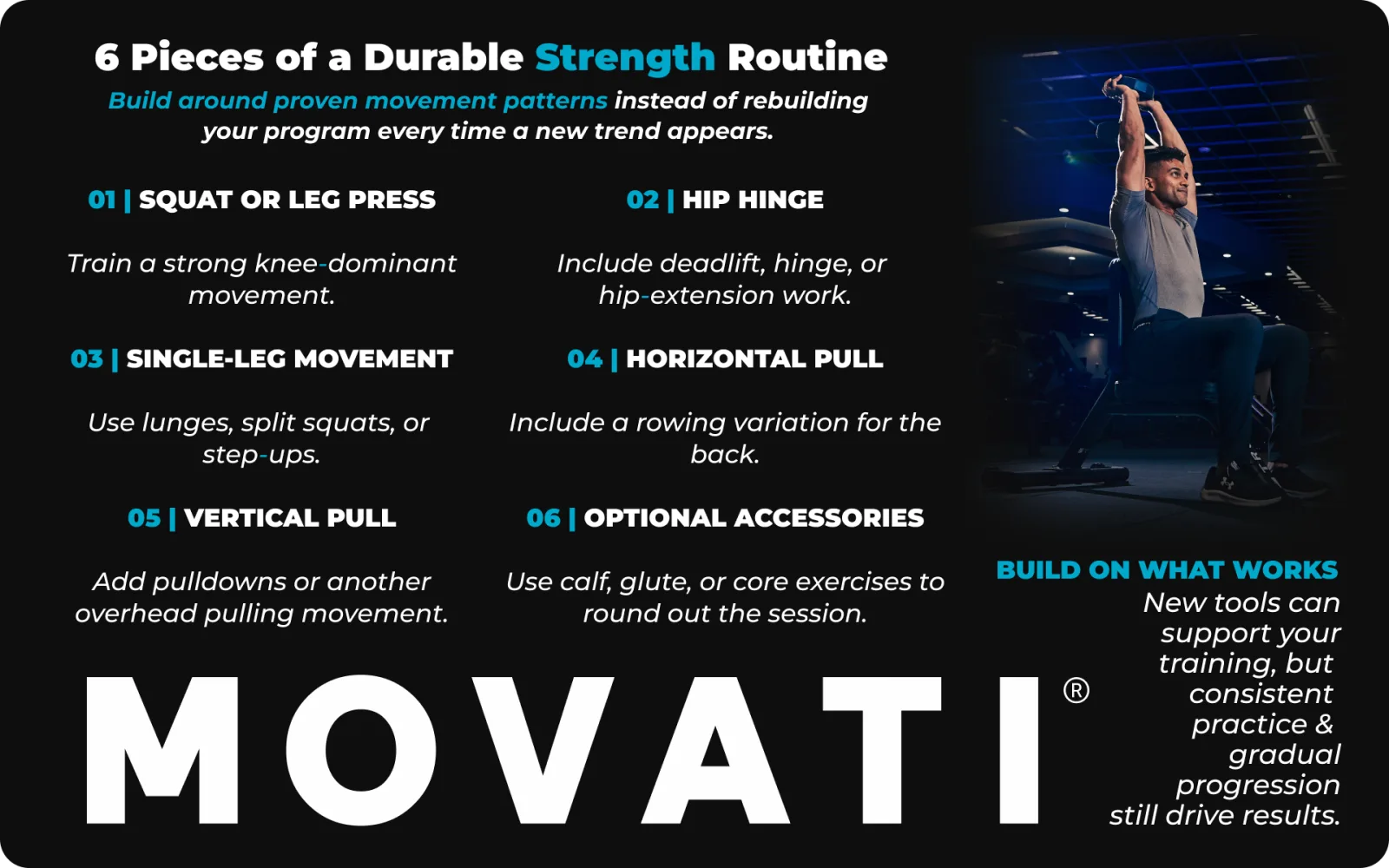
Choose versions that suit your mobility and experience, then repeat them long enough to measure progress. Add load or repetitions gradually instead of rebuilding the routine every week.
The best lesson from the trends of 2024 is that personalization works when it rests on sound fundamentals. New tools can support a program, but consistent practice remains the part that produces results.
