Lower leg strengthening exercises support walking, running, balance and confident movement. The calves help propel you forward, while the muscles around the shin and ankle help control each landing and change of direction. A useful routine trains both strength and stability rather than relying on calf raises alone.
10 exercises for the lower legs
1. Standing calf raise
Stand tall, rise onto the balls of your feet and lower slowly. Keep your weight centred rather than rolling to the outer edges of your feet.
2. Seated calf raise
With knees bent, lift and lower your heels through a comfortable range. This position places greater emphasis on the soleus, a calf muscle important for endurance and stability.
3. Single-leg calf raise
Use a wall or rail for balance and work one side at a time. Begin on the floor before progressing to the edge of a step.
4. Bent-knee calf raise
Hold a shallow squat and raise both heels. Keep the knees steady and use support if balance distracts from the calf work.
5. Toe raise
Keep your heels down and lift your toes toward your shins. Perform the movement standing against a wall or seated if needed.
6. Heel walk
Lift the front of the feet and take short, controlled steps on your heels. Keep the distance modest and stop before your form deteriorates.
7. Resistance-band ankle dorsiflexion
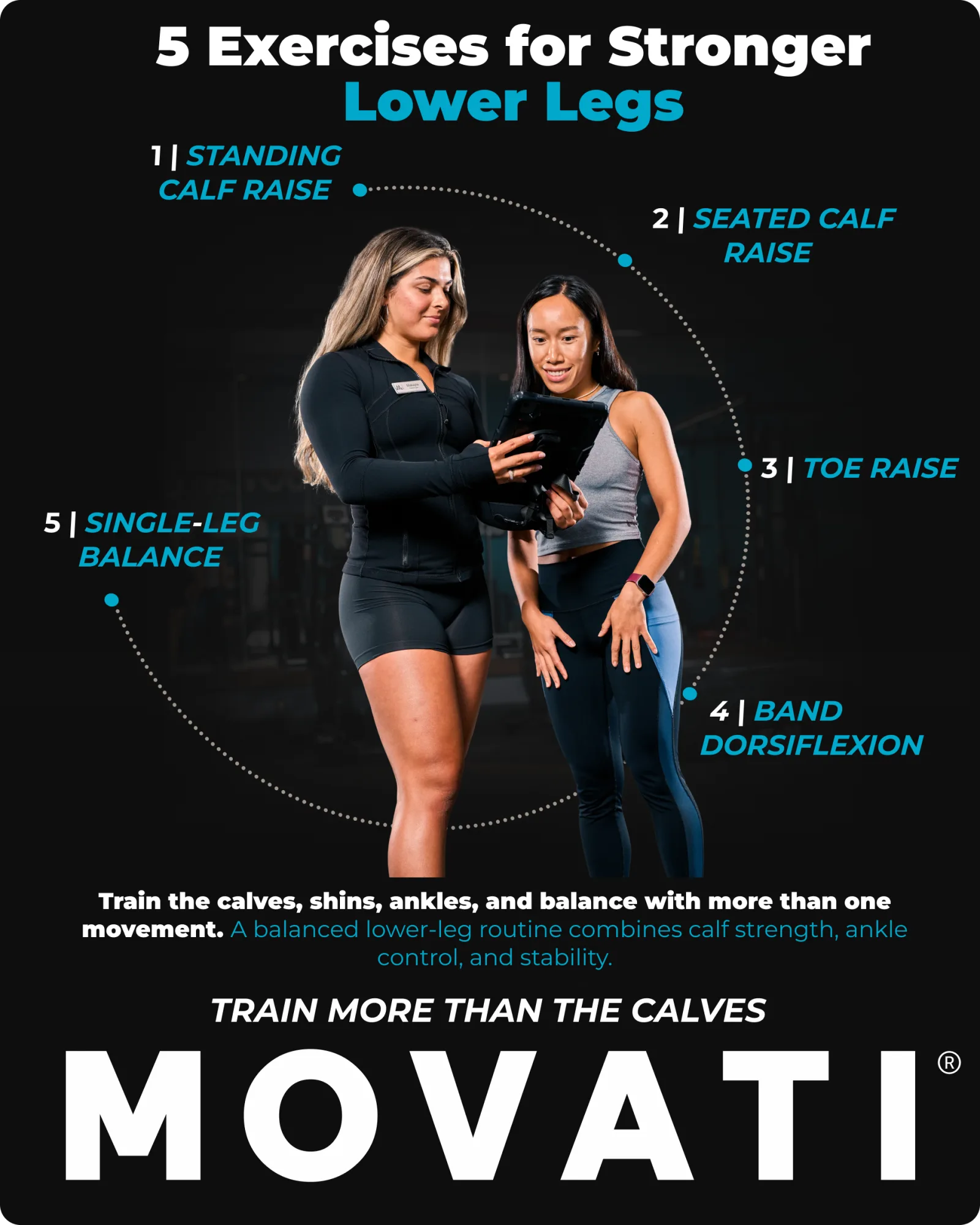
Anchor a band in front of you and pull your toes toward your shin. Move at the ankle without swinging the whole leg.
8. Resistance-band inversion and eversion
Turn the foot gently inward or outward against light resistance. Keep the knee still and use a small, controlled range.
9. Single-leg balance
Stand on one foot with a soft knee. Progress by turning your head, reaching in different directions or standing on a slightly less stable surface.
10. Low pogo hop
Use small, springy hops with quiet landings. This is an advanced option; establish pain-free calf strength and balance first.
How to build a simple routine
Choose four to six exercises and perform two or three controlled sets. Combine a straight-knee calf movement, a bent-knee variation, a toe-lifting exercise and a balance drill. Train two or three times per week with rest between harder sessions.
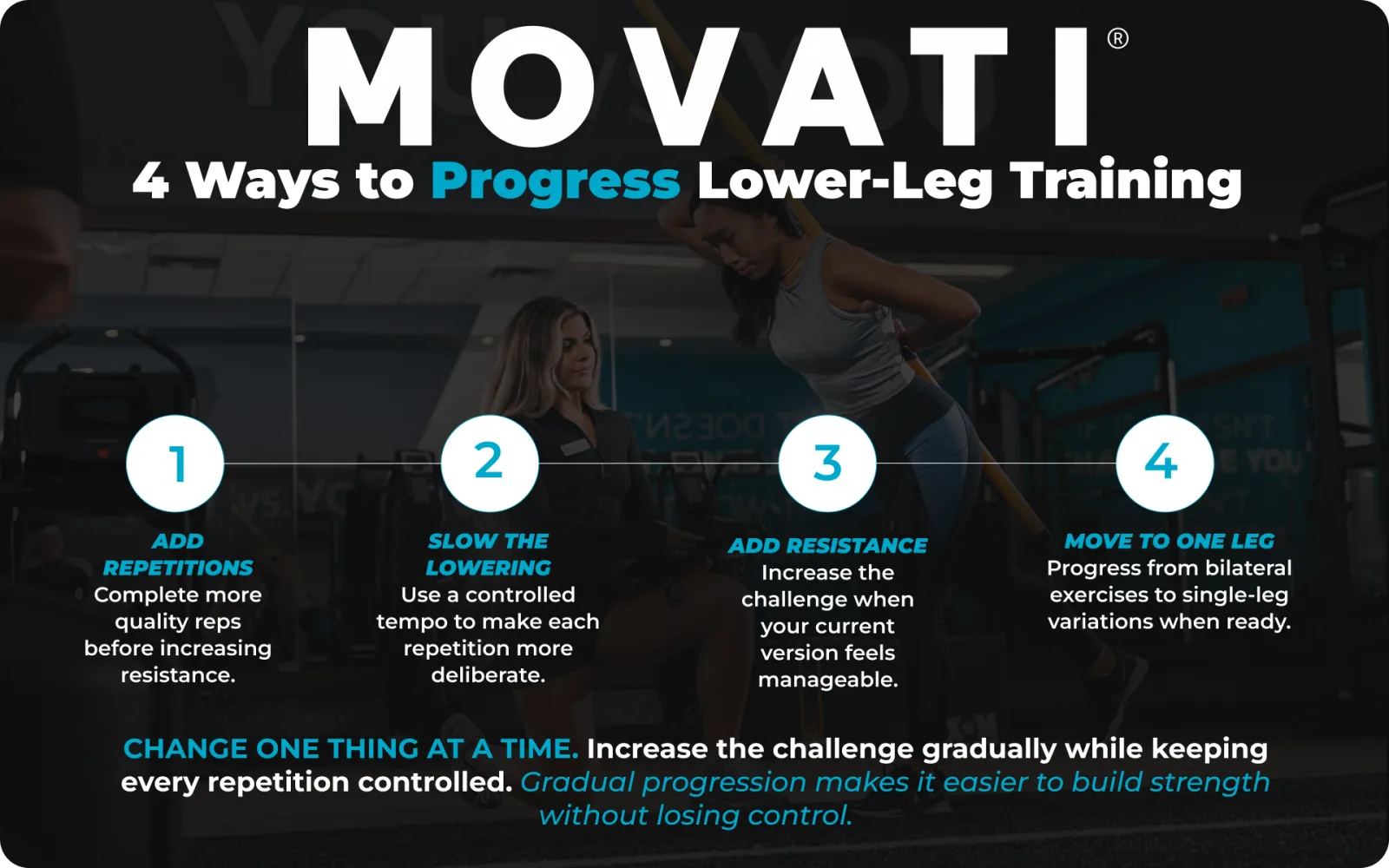
Progress by adding repetitions, slowing the lowering phase, increasing resistance or moving from two legs to one. Change only one variable at a time so you can judge how your body responds.
Train around pain, not through it
These movements should create muscular effort without sharp pain. If you are recovering from an ankle injury, have persistent swelling or feel unstable during daily activities, seek guidance from a qualified health professional before progressing.
Consistent lower-leg training does not need to be long or complicated. A few well-chosen movements, performed with control, can build stronger calves and ankles that support the rest of your routine.
