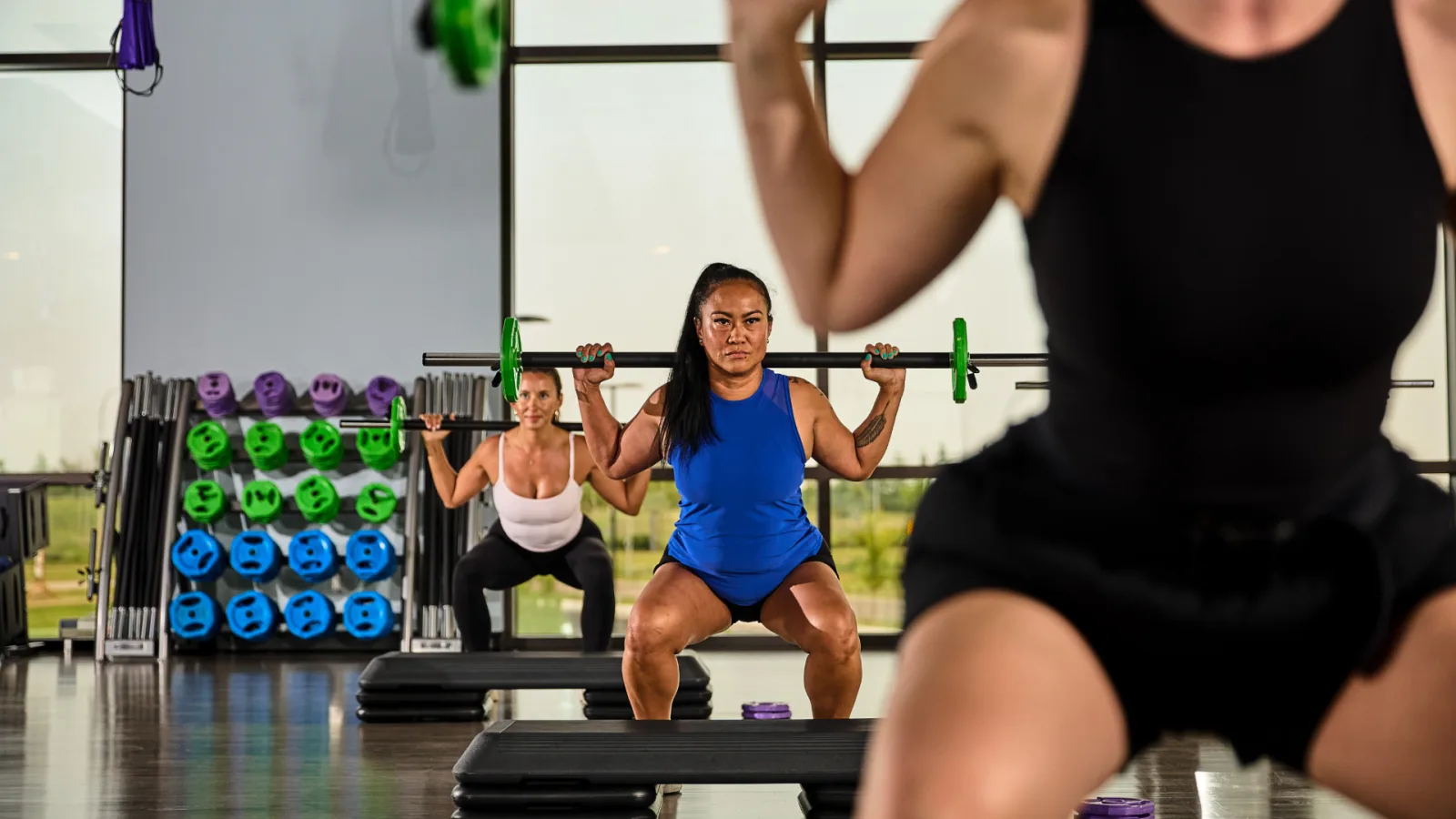
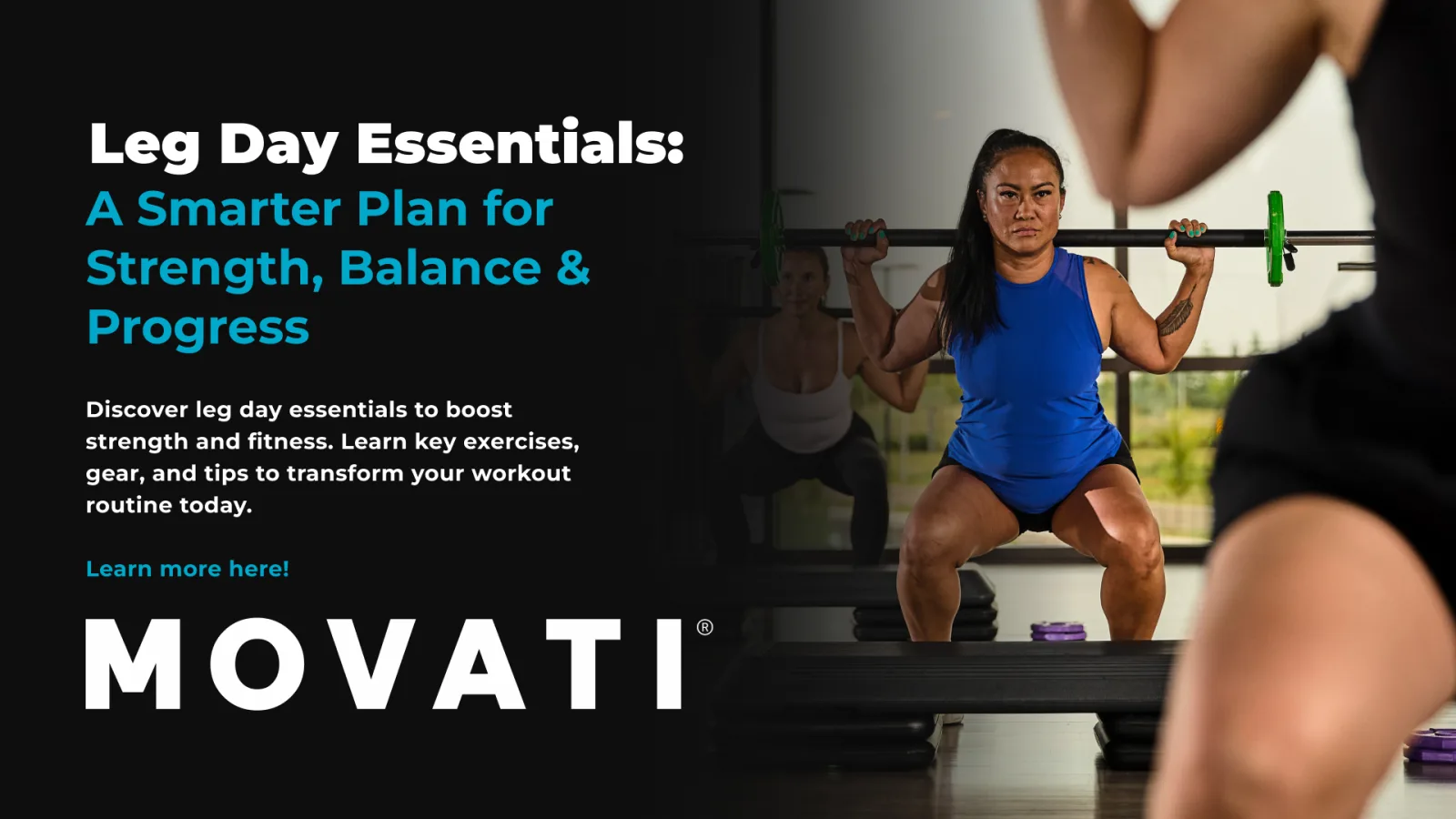
Leg Day Essentials begin with a clear plan: prepare the movements you will train, choose exercises that cover the major lower-body patterns and use resistance you can control. Shoes, belts and other accessories may have a role, but they cannot replace sound technique, gradual progression and adequate recovery.
A well-designed leg day should challenge the quadriceps, hamstrings, glutes and calves without turning every session into a test of your limits. Here is how to build one that is focused, balanced and repeatable.
Start with a purposeful warm-up
A warm-up should help you feel ready for the specific work ahead. Begin with several minutes of comfortable movement, then practise the patterns in your workout. If squats are first, for example, perform bodyweight repetitions followed by lighter sets before reaching your working resistance.
- Increase your body temperature with easy movement.
- Explore a comfortable range of motion at the hips, knees and ankles.
- Rehearse the first exercise with little or no load.
- Build resistance gradually instead of jumping directly to a heavy set.
Save long, relaxed stretches for another time if they leave you feeling less prepared to produce force.
Build the session around four movement patterns
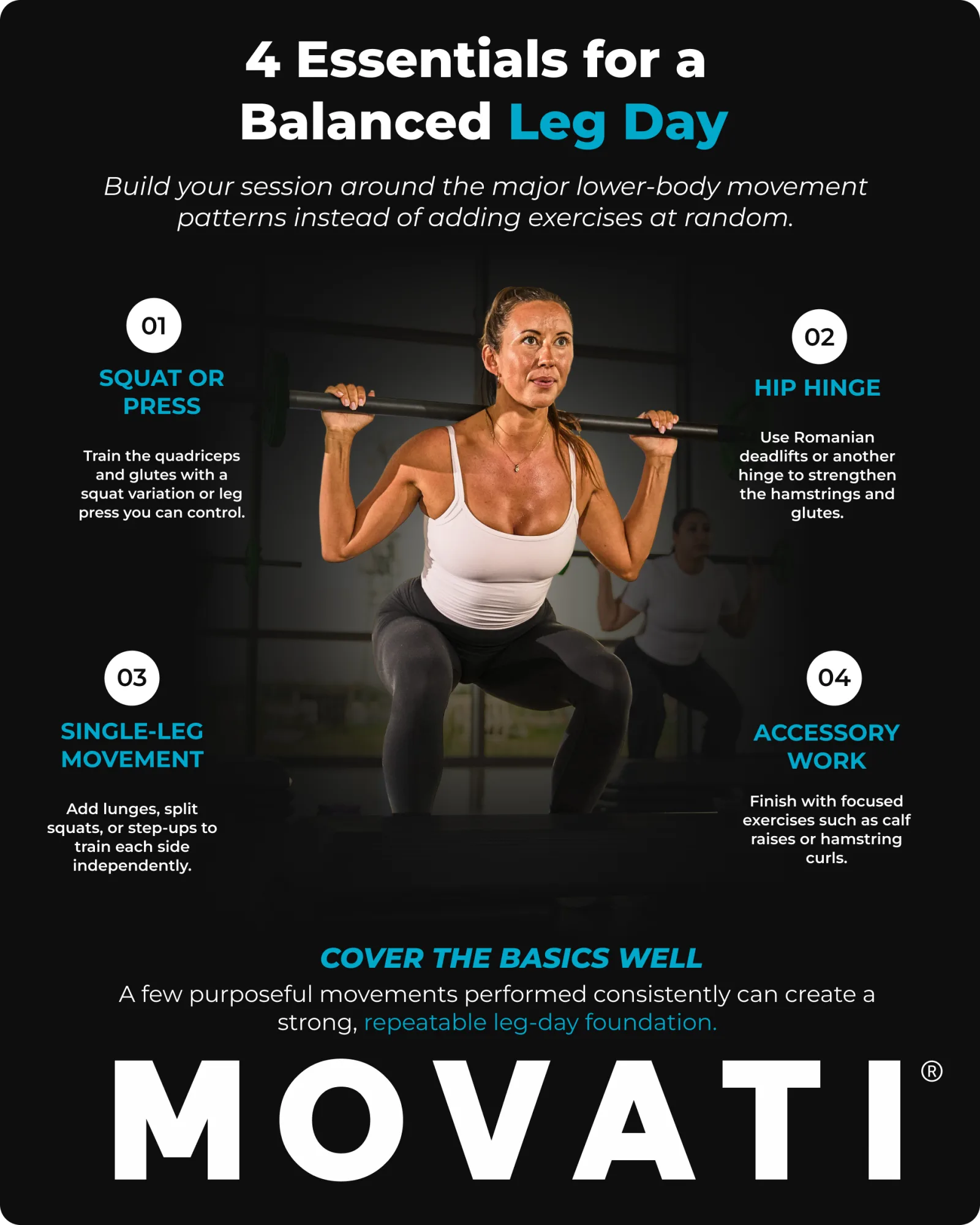
Squat or press
A squat variation or leg press trains the quadriceps and glutes. A goblet squat is approachable because the weight stays close to your body, while a machine can provide additional support. Choose a depth you can control with your feet stable.
Hip hinge
Romanian deadlifts and cable pull-throughs train the hamstrings and glutes. Think about moving the hips backward rather than simply lowering the weight. Stop the descent when you reach the end of your controlled range.
Single-leg movement
Reverse lunges, split squats and step-ups challenge each side independently. They also require balance and coordination. Holding a rack or rail for support can help you train the target muscles more effectively.
Calf or hamstring accessory
Finish with a focused exercise such as calf raises or hamstring curls. These movements complement the compound exercises and can be performed with a controlled tempo.
Choose equipment for the exercise, not the image
Stable, comfortable footwear is suitable for many gym sessions. Some people prefer a firmer sole for strength exercises, but the right choice depends on the activity and the individual. Avoid assuming that specialized shoes are required before you can train well.
A lifting belt is also optional. It does not automatically correct technique or prevent injury. If you plan to use one, learn how to brace without it first and ask a qualified trainer how it fits into your program.
Machines, dumbbells, barbells and bodyweight exercises are all tools. None is universally superior. Use the option that matches your experience, goals and ability to maintain control.
How do you apply progressive overload?
Progressive overload means increasing the training challenge gradually. It does not mean adding weight at every opportunity. You can make progress by completing more consistent repetitions, improving your range of motion or adding a small amount of resistance when the current work feels manageable.
- Keep a record of exercises, sets, repetitions and resistance.
- Work within a repeatable range instead of taking every set to exhaustion.
- Increase one variable at a time.
- Reduce the load if technique changes or discomfort appears.
Progress rarely moves in a straight line. Sleep, stress and previous activity can all affect a session, so adjust when needed.
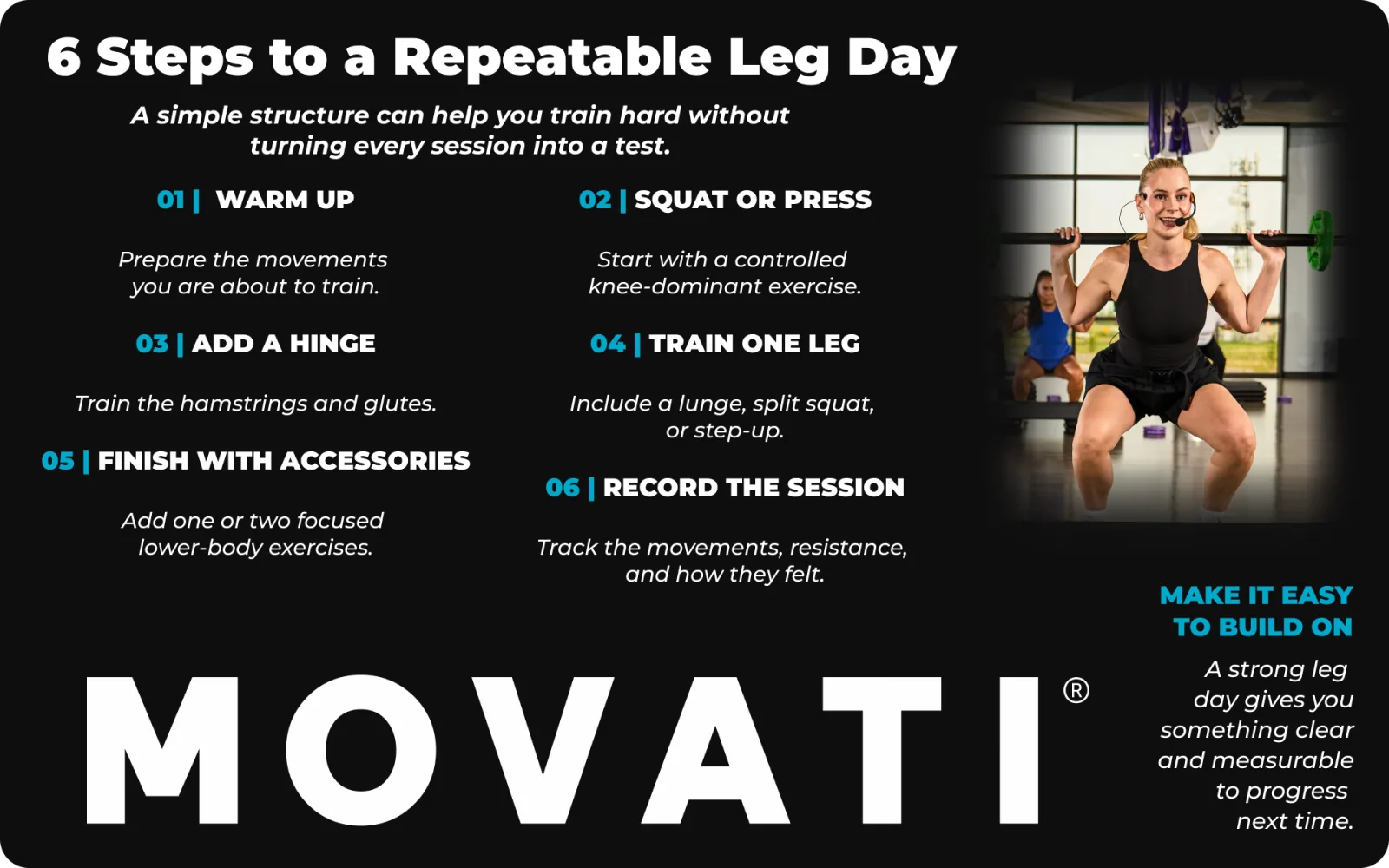
Use this leg-day checklist
- Complete a gradual, movement-specific warm-up.
- Choose one squat or press variation.
- Add one hip-hinge exercise.
- Train one single-leg movement.
- Finish with one or two accessories.
- Record the session and note how the movements felt.
Two or three working sets per exercise can provide a manageable starting point. Use a repetition range that lets you finish each set with consistent form, and rest until you are ready to repeat that quality.
Recovery is part of the plan
Give demanding sessions enough space that your next workout is not limited by lingering fatigue. Regular meals, fluids and sleep support the work you do in the gym. Gentle activity may help you feel less stiff, but severe soreness is not a requirement for an effective session.
If an exercise creates sharp pain or symptoms that worsen as you continue, stop. A qualified health professional can assess persistent concerns, while a MOVATI Athletic trainer can help you learn exercise variations and organize a session around your current ability.
Make every leg day repeatable
A strong session is one you can build on. Prepare well, cover the essential movement patterns and progress at a pace that protects technique. When those pieces are in place, leg day becomes less about surviving a punishing workout and more about developing durable strength over time.
