
Building strength and developing stamina are two important components of a well-rounded fitness routine. Hybrid training combines resistance exercises with cardiovascular activities, allowing individuals to improve muscular strength, aerobic capacity, and overall athletic performance. Whether you’re preparing for a fitness competition, improving your running ability, or simply looking to become more physically active, developing cardiovascular endurance can help you sustain exercise for longer periods while managing fatigue more effectively.
Improving stamina requires more than simply increasing the intensity of every workout. A successful approach combines aerobic conditioning, interval training, strength development, proper nutrition, and adequate recovery. By incorporating the following ten strategies into your fitness routine, you can gradually improve your conditioning while maintaining the strength and mobility needed for a balanced training program.
Why Cardiovascular Fitness Matters in Hybrid Training
Cardiovascular fitness describes how effectively your heart, lungs, blood vessels, and muscles work together to deliver and use oxygen during sustained physical activity.
In hybrid training, this ability becomes particularly important because workouts may involve alternating between resistance exercises and activities such as running, rowing, cycling, or other endurance-based movements.
Improving aerobic fitness offers several benefits:
Greater stamina: Maintain physical activity for longer periods before experiencing significant fatigue.
Improved exercise recovery: Recover more efficiently between repeated efforts and demanding training sessions.
Better workout performance: Support sustained effort during running, cycling, rowing, and circuit training.
Increased training capacity: Gradually tolerate longer or more challenging exercise sessions.
Improved heart health: Regular aerobic activity can support healthy blood pressure, circulation, and cardiovascular function.
Greater overall fitness: Develop the endurance needed to complement strength training and other physical activities.
The following strategies can help you build these benefits while maintaining a balanced approach to exercise.
1. Build an Aerobic Foundation With Steady-State Cardio
Steady-state cardiovascular exercise involves maintaining a relatively consistent effort over an extended period. This approach helps develop the aerobic system, which supplies energy during sustained physical activity.
For hybrid athletes, establishing a strong aerobic foundation can make longer workouts more manageable and support recovery between higher-intensity efforts.
Ways to incorporate steady-state training:
Begin with 20 to 30 minutes of continuous activity at a comfortable pace.
Choose activities such as brisk walking, jogging, cycling, swimming, or rowing.
Maintain an intensity that allows you to speak in complete sentences.

Gradually increase workout duration as your stamina improves.
Include two or three aerobic sessions throughout the week, depending on your existing training schedule.
Why it works: Consistent aerobic activity encourages adaptations that improve oxygen delivery and utilization, helping your body become more efficient during prolonged exercise.
2. Use Running and Jogging to Develop Stamina
Running is an accessible way to improve aerobic conditioning and develop the endurance needed for many hybrid fitness activities.
It engages large muscle groups, challenges the cardiovascular system, and can be adjusted to suit different fitness levels.
Tips for building running endurance:
Start with manageable distances rather than focusing immediately on speed.
Alternate walking and jogging intervals if continuous running feels challenging.
Increase your total running time gradually as your conditioning improves.
Include easier running sessions to develop endurance without excessive fatigue.
Use comfortable footwear and choose appropriate running surfaces.
Beginners might start with alternating two minutes of jogging and two minutes of walking for 20 minutes. As fitness improves, the jogging intervals can gradually become longer.
Why it works: Regular running encourages improvements in aerobic capacity, muscular endurance, and the ability to maintain physical effort over time.
3. Incorporate Cycling for Additional Aerobic Conditioning
Cycling provides an effective way to challenge the cardiovascular system while placing less impact stress on the joints than running.
Both stationary and outdoor cycling allow individuals to adjust resistance, speed, and duration according to their training objectives.
Ways to use cycling in your routine:
Perform 30 to 45 minutes of cycling at a comfortable, sustainable pace.
Use stationary cycling for controlled indoor training sessions.
Introduce moderate resistance to challenge the leg muscles.
Alternate easier rides with more demanding sessions throughout the week.
Consider cycling as an alternative aerobic activity when managing the impact of running.
Why it works: Cycling develops aerobic endurance while strengthening the muscles of the lower body. It can also help diversify your training and reduce the repetitive impact associated with frequent running.
4. Add Swimming to Improve Full-Body Conditioning
Swimming combines cardiovascular activity with resistance provided by the water, making it a useful addition to a hybrid fitness routine.
Because water supports much of the body’s weight, swimming can provide an alternative to land-based activities for individuals seeking a joint-friendly exercise option.
How to incorporate swimming:
Begin with short swimming intervals separated by comfortable rest periods.
Gradually increase the number of lengths completed during each session.
Alternate swimming strokes to engage different muscle groups.
Focus on controlled breathing and consistent technique.
Include water walking or aquatic fitness exercises when appropriate.
Why it works: Swimming challenges the cardiovascular system while engaging the shoulders, back, core, and lower body. Regular practice can improve aerobic fitness, muscular endurance, and movement coordination.
5. Introduce High-Intensity Interval Training
High-intensity interval training, commonly called HIIT, alternates short periods of demanding exercise with recovery intervals.
This method allows individuals to challenge their cardiovascular system at higher intensities without maintaining that effort continuously throughout the entire workout.
HIIT can be performed using running, cycling, rowing, or other exercises that allow intensity to be adjusted.
Example of a beginner-friendly interval session:
Warm up with five minutes of easy movement.
Increase your effort for 30 seconds at a challenging but controlled intensity.
Recover with 90 seconds of easy activity.
Repeat the sequence five to eight times.
Finish with five minutes of gradually decreasing intensity.
Why it works: Interval training can improve aerobic capacity and the body’s ability to tolerate demanding efforts. However, these sessions also create significant fatigue, so they should be balanced with easier workouts and sufficient recovery.
6. Experiment With Fartlek Training
Fartlek training is a flexible approach to endurance development that combines continuous movement with changes in speed and intensity.
The Swedish term fartlek translates to “speed play,” reflecting the informal structure of these workouts.
Unlike traditional interval sessions that follow specific time and recovery periods, fartlek training allows individuals to vary their pace based on distance, landmarks, or how they feel.
How to perform a fartlek workout:
Begin with five to ten minutes of comfortable jogging.
Increase your pace for a short distance, such as between two landmarks.
Return to a comfortable jogging speed.
Repeat several faster efforts throughout the session.
Finish with an easy jog or walk.
Why it works: Varying your pace challenges different energy systems and helps develop the ability to transition between comfortable and demanding exercise intensities.
This can be particularly useful for hybrid athletes who regularly alternate between strength movements and cardiovascular efforts.
7. Strengthen Your Muscles With Compound Exercises
Although cardiovascular activities are essential for developing aerobic fitness, resistance training also plays an important role in overall endurance performance.
Stronger muscles can make certain physical tasks more efficient and help maintain movement quality as fatigue develops.
Compound exercises are particularly useful because they involve multiple joints and muscle groups simultaneously.
Effective strength exercises include:
Squats: Develop lower-body strength and support movements involving the hips, knees, and ankles.
Deadlifts: Strengthen the posterior chain, including the glutes, hamstrings, and back.
Lunges: Improve unilateral leg strength, stability, and coordination.
Rows: Develop upper-body pulling strength and support posture.
Bench presses: Strengthen the chest, shoulders, and triceps.
Step-ups: Build lower-body strength through a functional movement pattern.
Why it works: Improving muscular strength can support exercise economy and reduce the relative effort required for certain movements. However, strength training complements rather than replaces dedicated cardiovascular conditioning.
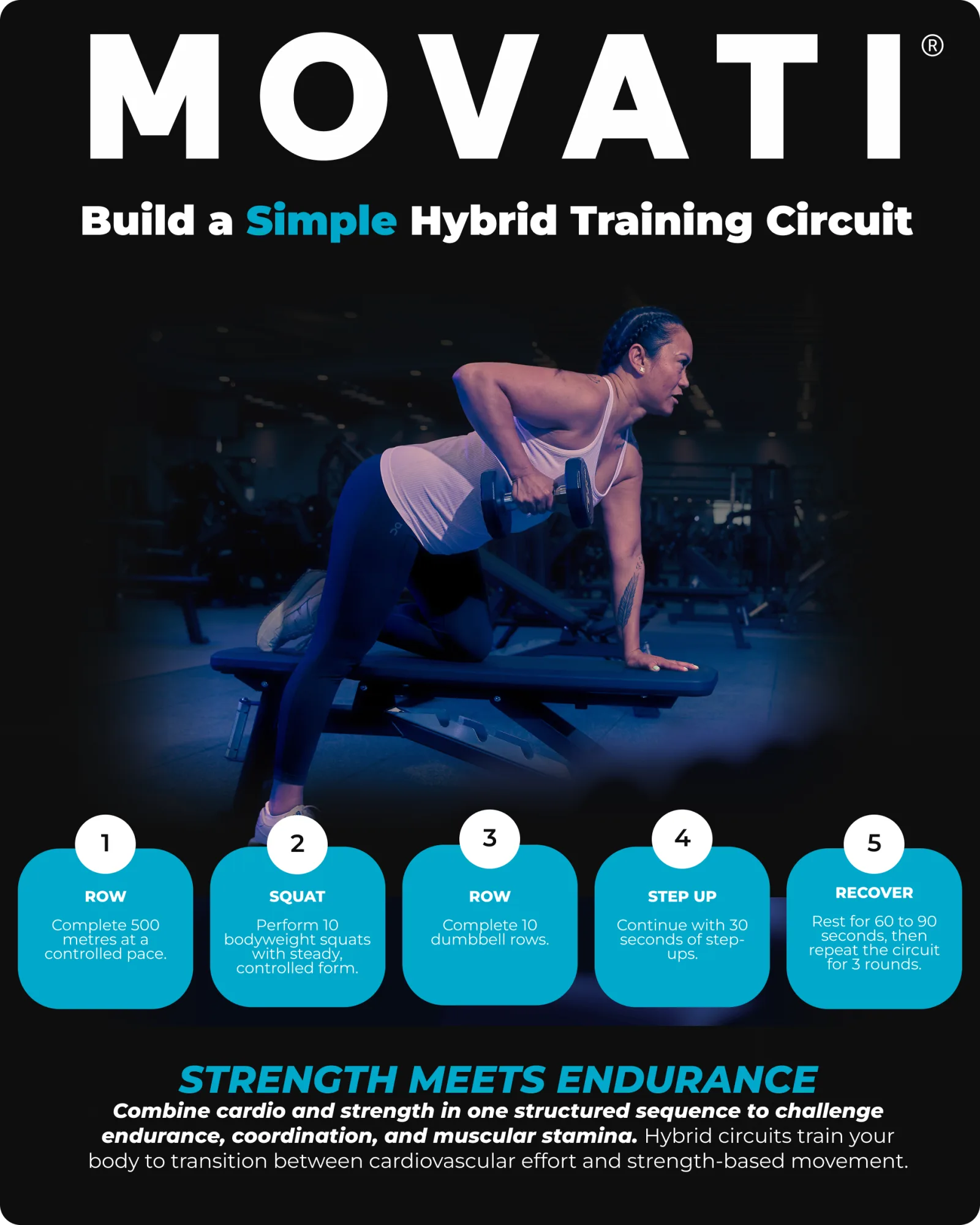
8. Combine Strength and Cardio With Hybrid Circuits
Hybrid circuits combine resistance exercises with cardiovascular movements in a structured sequence.
These workouts can help develop muscular endurance, cardiovascular conditioning, and the ability to transition between different physical demands.
They are particularly relevant for individuals participating in functional fitness competitions or training programs that combine running with strength-based stations.
Example of a hybrid training circuit:
500 metres of rowing at a controlled pace.
10 bodyweight squats.
10 dumbbell rows.
30 seconds of step-ups.
60 to 90 seconds of recovery.
Repeat the circuit for three rounds, adjusting repetitions and resistance according to your experience.
Why it works: Combining different movement patterns challenges the cardiovascular system while encouraging muscular endurance and coordination.
For individuals whose primary goal is maximum strength development, demanding cardio circuits are often better scheduled separately from heavy lifting sessions to help manage fatigue and maintain exercise quality.
9. Prioritize Recovery, Hydration, and Nutrition
Improving physical endurance requires a balance between training stress and recovery. Although challenging workouts stimulate fitness adaptations, those improvements occur as the body recovers and adjusts to increased demands.
Insufficient recovery can contribute to persistent fatigue, reduced performance, and a greater risk of overuse injuries.
Important recovery and nutrition practices include:
Schedule recovery days: Allow time between demanding sessions, particularly when training the same muscle groups.
Prioritize sleep: Aim for sufficient, consistent sleep to support physical recovery and overall health.
Consume adequate carbohydrates: Carbohydrates provide an important energy source for endurance activities and higher-intensity exercise.
Include protein: Protein supports muscle repair and maintenance following physical activity.
Maintain hydration: Drink fluids throughout the day and replace additional fluid losses during exercise.
Adjust training when needed: Reduce workout intensity or volume when experiencing unusual fatigue or persistent soreness.
Why it works: Adequate recovery and nutrition help replenish energy stores, support tissue repair, and allow the body to adapt to training.
10. Track Your Progress and Gradually Increase Training Demands
Monitoring your workouts provides valuable information about how your fitness is improving over time.
Tracking performance can help identify progress, maintain motivation, and determine when adjustments to your training routine may be appropriate.
Useful ways to measure improvement include:
Resting heart rate: Changes over time may provide insight into cardiovascular adaptations, although many factors influence this measurement.
Workout duration: Track how long you can maintain a comfortable exercise pace.
Distance and speed: Compare running, cycling, or rowing performance under similar conditions.
Perceived exertion: Record how difficult an activity feels using a simple effort scale.
Heart rate recovery: Observe how your heart rate responds after completing a consistent exercise effort.
Training consistency: Monitor how frequently you complete planned workouts.
Why it works: Regular assessments help you recognize improvements and make informed decisions about training progression.
For example, if a 30-minute cycling session begins to feel easier at the same resistance and pace, you may be ready to gradually increase the duration or challenge.
Example Weekly Hybrid Training Schedule
Organizing your workouts throughout the week can help balance cardiovascular development, strength training, and recovery.
The following example provides a general framework for someone with an established exercise foundation.
| Day | Training Focus | Suggested Activity |
|---|---|---|
| Monday | Strength | Full-body resistance training |
| Tuesday | Aerobic endurance | 30–45 minutes of easy cycling or jogging |
| Wednesday | Strength | Upper-body and lower-body exercises |
| Thursday | Interval training | Short, controlled cardiovascular intervals |
| Friday | Recovery | Rest, walking, or gentle mobility exercises |
| Saturday | Hybrid conditioning | Strength and cardio circuit |
| Sunday | Aerobic endurance | Comfortable swimming, cycling, or running |
This schedule is only an example. Beginners may benefit from fewer sessions, while experienced athletes may require more individualized programming based on their training goals and recovery capacity.
Common Mistakes That Can Limit Endurance Improvements
Developing cardiovascular fitness takes time, and certain training habits can make progress more difficult.
Avoiding these common mistakes can help create a more sustainable approach.
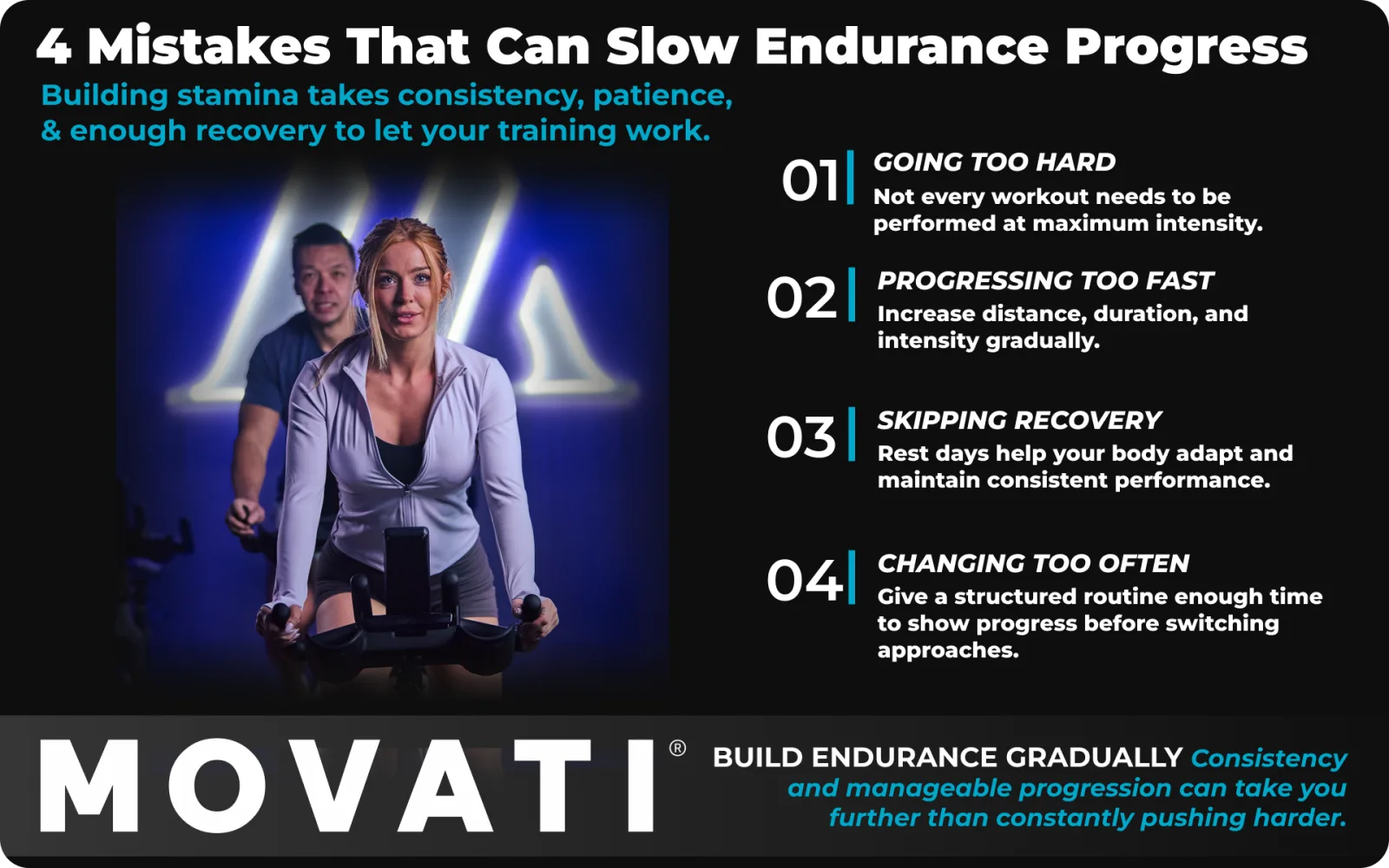
Training at maximum intensity too often: Not every workout needs to be exhausting. Easier aerobic sessions are important for developing endurance while managing fatigue.
Increasing training volume too quickly: Sudden increases in distance, duration, or intensity can contribute to overuse injuries.
Neglecting strength training: Muscular strength supports movement efficiency and overall physical performance.
Skipping recovery days: Rest is necessary for adapting to training demands and maintaining consistent performance.
Ignoring nutrition: Inadequate energy intake can reduce workout quality and interfere with recovery.
Comparing progress with others: Fitness improvements depend on individual experience, genetics, training history, and consistency.
Changing routines too frequently: Following a structured program long enough to measure progress can be more effective than constantly introducing new workouts.
How Long Does It Take to Improve Endurance?
The time required to develop noticeable improvements varies depending on your starting fitness level, training consistency, exercise intensity, and recovery habits.
Beginners may notice that everyday activities and familiar workouts become easier within several weeks of regular exercise. More substantial improvements in aerobic capacity and performance typically develop through continued training over several months.
Experienced athletes may progress more gradually because they have already developed a strong cardiovascular foundation.
Rather than expecting immediate results, focus on consistent training, manageable progression, and maintaining a balanced routine.
Conclusion
Improving cardiovascular endurance is an important part of successful hybrid training, allowing you to sustain physical activity, manage fatigue, and support performance across different exercise disciplines. By combining steady-state aerobic activity, interval training, resistance exercises, and appropriate recovery, you can develop a more complete approach to physical fitness. The key is to progress gradually, monitor your improvements, and choose activities that align with your abilities and long-term goals. With consistent effort and a balanced training schedule, you can build the stamina and strength needed to perform confidently both inside and outside the gym.
*MOVATI’s trainers and/or consultants are not health care providers, and do not provide any medical diagnosis, treatment or advice, and any trainer and/or consultant tips are not intended to replace the advice of a health care professional.
