
Signing up for your first HYROX competition can be an exciting milestone in your fitness journey. Combining endurance running with functional strength exercises, HYROX challenges athletes to push beyond traditional gym workouts and develop a more complete level of physical conditioning. However, preparing for your first event can also feel overwhelming, particularly if you’re unfamiliar with the competition format or unsure how to balance strength training with cardiovascular exercise.
The good news is that you don’t need to be an elite athlete to begin preparing for HYROX competitions. With a realistic training schedule, consistent practice, and a willingness to progress gradually, you can develop the endurance, strength, and confidence needed to approach your first race. Understanding where to begin and how to structure your preparation is the first step toward a successful experience.

Why HYROX Requires a Different Approach to Training
Unlike traditional running races or strength competitions, HYROX combines both disciplines into a single event.
Participants complete eight 1-kilometre runs, each followed by a functional workout station. The standardized format includes:
| Station | Exercise | Race Requirement |
|---|---|---|
| 1 | SkiErg | 1,000 metres |
| 2 | Sled Push | 50 metres |
| 3 | Sled Pull | 50 metres |
| 4 | Burpee Broad Jumps | 80 metres |
| 5 | Rowing | 1,000 metres |
| 6 | Farmer’s Carry | 200 metres |
| 7 | Sandbag Lunges | 100 metres |
| 8 | Wall Balls | 100 repetitions |
Equipment weights and certain movement standards vary according to competition division.
The challenge comes from completing these exercises while managing fatigue from repeated running segments.
A strong runner may struggle with the resistance required for sled movements, while an experienced weightlifter may find the cardiovascular demands particularly challenging.
This is why successful preparation requires a balanced approach rather than focusing exclusively on one area of fitness.
The Challenge of Preparing Without a Structured Plan
One of the most common mistakes beginners make is attempting to train for every aspect of HYROX at maximum intensity.
It’s easy to assume that more running, heavier lifting, and additional high-intensity workouts will automatically produce better results.
However, combining demanding strength and endurance sessions without sufficient recovery can lead to excessive fatigue, inconsistent performance, and an increased risk of overuse injuries.
Strength Alone Isn’t Enough
Traditional strength training develops muscular force, but HYROX requires athletes to repeatedly perform exercises while fatigued.
For example, completing a heavy sled push after running a kilometre presents a different challenge than pushing the same sled at the beginning of a workout.
Athletes need to develop both strength and muscular endurance to perform effectively.
Running Endurance Can Be Overlooked
Running accounts for 8 kilometres of the competition, making aerobic conditioning essential.
Even individuals who regularly attend the gym may discover that their cardiovascular endurance requires additional development.
Without adequate running preparation, fatigue can accumulate quickly and affect performance at later workout stations.
Poor Pacing Can Affect the Entire Race
Starting too aggressively can make the remaining stations considerably more difficult.
HYROX rewards athletes who understand how to manage their effort, maintain efficient movement, and conserve energy throughout the competition.
Learning these skills requires practice under conditions that resemble the race.
Building a Training Plan for Your First HYROX Competition
A successful beginner training program should focus on developing a strong aerobic foundation, improving functional strength, and gradually introducing race-specific conditioning.
For individuals with an established fitness routine, approximately 12 to 16 weeks may provide a useful preparation period. Those returning after prolonged inactivity may benefit from additional time.
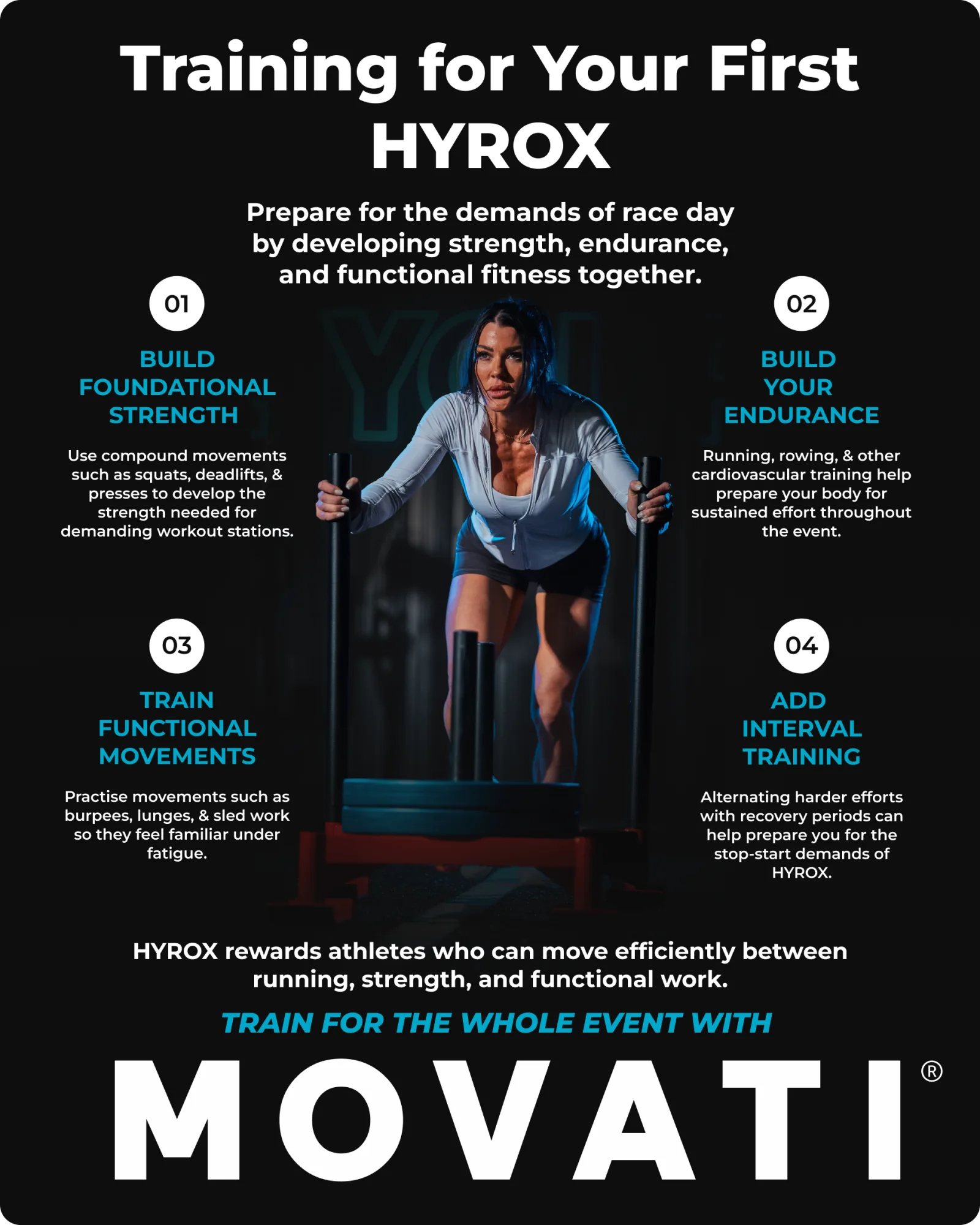
The objective should be steady improvement rather than attempting to reach competition-level performance immediately.
Develop Your Running Endurance
Running should be a consistent part of your weekly training schedule.
Begin with comfortable distances and gradually increase your ability to sustain continuous movement.
For beginners, alternating walking and jogging can help establish cardiovascular conditioning before progressing to longer runs.
As your endurance improves, incorporate different running sessions:
Easy runs: Develop aerobic endurance at a comfortable pace.
Interval training: Alternate faster running with recovery periods.
Longer runs: Gradually improve your ability to sustain activity over extended periods.
Transition runs: Practice running after completing functional exercises.
Training at different intensities helps prepare the cardiovascular system for the varied demands of competition.
Build Functional Strength
Strength training supports the muscular demands of sled movements, carries, lunges, and wall balls.
Focus on compound exercises that engage multiple muscle groups, including squats, deadlifts, lunges, rows, and presses.
These movements help develop strength in the legs, back, shoulders, and core.
Begin with manageable resistance and prioritize proper technique before gradually increasing training loads.
As your conditioning improves, introduce exercises that resemble the official HYROX stations.
Practice Race-Specific Movements
Familiarity with the workout stations can make a significant difference in your confidence and efficiency.
Practice movements such as rowing, SkiErg, sled pushes, sled pulls, farmer’s carries, burpee broad jumps, sandbag lunges, and wall balls whenever suitable equipment is available.
Start with shorter distances or fewer repetitions rather than attempting full competition requirements immediately.
For example, practice 250 metres of rowing before progressing toward 1,000 metres, or complete shorter farmer’s carries before increasing distance and resistance.
Gradual progression allows you to develop strength and endurance while refining technique.
Learn to Run Under Fatigue
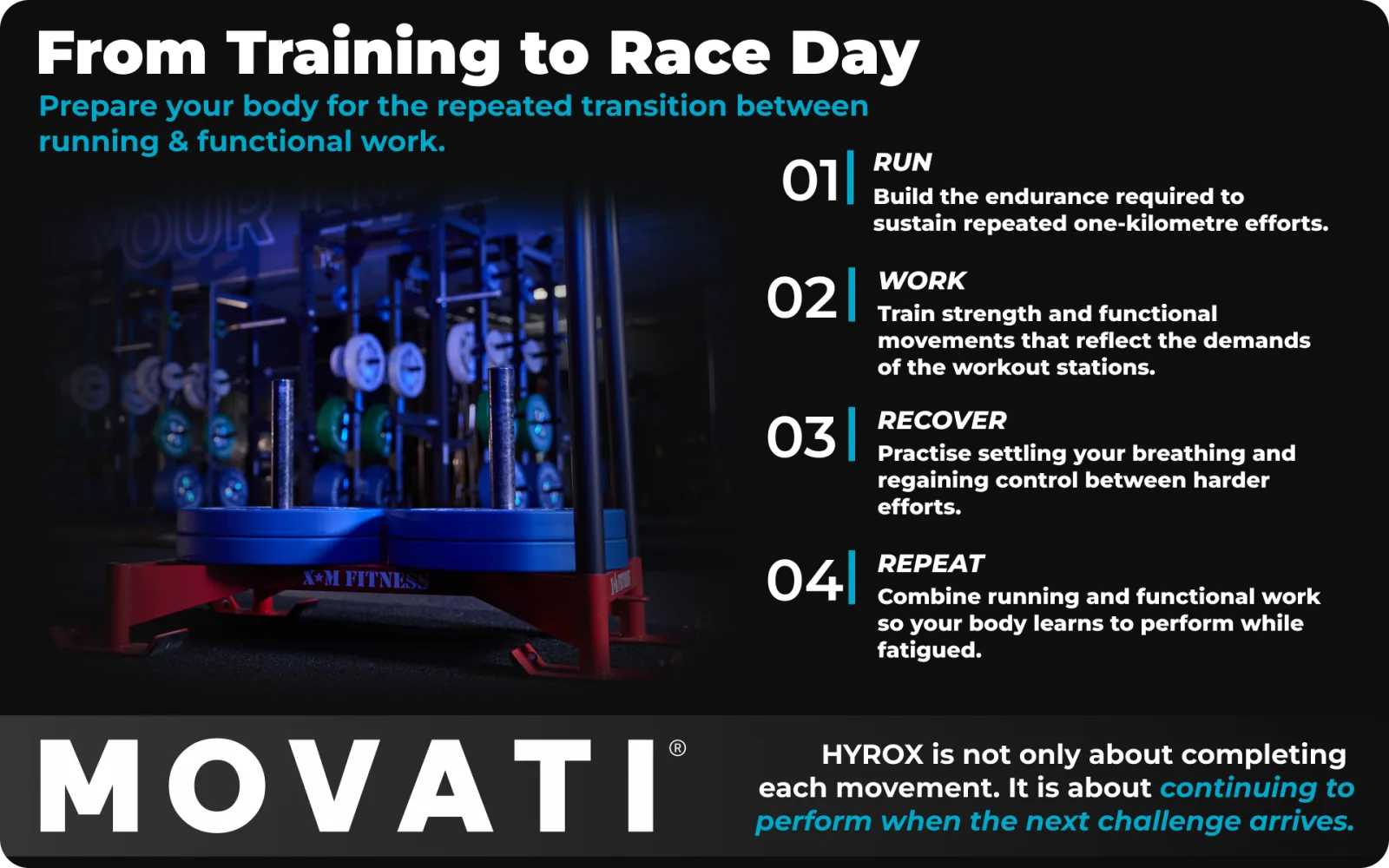
One of the most important aspects of HYROX preparation is becoming comfortable transitioning between running and functional exercises.
During competition, your legs may feel significantly different after completing sled pushes or sandbag lunges.
Practicing these transitions helps you understand how fatigue affects your running pace and movement efficiency.
A beginner hybrid workout might include:
500-metre run.
250 metres of rowing.
500-metre run.
20 metres of farmer’s carry.
500-metre run.
10 controlled walking lunges.
Adjust distances, repetitions, and resistance according to your fitness level.
As conditioning improves, gradually increase the workload while maintaining consistent technique.
You don’t need to complete a full race simulation every week. Shorter sessions can provide valuable preparation without creating unnecessary training fatigue.
A Sample Weekly HYROX Training Schedule
A structured routine helps distribute physical demands while providing adequate recovery.
| Day | Training Focus | Suggested Activity |
|---|---|---|
| Monday | Strength | Squats, deadlifts, and functional exercises |
| Tuesday | Running | Comfortable endurance run |
| Wednesday | Conditioning | Rowing, SkiErg, and carries |
| Thursday | Recovery | Walking, mobility, or rest |
| Friday | Running intervals | Controlled speed and endurance work |
| Saturday | Hybrid training | Running combined with workout stations |
| Sunday | Rest | Full recovery |
This example is intended for individuals with a reasonable foundation of regular physical activity. Beginners may benefit from fewer sessions and additional recovery days.
Fuel Your Training With Proper Nutrition
HYROX preparation requires sufficient energy to support both endurance training and resistance exercise.
A balanced diet containing carbohydrates, protein, and healthy fats can help maintain training performance and support recovery.
Carbohydrates for Energy
Carbohydrates provide an important fuel source for running and demanding functional exercises.
Include foods such as rice, pasta, potatoes, oatmeal, and fruit in your regular meals.
Protein for Muscle Recovery
Protein supports muscle repair and maintenance following exercise.
Sources include poultry, fish, eggs, dairy products, legumes, tofu, and protein shakes.
For a convenient post-workout option, explore MOVATI Athletic’s protein shakes, which can help support your daily protein intake as part of a balanced nutrition routine.
Hydration and Recovery
Maintain appropriate hydration throughout the day and adjust fluid intake according to exercise duration, temperature, and sweat losses.
Avoid experimenting with unfamiliar foods or supplements immediately before demanding workouts or competition.
Mental Preparation: Building Confidence for Race Day
Preparing for your first HYROX event involves more than physical conditioning.
The combination of running, strength exercises, and sustained effort can create moments when maintaining focus becomes challenging.
Developing realistic expectations and practicing race-specific strategies can help you approach competition with greater confidence.
Establish Achievable Goals
For a first competition, completing the event while maintaining controlled technique may be a more useful objective than targeting an aggressive finish time.
As your training progresses, set measurable goals related to running endurance, exercise technique, or station performance.
Practice Pacing
Avoid beginning every workout at maximum intensity.
Learn how to maintain a sustainable pace and manage your effort during demanding exercises.
Practicing controlled pacing can help you conserve energy for later stages of the competition.
Become Comfortable With the Unexpected
Not every training session will go according to plan.
Some workouts may feel more difficult because of fatigue, stress, sleep, or recovery.
Learning to adjust your training without becoming discouraged is an important part of long-term preparation.
Recovery Is Part of Your Training
Rest and recovery allow your body to adapt to the physical demands of exercise.
Schedule easier days between demanding sessions and prioritize adequate sleep.
Gentle walking, stretching, and mobility exercises can help maintain movement during recovery periods.
Foam rolling or massage may provide temporary relief from muscle soreness, but they don’t replace adequate rest and appropriate training progression.
If you experience persistent pain or unusual symptoms, seek guidance from a qualified healthcare professional.
How MOVATI Athletic Can Support Your HYROX Preparation
Preparing for HYROX is easier when you have access to a variety of training options in one environment.
MOVATI Athletic offers members opportunities to develop cardiovascular endurance, build muscular strength, and incorporate functional movements into their routines.
Depending on your club’s available equipment and services, you can combine treadmill running, rowing, resistance training, and other conditioning exercises to support your preparation.
Personal training services can also help you develop a structured program, improve exercise technique, and establish realistic goals based on your current fitness level.
Whether you’re beginning your first training program or refining your performance, having a consistent training environment can help you stay focused on your progress.
Conclusion: Prepare With Confidence for Your First HYROX
Training for your first HYROX event requires patience, consistency, and a balanced approach to physical conditioning. By developing running endurance, building functional strength, practicing race-specific movements, and prioritizing recovery, you can gradually prepare your body for the demands of competition.
The most important objective isn’t to become an elite athlete overnight. It’s to establish a sustainable routine that allows you to improve steadily while building confidence in your abilities.
With access to fitness facilities, training equipment, and professional guidance, MOVATI Athletic can help support your preparation for HYROX competitions and the broader fitness goals that come with them.
Start with your current abilities, progress at a manageable pace, and enjoy the process of preparing for a challenging and rewarding fitness experience.
*MOVATI’s trainers and/or consultants are not health care providers, and do not provide any medical diagnosis, treatment or advice, and any trainer and/or consultant tips are not intended to replace the advice of a health care professional.
