
Healthy meal planning doesn’t have to be complicated or time-consuming. Whether you’re juggling work, family, workouts, or a busy social schedule, having a plan for your meals can make it much easier to eat nutritious foods consistently.
Instead of wondering what to eat each day or relying on takeout when you’re short on time, meal planning helps you stay organized, reduce stress, and make healthier choices. With a few simple strategies, you can build balanced meals that support your energy, fitness, and overall well-being.
What Is Healthy Meal Planning?
Healthy meal planning is the process of deciding what you’ll eat ahead of time to ensure your meals are balanced, nutritious, and fit your lifestyle.
It isn’t about following a restrictive diet or eating the same foods every day. Instead, it’s about preparing for the week so healthy choices become the easiest choices.
A good meal plan helps you:
Save time during busy weekdays
Reduce food waste
Spend less on groceries
Support healthy eating habits
Make balanced nutrition more consistent
Even planning just a few meals each week can make a noticeable difference.
Why Is Meal Planning Important?
One of the biggest reasons people struggle to eat well isn’t a lack of knowledge—it’s a lack of preparation.
When you’re tired or short on time, convenience often wins. Having healthy meals and snacks already planned reduces the temptation to grab highly processed foods or skip meals altogether.
Meal planning also makes it easier to fuel your body with the nutrients it needs, whether your goal is maintaining a healthy weight, building muscle, increasing energy, or simply feeling your best.
How Do You Create a Balanced Meal Plan?
A balanced meal starts with including a variety of nutrient-rich foods rather than focusing on a single nutrient or food group.
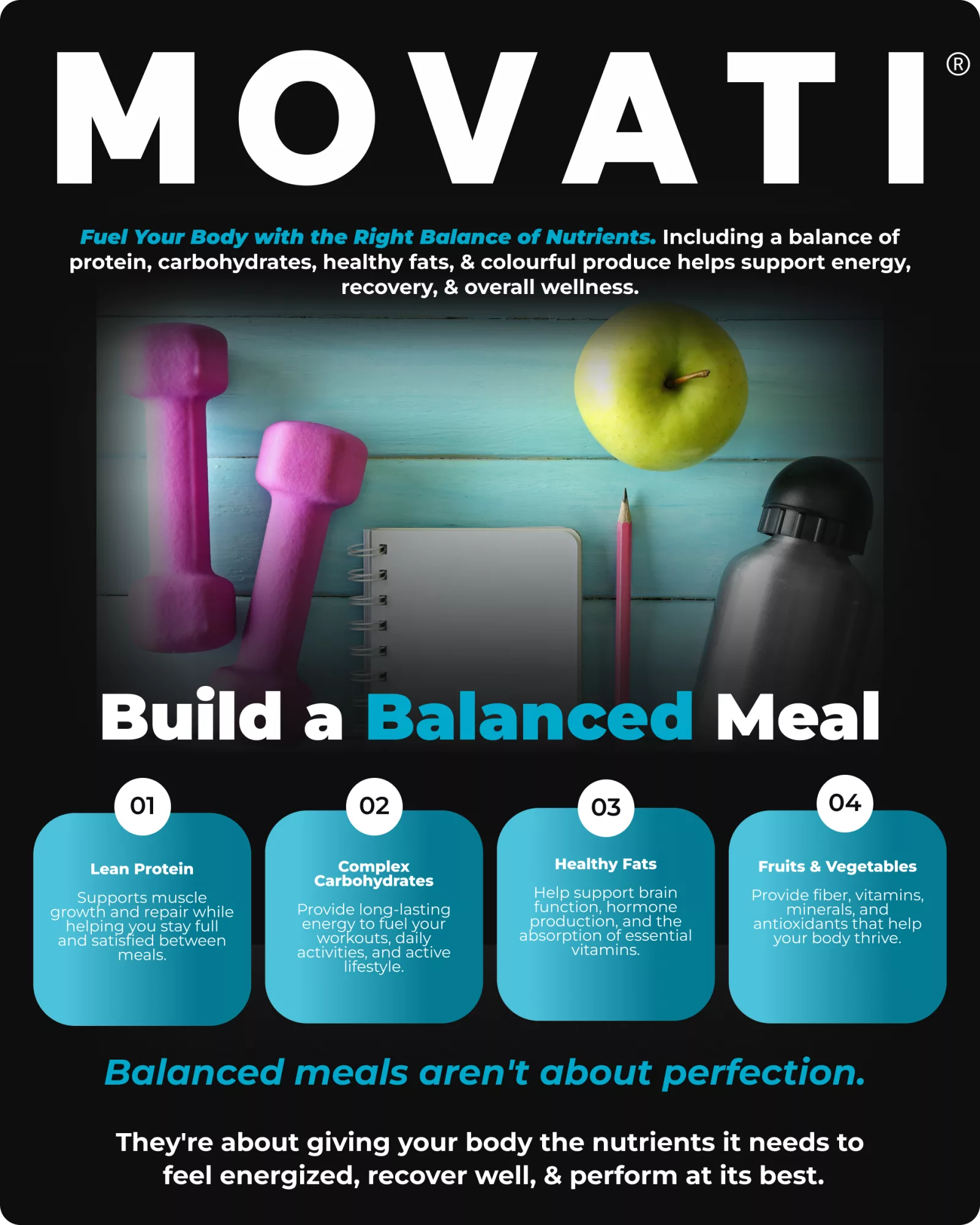
Most meals should include:
Lean protein
Complex carbohydrates
Healthy fats
Plenty of vegetables and fruit
This combination provides steady energy, supports muscle recovery, promotes fullness, and delivers essential vitamins and minerals.
For example, a lunch of grilled chicken, brown rice, roasted vegetables, and avocado provides protein, fiber, healthy fats, and slow-digesting carbohydrates that help keep you energized throughout the afternoon.
Why Is Nutrition Planning Important?
Nutrition planning goes beyond deciding what you’ll eat. It involves understanding how different nutrients support your body and making intentional food choices that align with your health goals.
Balance Your Macronutrients
Protein, carbohydrates, and fats each play a unique role in maintaining your health.
Protein helps build and repair muscle while keeping you satisfied between meals. Complex carbohydrates provide your body’s primary source of energy, and healthy fats support brain function, hormone production, and the absorption of important vitamins.
Rather than eliminating one macronutrient, aim to include all three in balanced portions throughout the day.
Don’t Forget Micronutrients
Vitamins and minerals are equally important, even though your body needs them in smaller amounts.
Leafy greens provide iron and vitamin K, citrus fruits are rich in vitamin C, dairy products contain calcium, and colourful vegetables supply antioxidants that support overall health.
Eating a wide variety of fruits and vegetables throughout the week is one of the easiest ways to meet your micronutrient needs naturally.
What Are the Best Meal Prep Techniques?
Meal prep is one of the easiest ways to make healthy eating more convenient.
Instead of preparing every meal from scratch each day, spending a little time preparing ingredients in advance can save hours throughout the week.
Batch Cook Your Meals
Cooking larger portions allows you to prepare multiple meals at once.
Soups, chili, grilled chicken, roasted vegetables, quinoa, brown rice, and lean proteins all store well and can be mixed and matched throughout the week.
Batch cooking also reduces the temptation to order takeout after a busy day.
Prepare Ingredients Ahead of Time
You don’t always have to prepare complete meals.
Washing lettuce, chopping vegetables, portioning fruit, or cooking grains ahead of time makes assembling healthy meals much faster.
Having ready-to-use ingredients encourages you to choose nutritious options because much of the work is already done.
Use Portion-Control Containers
Meal prep containers help organize meals and make portion sizes more consistent.
They’re especially helpful for busy professionals, students, or anyone packing lunches for work or school.
What Foods Should You Include in Your Meal Plan?
A healthy meal plan doesn’t need to include expensive specialty foods.
Some versatile staples include:
- Lean proteins like chicken, turkey, eggs, fish, tofu, Greek yogurt, beans, and lentils.
- Complex carbohydrates such as brown rice, quinoa, oats, sweet potatoes, and whole grain bread.
- Healthy fats including avocados, olive oil, almonds, walnuts, and seeds.
- A variety of colourful fruits and vegetables to provide fiber, vitamins, minerals, and antioxidants.
- Choosing mostly whole foods creates meals that are filling, nutritious, and easy to customize.
How Can You Keep Healthy Meals Interesting?
Eating healthy shouldn’t feel repetitive.
One of the easiest ways to prevent meal fatigue is by experimenting with different flavours and cuisines.
Mediterranean bowls, stir-fries, tacos, grain bowls, curries, and pasta dishes can all be made nutritious by focusing on whole ingredients and balanced portions.
You can also make simple ingredient swaps to improve nutrition. Replacing white rice with quinoa or brown rice, using Greek yogurt instead of sour cream, or adding extra vegetables to your favourite recipes are small changes that can make meals more nutritious without sacrificing flavour.
Seasonal produce is another great way to add variety. Fruits and vegetables that are in season are often fresher, more affordable, and packed with flavour.
How Can Busy People Make Meal Planning Easier?
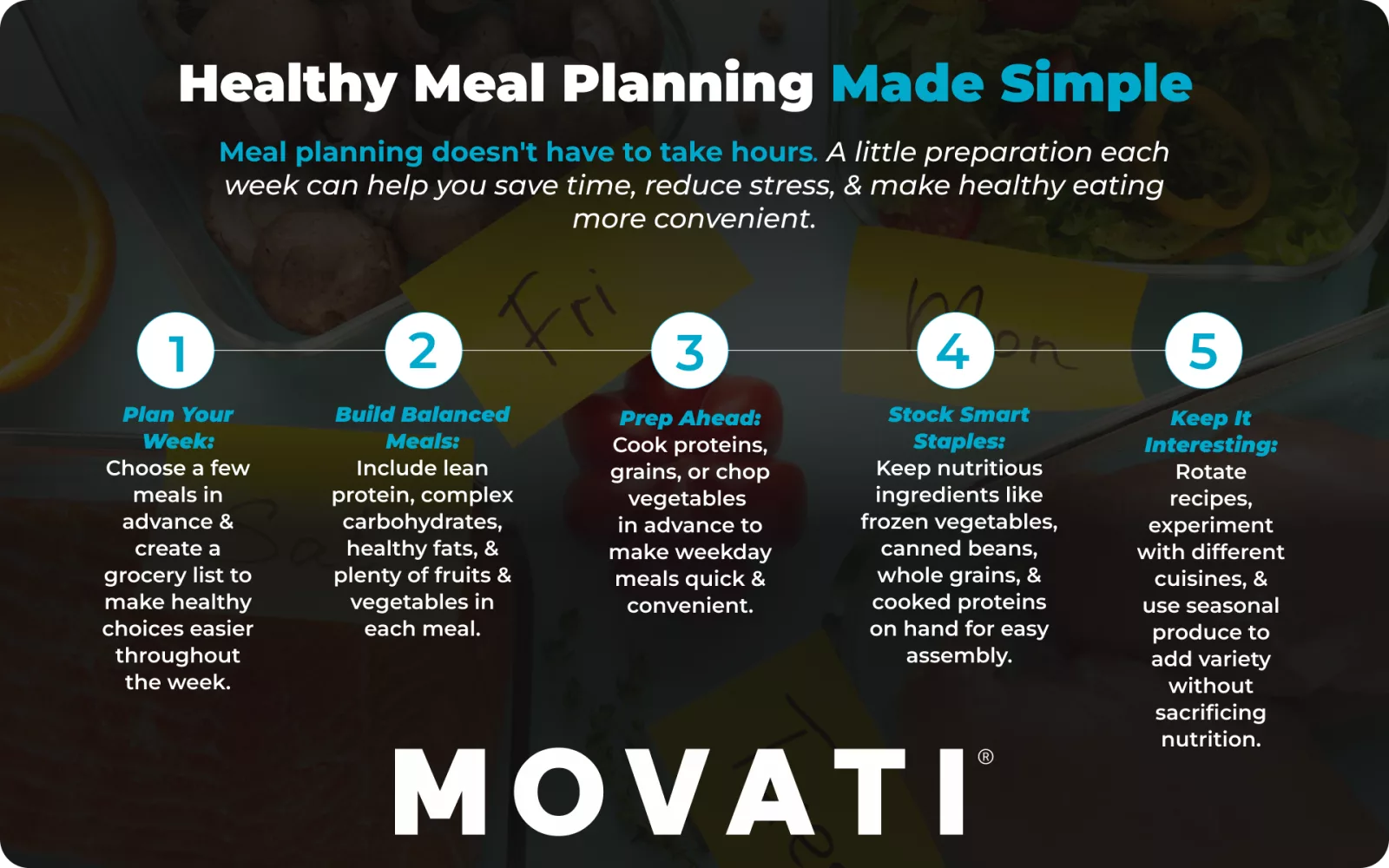
You don’t have to prepare every meal for the week in one day.
Start small by planning three or four dinners, preparing a few healthy lunches, or stocking your fridge with grab-and-go snacks.
Keeping healthy staples on hand—such as frozen vegetables, canned beans, whole grains, and cooked proteins—also makes it easier to throw together balanced meals when time is limited.
The goal isn’t perfection. It’s creating a system that works for your schedule.
My Experience with Meal Planning
One of the biggest improvements I’ve made to my own routine was setting aside about an hour each weekend to prepare for the week ahead. Instead of cooking every meal, I simply prepared ingredients like grilled chicken, chopped vegetables, cooked rice, and overnight oats. Having those basics ready made it much easier to put together healthy meals, even on busy days when I didn’t feel like cooking. I also noticed I wasted less food because I had a plan for using the ingredients I bought instead of letting them sit in the fridge.
Make Healthy Eating Simpler
Healthy meal planning isn’t about perfection—it’s about preparation. By understanding basic nutrition, balancing your meals, preparing ingredients ahead of time, and keeping healthy foods readily available, you can make nutritious eating fit even the busiest lifestyle.
Small, consistent habits often have the biggest impact. Start by planning a few meals each week, build from there, and create a routine that supports your health goals while fitting comfortably into your everyday life.
