
Nutrition advice is everywhere. From TikTok videos and Instagram influencers to podcasts and blog posts, it can be difficult to know what information is backed by science and what is simply another trend. Unfortunately, many popular nutrition myths spread quickly because they’re easy to understand, even if they aren’t accurate.
The best way to make informed decisions about your health is to rely on evidence-based nutrition rather than social media claims or fad diets. Understanding the facts can help you build healthy eating habits that are realistic, sustainable, and supported by research.
Why Are There So Many Nutrition Myths?
Nutrition science is constantly evolving as researchers learn more about how food affects the body. At the same time, social media often simplifies complex topics into short videos or attention-grabbing headlines.
Many nutrition myths originate from:
-
Outdated research
-
Misinterpreted scientific studies
-
Personal success stories presented as universal advice
-
Marketing claims
-
Viral social media trends
While personal experiences can be valuable, they don’t always apply to everyone. That’s why it’s important to consider the broader body of scientific evidence rather than relying on a single opinion or trend.
How Can You Tell if Nutrition Advice Is Credible?
One of the easiest ways to evaluate nutrition information is to ask a few simple questions:
-
Is the advice supported by scientific research?
-
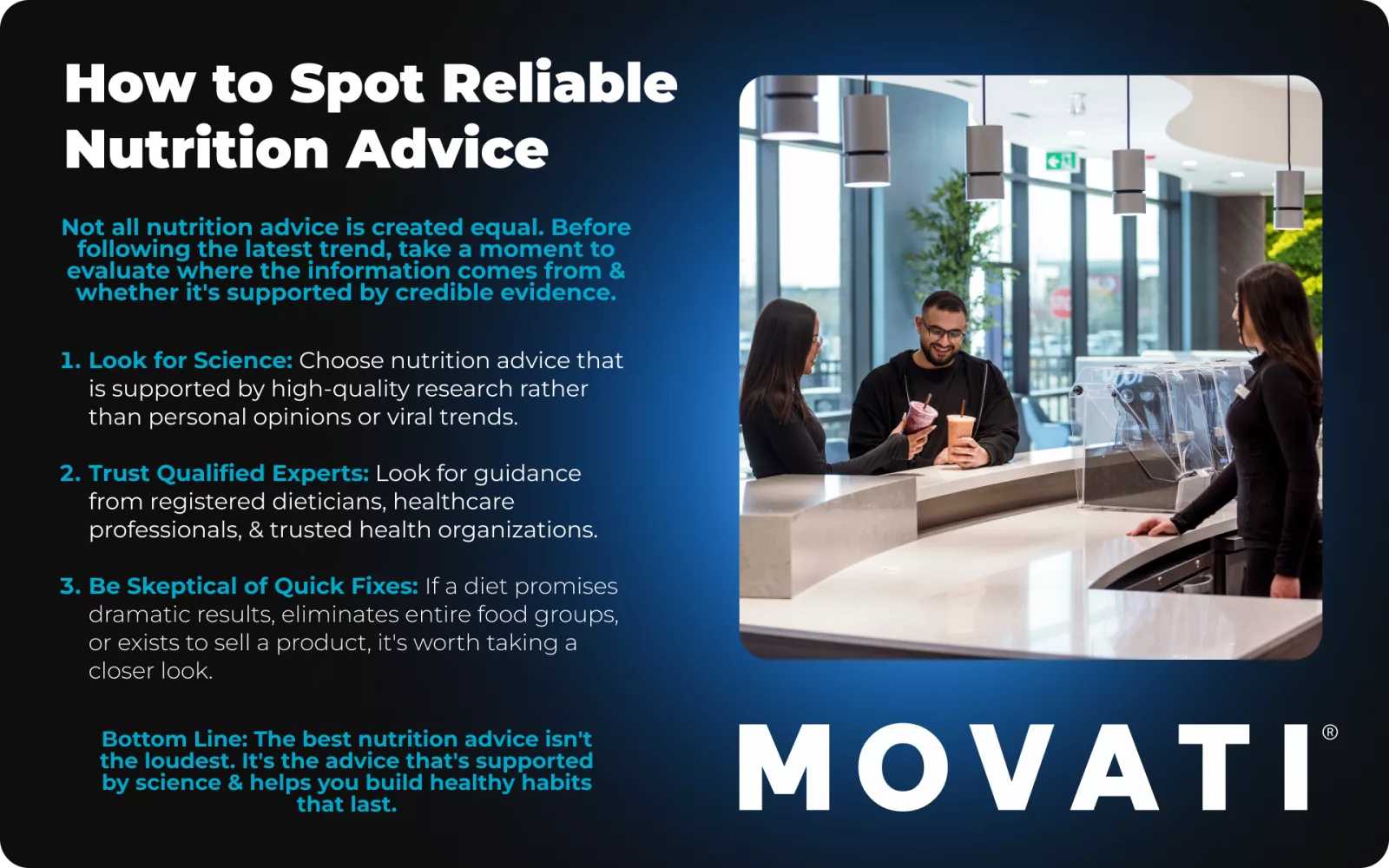
Does it come from a registered dietitian or qualified healthcare professional?
-
Does it promise quick or unrealistic results?
-
Does it eliminate entire food groups without a medical reason?
-
Is it trying to sell a supplement or product?
Generally, if something sounds too good to be true, it probably is.
Myth #1: Are Carbohydrates Bad for You?
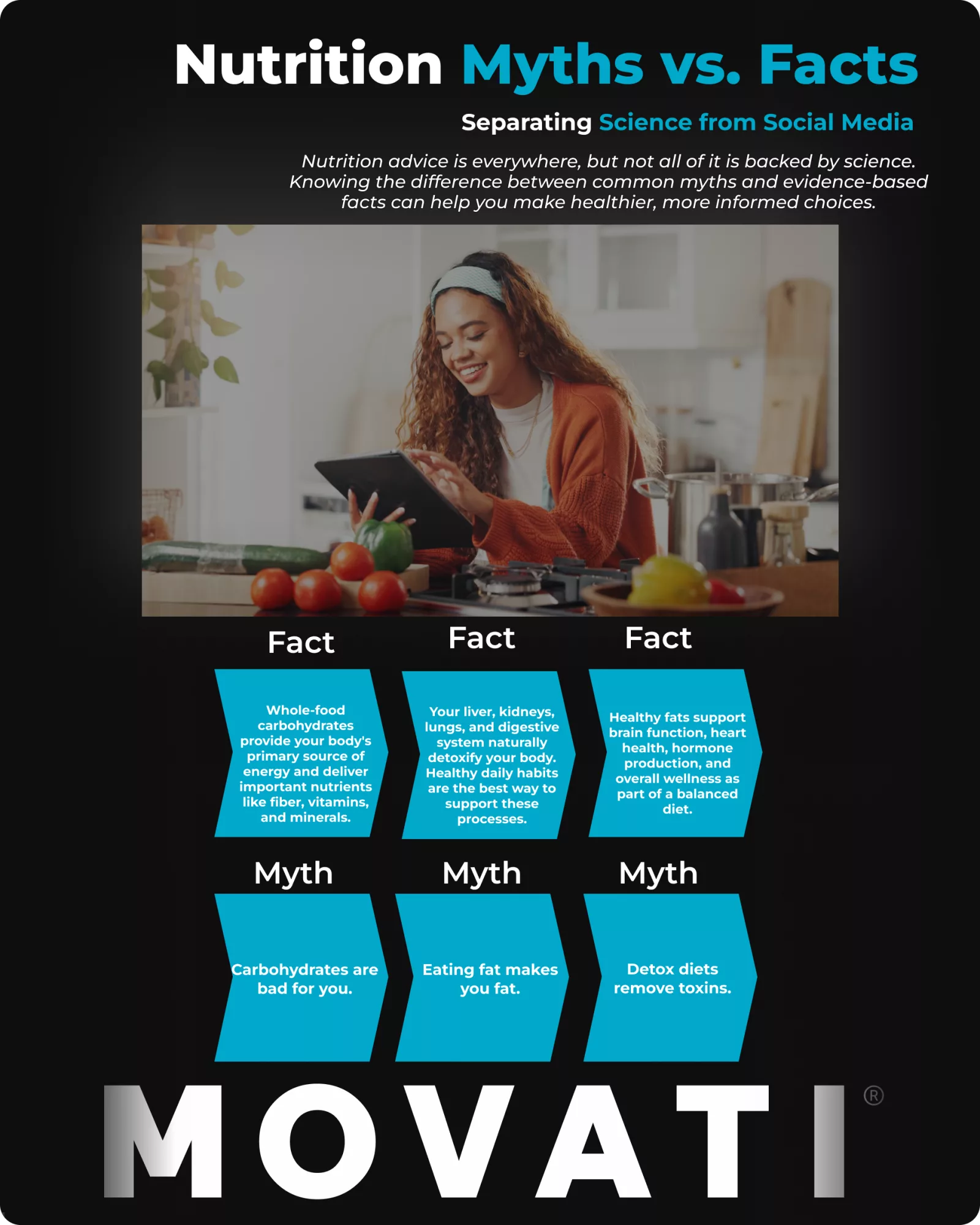
Fact: Carbohydrates are your body’s primary source of energy.
One of the most common nutrition myths is that all carbohydrates should be avoided. While limiting highly processed foods and added sugars can benefit your health, carbohydrates themselves are not the problem.
Whole-food carbohydrates provide important nutrients, including fiber, vitamins, and minerals.
Healthy carbohydrate sources include:
-
Whole grains
-
Oats
-
Brown rice
-
Sweet potatoes
-
Fruits
-
Vegetables
-
Beans and legumes
Rather than avoiding carbohydrates altogether, focus on choosing minimally processed options that provide lasting energy.
Myth #2: Does Eating Fat Make You Fat?
Fact: Healthy fats are an essential part of a balanced diet.
This misconception has existed for decades, but research has shown that dietary fat is not automatically converted into body fat.
Healthy fats support:
-
Brain function
-
Hormone production
-
Heart health
-
Vitamin absorption
-
Cell function
Foods such as avocados, olive oil, nuts, seeds, and fatty fish provide beneficial unsaturated fats that contribute to overall health.
Like all foods, portion sizes still matter, but healthy fats deserve a place in a balanced eating pattern.
Myth #3: Do Detox Diets Remove Toxins?
Fact: Your body already has an effective detoxification system.
Many detox programs claim to cleanse your body of toxins, but your liver, kidneys, lungs, and digestive system already perform this function naturally.
There is little scientific evidence that detox teas, juice cleanses, or restrictive detox diets improve your body’s natural detoxification process.
Instead, you can support these organs by:
-
Drinking enough water
-
Eating plenty of fruits and vegetables
-
Consuming adequate fiber
-
Exercising regularly
-
Getting enough sleep
Healthy lifestyle habits remain the most effective long-term approach.
Myth #4: Does Eating Late at Night Cause Weight Gain?
Fact: Total calorie intake and food quality matter more than the time you eat.
Many people believe eating after a certain hour automatically causes weight gain, but research suggests it’s your overall eating pattern that has the greatest impact.
Eating nutritious foods in appropriate portions at night isn’t inherently unhealthy.
However, late-night eating can become problematic if it leads to excessive snacking, larger portions, or choosing highly processed foods out of convenience.
The focus should be on what you eat and how much you eat throughout the day rather than watching the clock.
Myth #5: Do You Need Supplements to Be Healthy?
Fact: Most people can meet their nutritional needs through a balanced diet.
Supplements can be beneficial in certain situations, such as vitamin D, iron, or vitamin B12 deficiencies, but they should not replace nutritious foods.
Whole foods provide a combination of nutrients, fiber, antioxidants, and plant compounds that supplements cannot fully replicate.
If you’re considering supplements, it’s always best to speak with a healthcare provider or registered dietitian first.
Myth #6: Are High-Protein Diets Better for Everyone?
Fact: Protein is important, but more isn’t always better.
Protein supports muscle growth, recovery, and satiety, but consuming excessive amounts doesn’t automatically lead to better health or more muscle.
Your protein needs depend on factors like age, activity level, and health goals.
A balanced eating pattern that includes protein, carbohydrates, healthy fats, fruits, and vegetables is generally more beneficial than focusing on one nutrient alone.
Why Is Evidence-Based Nutrition Important?
Evidence-based nutrition relies on high-quality scientific research instead of opinions or trends.
Nutrition recommendations are developed by reviewing numerous peer-reviewed studies rather than relying on one isolated piece of research.
This approach helps reduce misinformation and provides guidance that’s more likely to support long-term health.
Trusted sources include:
-
Registered dietitians
-
Your healthcare provider
-
Health Canada
-
The World Health Organization (WHO)
-
The American Heart Association (AHA)
These organizations regularly review new research and update their recommendations as new evidence becomes available.
My Experience Sorting Through Nutrition Advice
One of the biggest lessons I’ve learned is that nutrition becomes much less confusing when you stop chasing every new trend. I’ve seen diets that completely eliminate carbohydrates, encourage expensive detox products, or promise dramatic results in just a few weeks. Instead of trying every popular recommendation, I found it far more helpful to focus on balanced meals built around whole foods and to rely on advice from qualified health professionals. That approach has been much easier to maintain and has helped me avoid the frustration that often comes with constantly changing nutrition trends.
Build Your Nutrition Knowledge on Facts, Not Trends
Social media can be a great source of inspiration, but it shouldn’t replace evidence-based nutrition advice. Understanding the difference between myths and facts allows you to make informed food choices that support your long-term health instead of chasing short-lived trends.
The healthiest eating habits are rarely the most restrictive or the most popular online. They’re the ones you can maintain consistently by choosing balanced meals, eating a variety of whole foods, and relying on trusted, science-backed information when making decisions about your nutrition.
*MOVATI’s trainers and/or consultants are not health care providers, and do not provide any medical diagnosis, treatment or advice, and any trainer and/or consultant tips are not intended to replace the advice of a health care professional.
