Single leg exercises develop lower-body strength while asking each side to manage balance and control independently. They can reveal side-to-side differences, complement squats and deadlifts, and prepare the body for everyday tasks that happen one step at a time.
Why train one side at a time?
Unilateral movements reduce the ability of the stronger side to dominate. They also challenge the foot, ankle, knee and hip to coordinate. That makes them useful, but not automatically superior to two-leg lifts. Most programs benefit from both.
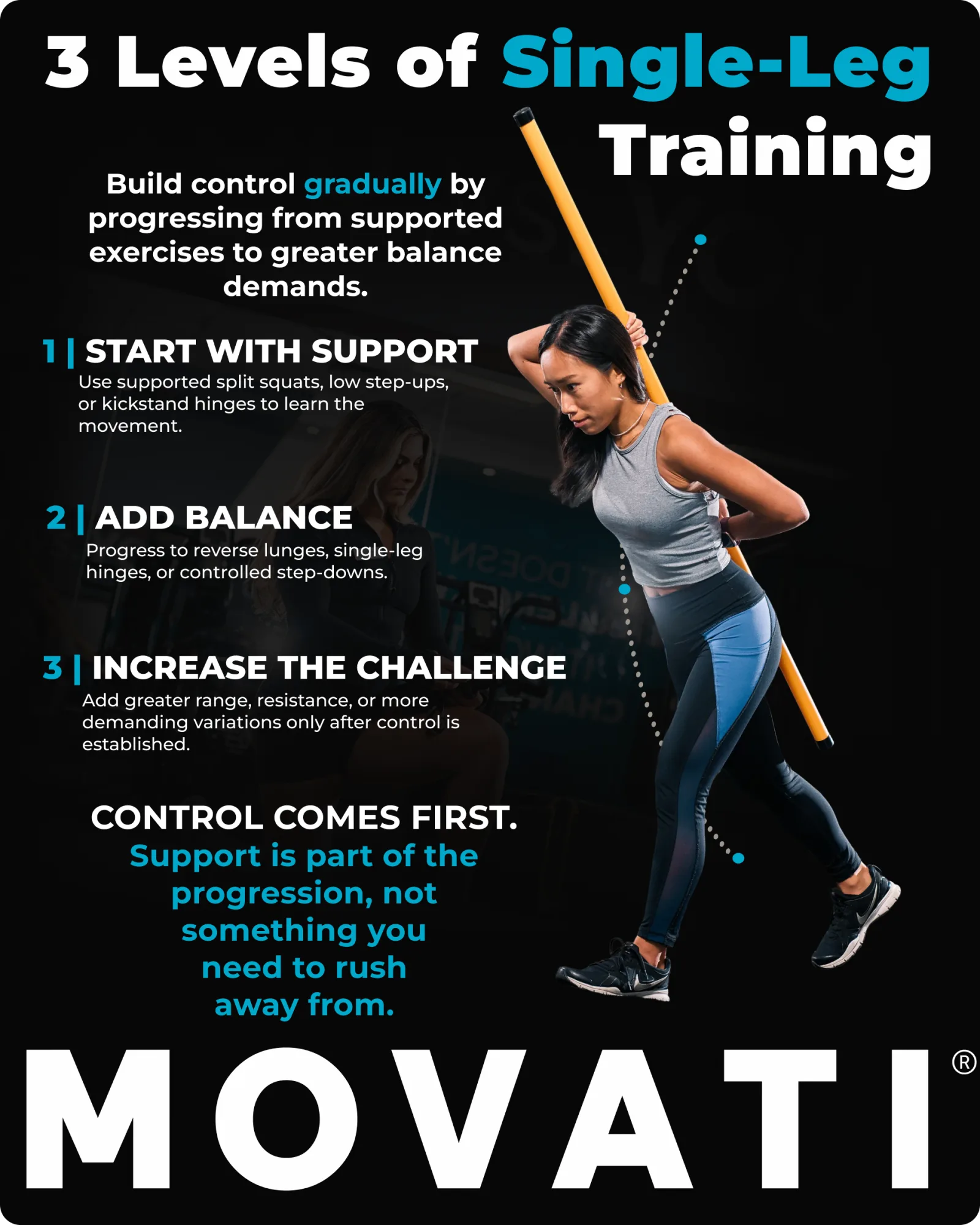
Start with supported options
Supported split squat
Hold a rail, place one foot forward and lower straight down. Use support to keep the movement stable and direct effort into the legs.
Low step-up
Plant the whole foot on a low box and stand through the working leg. Limit the push from the trailing foot and step down slowly.
Kickstand Romanian deadlift
Place most of your weight on the front leg and use the rear toes as a kickstand. Push the hips back while keeping them square.
Progress to greater balance demands
Reverse lunge
Step back softly and drive through the front foot to return. Keep the front knee aligned with the toes.
Single-leg Romanian deadlift
Tip forward from the hip as the free leg reaches behind you. A smaller range with level hips is more useful than reaching the floor with rotation.
Lateral step-down
Stand on a low step and lower the free heel toward the floor. Control the standing knee and use a shorter range if needed.
Add advanced variations carefully
Rear-foot-elevated split squats, higher step-ups and loaded single-leg hinges increase the challenge. Earn these options by controlling the simpler version first. Instability is not the goal; purposeful tension in the working leg is.
How to program unilateral work
Choose one knee-dominant exercise, such as a split squat, and one hip-dominant exercise, such as a single-leg hinge. Complete two or three sets per side after your main bilateral lift or use them as the primary movements in a lighter session.
How to handle side-to-side differences
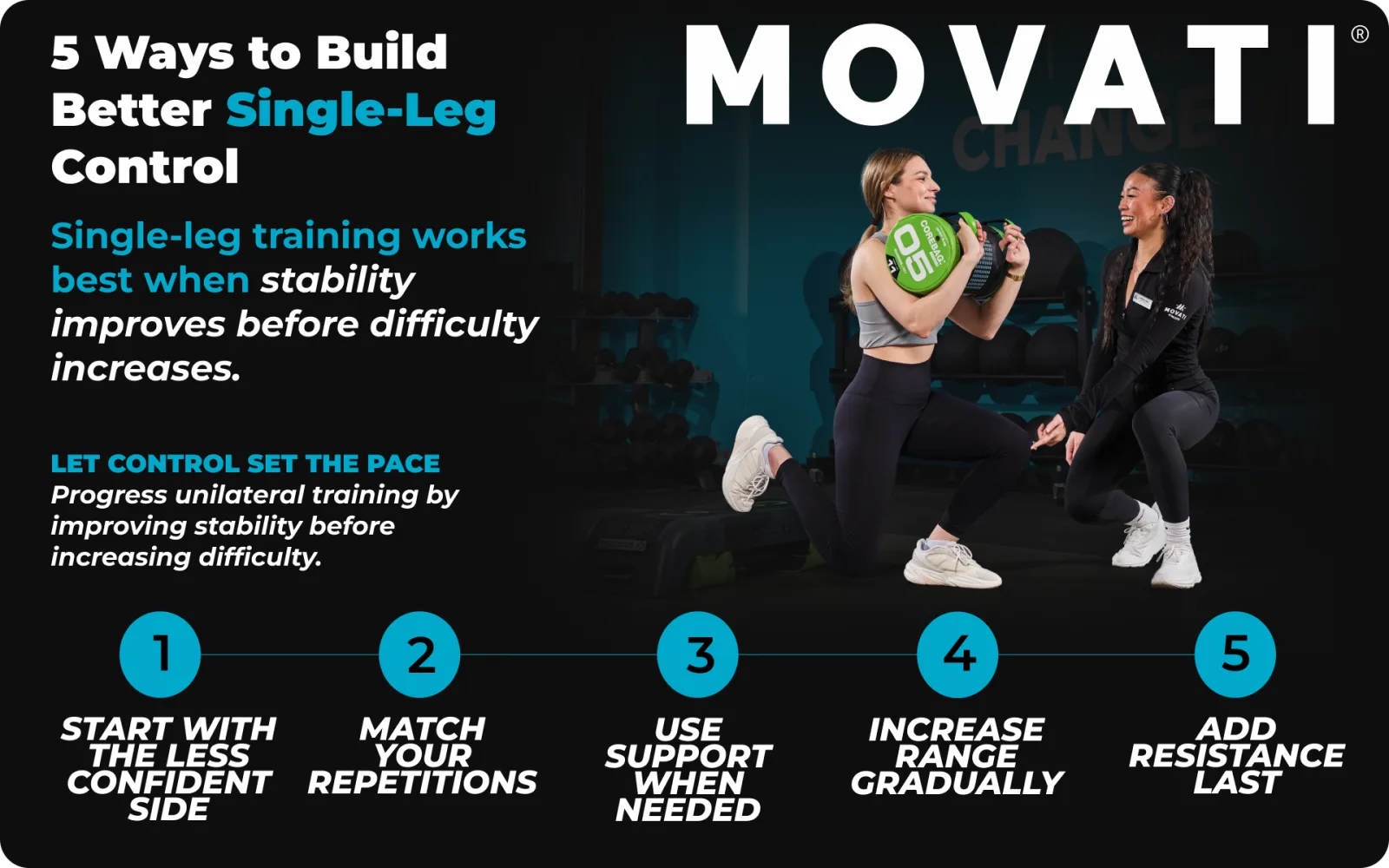
Begin with the less confident side and match the same repetitions on the other side. Avoid adding large amounts of extra work without professional guidance. Differences in balance or mobility are common and may improve with consistent practice.
Use loads and ranges that allow stable, repeatable movement. If pain or a history of injury changes how you bear weight, consult a qualified health professional.
Single-leg training works best when progression is gradual. Master support, then range, then resistance—and let control determine when you move forward.
