
If you’re keen to learn how to start running but aren’t sure where to begin, don’t fret. Our MOVATI Performance Coaches have tips to help you start on the right foot.
One of the great things about running is how simple it can be to get started. With a comfortable pair of running shoes and a little time, you can head outside, hop on a treadmill, or hit the track and begin building your running routine. Running is an effective form of cardiovascular exercise that can help improve cardiorespiratory fitness, support heart health, build endurance, and contribute to overall physical and mental well-being. Better yet, you don’t have to run particularly fast or far to call yourself a runner. For beginners, the goal isn’t to see how quickly you can finish your first kilometre. It’s to gradually build a routine your body can adapt to and that you can realistically maintain.
Before You Start Running
For most healthy adults, gradually increasing physical activity is considered safe. However, running is a vigorous, weight-bearing activity, so some people may benefit from speaking with a healthcare professional before getting started. Consider checking in with your doctor if you have a chronic health condition, have been inactive for an extended period, have an injury or physical limitation that may affect exercise, or experience symptoms such as chest discomfort, unusual shortness of breath, dizziness, or fainting during physical activity. Once you’re ready to get moving, starting a running routine can be surprisingly simple. For more tips visit this post on physical activity tips for adults from the Government of Canada’s Public Health blog.
Start by Walking
If you’re new to exercise or have been sedentary for a while, you don’t need to start running continuously. Begin with walking and gradually work toward approximately 30 minutes of brisk walking several times per week. This gives you an opportunity to establish an exercise routine before adding the additional demands of running. Once walking feels comfortable, you’re ready to begin introducing running intervals.
Try a Walk-Run Approach
Alternating between walking and running is an excellent way to introduce your body to running without expecting yourself to complete an entire workout at a running pace.
Try starting with:
5 minutes: Brisk walking to warm up
1 minute: Easy running
2 minutes: Walking
Repeat: Run-walk intervals for 20–30 minutes
Finish: A few minutes of easy walking
Don’t worry if one minute of running feels challenging at first. That’s exactly why the walking intervals are there. As your fitness improves and running begins to feel more comfortable, gradually lengthen your running intervals while shortening your walking breaks. Walking during a run isn’t failing. It’s a useful training tool that can help you manage effort and gradually build endurance.
Focus on Time Before Speed
When you’re starting out, resist the temptation to chase a particular pace. Instead, focus on gradually increasing the amount of time you’re comfortable running. Once you’ve established consistency, you can begin working toward goals involving distance, pace, or endurance. Running is highly individual. How often, how far, and how quickly you run will depend on your fitness level, experience, schedule, and goals. Maybe you want to improve your cardiovascular fitness. Maybe you’re working toward your first 5K. Or perhaps running is simply an opportunity to get outside, clear your head, and move. Knowing why you’re running can help you build a routine that works for you.
Running Basics FAQ
You don’t need to obsess over every detail of your running technique. However, understanding a few basics about effort, breathing, form, and recovery can make it feel much more approachable when you start running.
How Should I Warm Up?
Give yourself approximately 5–10 minutes to transition into your workout. Start with easy walking before increasing your pace. You can also incorporate dynamic movements such as leg swings, marching, high knees, or other exercises that move your joints and muscles through a comfortable range of motion. Your warm-up should prepare you to run, not exhaust you before you even begin to start running.
How Fast Should I Run?
For beginner, slower is often better when you first start running. One of the easiest ways to judge your effort is the talk test. During an easy run, you should generally be able to speak in complete sentences. If you’re struggling to get more than a few words out, slow your pace or take a walking interval. You can also think about your effort on a scale from 1–10. An easy beginner run might feel around a 3–5 out of 10. You’re clearly exercising, but you aren’t pushing yourself to your limit. There will be opportunities to work on speed later. First, build the consistency and endurance that will support it.
How Should I Breathe While Running?
Don’t overcomplicate your breathing. Some runners breathe through their nose, others through their mouth, and many naturally use a combination of both. Rather than forcing yourself into a particular breathing pattern, focus on maintaining a pace where you can breathe comfortably and rhythmically. If you’re gasping for air during what is supposed to be an easy run, that’s a good indication that it’s time to reduce your pace.
What’s Proper Running Form?
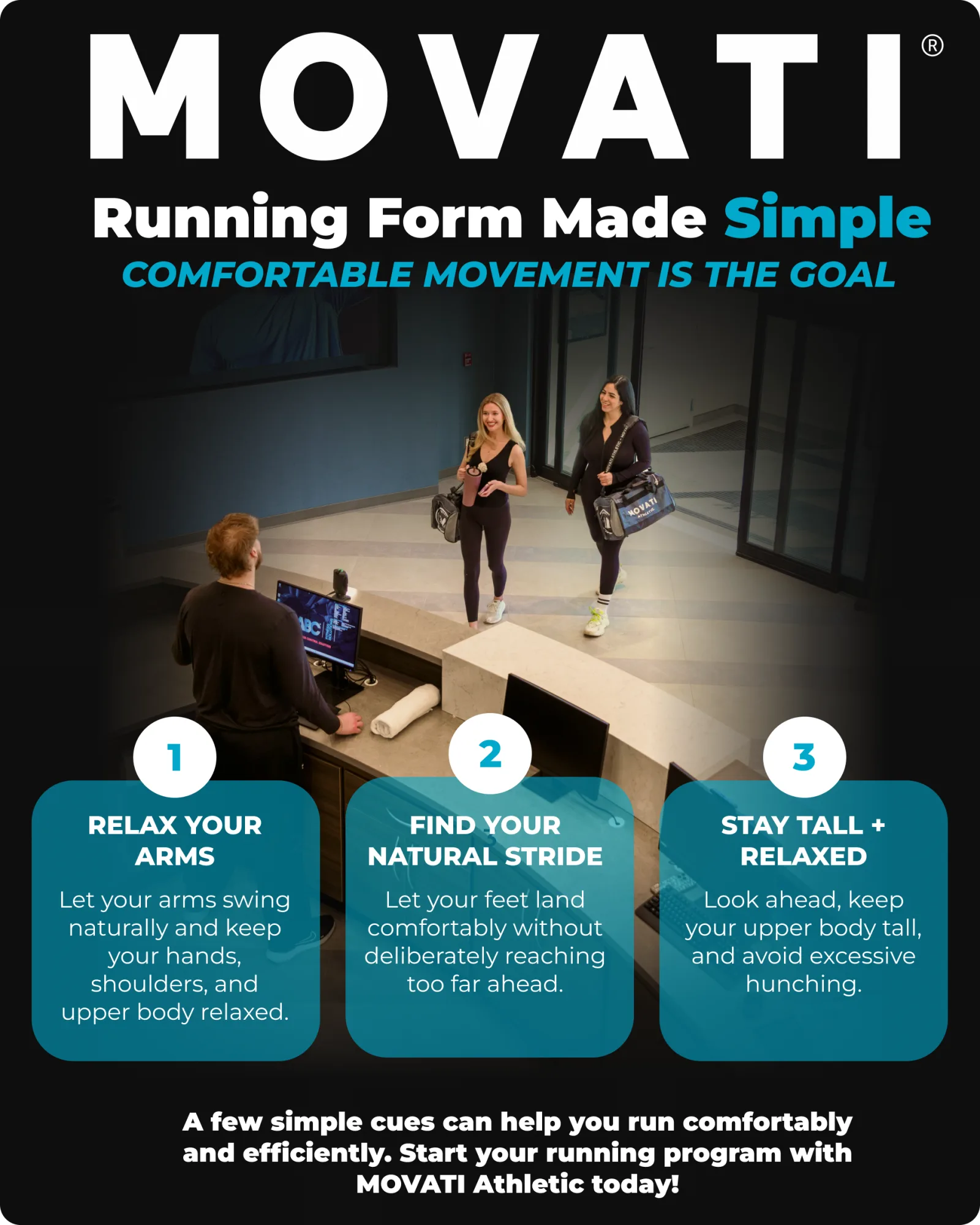
There isn’t one perfect running form that every runner needs to replicate. However, a few basic cues can help you run comfortably and efficiently.
Arms
Keep your arms relaxed and allow them to swing naturally alongside your body. Avoid excessive tension in your hands, shoulders, or upper body.
Feet
Aim for a comfortable, natural stride rather than deliberately reaching your foot far ahead of your body.
Body
Keep your upper body tall but relaxed. Look ahead rather than directly at your feet and avoid excessive hunching at your shoulders or waist. Most importantly, don’t spend your entire run worrying about whether every step looks perfect. Comfortable movement is the goal.
What Should it Feel Like When You Start Running?
Running can feel challenging, particularly when you’re new to it. Heavy breathing, tired muscles, and general fatigue can all occur during exercise. Pain is different. Pay attention to discomfort that is sharp, worsening, changes the way you run, persists during everyday activities, or repeatedly returns when you exercise. Pushing through pain isn’t a requirement for becoming a better runner. If something doesn’t feel right, stop, recover, and seek guidance from an appropriate healthcare professional if the problem persists.
What’s the Best Way to Cool Down?
Avoid going from a hard running effort directly to standing still. Gradually reduce your pace and finish with several minutes of easy jogging or walking. This gives your body an opportunity to transition from exercise back toward rest. Afterward, gentle mobility or stretching may feel good, particularly if there are areas where you commonly experience tightness.
Where Should I Run?
The best place to run is somewhere you feel comfortable and can train consistently. That might be a treadmill, indoor track, outdoor track, sidewalk, trail, or neighbourhood route. As you gain experience, varying your running environment can also keep your routine interesting. Just remember that different surfaces, hills, weather conditions, and terrain can change how difficult a run feels.
How Often Should Beginners Run?
You don’t need to run every day to improve. For many beginners, approximately three running or walk-run sessions per week can provide a manageable starting point while leaving room for strength training, other activities, and recovery. Your ideal frequency will depend on your current fitness, schedule, goals, and how your body responds to training. Consistency matters more than trying to fit as many runs as possible into one week.
How to Build Running Endurance
Once your walk-run workouts begin feeling comfortable, you can gradually increase the amount of running you’re doing. The key word is gradually. Your cardiovascular fitness may begin improving relatively quickly, but your muscles, tendons, bones, and joints also need time to adapt to the repetitive demands of running.
Progress Gradually
You may have heard runners talk about the “10% rule,” which suggests limiting weekly mileage increases to approximately 10%. Rather than treating one percentage as a universal injury-prevention rule, focus on making manageable changes based on how your body responds to training. Avoid dramatically increasing your distance, frequency, and intensity all at once when you start running. For example, if you’re starting to run farther, you may want to keep your pace comfortable rather than simultaneously trying to set a new speed goal. There’s also nothing wrong with repeating the same training week before progressing. You don’t have to make every week harder than the last.
Add Strength Training
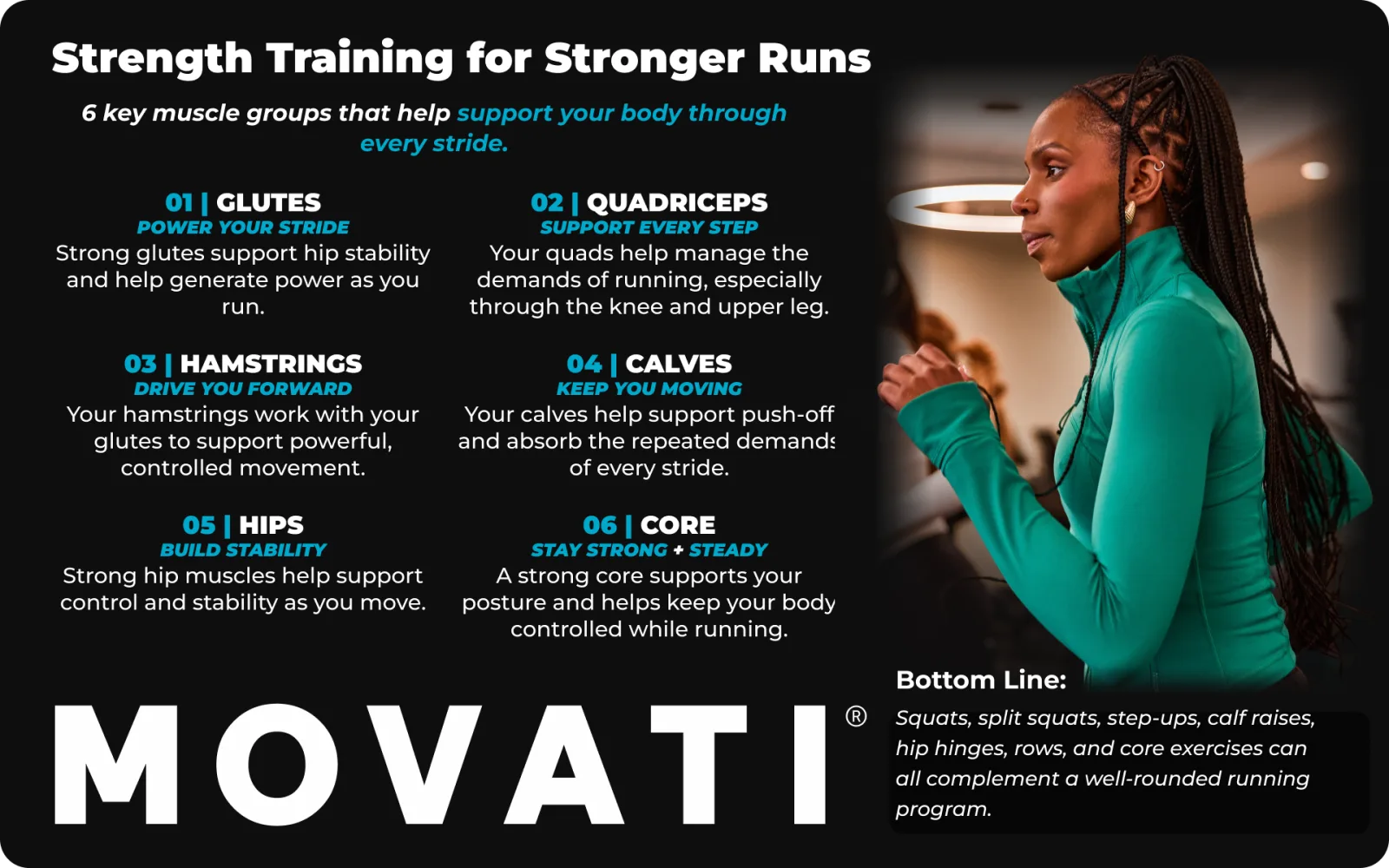
Running isn’t the only training that can help you become a stronger runner. Strength training can complement your running program by developing the muscles that support movement and help your body manage the demands of your workouts. Pay particular attention to your:
Glutes
Quadriceps
Hamstrings
Calves
Hips
Core
Exercises such as squats, split squats, step-ups, calf raises, hip hinges, rows, and core exercises can all have a place in a well-rounded strength program. If you aren’t sure where to begin when you decide to start running, a MOVATI Performance Coach can help you build a program appropriate for your experience, abilities, and goals.
Cross Train
Your cardiovascular training doesn’t always have to involve running. Cycling, swimming, walking, group fitness classes, and elliptical training are examples of activities that can complement a running program while providing a different training stimulus. Cross training can be especially useful as your running volume increases or when you simply want some variety in your routine.
Prioritize Rest and Recovery
Recovery isn’t time wasted between workouts. It’s part of your training. Running creates a physical demand that your body needs time to recover from. Sleep, nutrition, hydration, easier training days, and rest all contribute to your ability to return for your next workout ready to move. More running isn’t automatically better running. Pay attention to how you feel and give yourself permission to take an additional recovery day when you need one.
What Could a Beginner Running Week Look Like?
There’s no perfect schedule that works for everyone, but a beginner week could look something like this:
Monday: 25–30 minute walk-run
Tuesday: Strength training or rest
Wednesday: 25–30 minute walk-run
Thursday: Rest or light activity
Friday: Strength training
Saturday: 25–30 minute walk-run
Sunday: Rest or gentle recovery activity
Use this as an example rather than a rigid prescription. Your schedule should reflect your fitness level, goals, recovery, and lifestyle.
How to Stay Motivated
Choosing to start running is one thing. Turning it into something you actually want to continue is another. Having a plan and knowing your goal are two common ways to ensure you stay motivated to keep it up after you start.
Have a Plan
Schedule your runs like you would any other commitment. If lunchtime is your best opportunity, put it on your calendar. If you prefer running before work, prepare your clothing and shoes the night before. Removing small barriers can make it easier to follow through. At the same time, don’t let consistency become rigidity. If your body is telling you that you need to recover, taking a rest day doesn’t undo the work you’ve already completed.
Know Your Goal
Be intentional about why you’re running. Maybe you want to improve your fitness, complete your first 5K, have more energy, spend more time outdoors, or simply prove to yourself that you can establish a new routine.
Some further common motivators include:
Run with friends or family
Join a running community or club
Sign up for a race
Record and track your progress
Make it a competition with yourself
Your reason doesn’t need to impress anyone else. Having a meaningful goal gives all those individual runs something to add up to in the long run.
Your First Goal: Keep Showing Up
You don’t need to be fast. You don’t need expensive equipment. And you certainly don’t need to run a marathon to benefit from running. All you need is to start running. Start with what you can comfortably manage today and give yourself time to improve. Walk when you need to. Run at a pace that feels sustainable. Strength train to support your body. Prioritize recovery. And gradually build from there. The most effective running routine isn’t necessarily the hardest one. It’s the one you can consistently return to. Join MOVATI Today and get Started with this Special Offer. Already a member? Get customized programming and improve your mobility and recovery by consulting with one of our Performance Coaches in club and complete your Game Plan Session or join seminars with one of our fitness professionals. Story Credit: Filip Owczarzak, Performance Coach *MOVATI’s trainers and/or consultants are not health care providers, and do not provide any medical diagnosis, treatment or advice, and any trainer and/or consultant tips are not intended to replace the advice of a health care professional.
