The dumbbell bench press is a popular strength-training exercise that can help develop upper-body strength, build muscle, and improve stability. Unlike a barbell bench press, using separate dumbbells requires each arm to work independently, which can place additional demands on the stabilizing muscles and help develop more balanced strength. The exercise can also provide a greater range of motion for some individuals, making it a versatile addition to chest, upper-body, or full-body strength-training routines.
Proper form and technique are important for getting the most from the dumbbell bench press while reducing unnecessary stress on the shoulders, elbows, and wrists. Understanding how to position your body, control the dumbbells, and move through an appropriate range of motion can help make each repetition safer and more effective. In this guide, we’ll explain how to perform the dumbbell bench press correctly, explore the primary and supporting muscles involved, and provide practical tips for incorporating the exercise into your workouts.
Understanding the Dumbbell Bench Press
Dumbbell exercises press is a compound exercise that primarily targets the chest muscles, or pectorals, while also engaging the shoulders and triceps. Unlike the barbell bench press, using dumbbells allows for a greater range of motion, enhancing muscle activation and promoting balanced muscle development. This exercise is particularly effective for those looking to correct muscle imbalances and improve overall upper body strength.
Dumbbell Workouts Are One of the Most Popular Ways to Strength Train
Dumbbell workouts are a versatile and effective way to build strength, improve stability, and increase functional fitness. Whether you’re a beginner or an experienced lifter, dumbbells allow you to train virtually every major muscle group while promoting balanced muscle development.
Key findings:
- According to the Health & Fitness Association’s 2025 U.S. Health & Fitness Consumer Report, 32.1% of active gym members use dumbbells or free weights, making them the second most-used equipment in commercial gyms, behind only treadmills.
- The report found that free weights remain one of the most popular training methods, reflecting the growing interest in functional strength training.
- Dumbbell workouts can help improve:
- Total-body strength.
- Muscle balance by training each side independently.
- Coordination and stability.
- Functional movement patterns used in everyday life.
- Unlike many exercise machines, dumbbells require your stabilizing muscles to work throughout each movement, making them an effective tool for improving overall athleticism and reducing muscle imbalances.
Reference:
Health & Fitness Association. How 77 Million Fitness Members Work Out: New HFA Data Reveals Shifting Equipment, Training, and Membership Trends. Available at: https://www.healthandfitness.org/how-77-million-fitness-members-work-out-new-hfa-data-reveals-shifting-equipment-training-and-membership-trends
Step-by-Step Guide to Performing the Dumbbell Bench Press
Setting Up the Bench
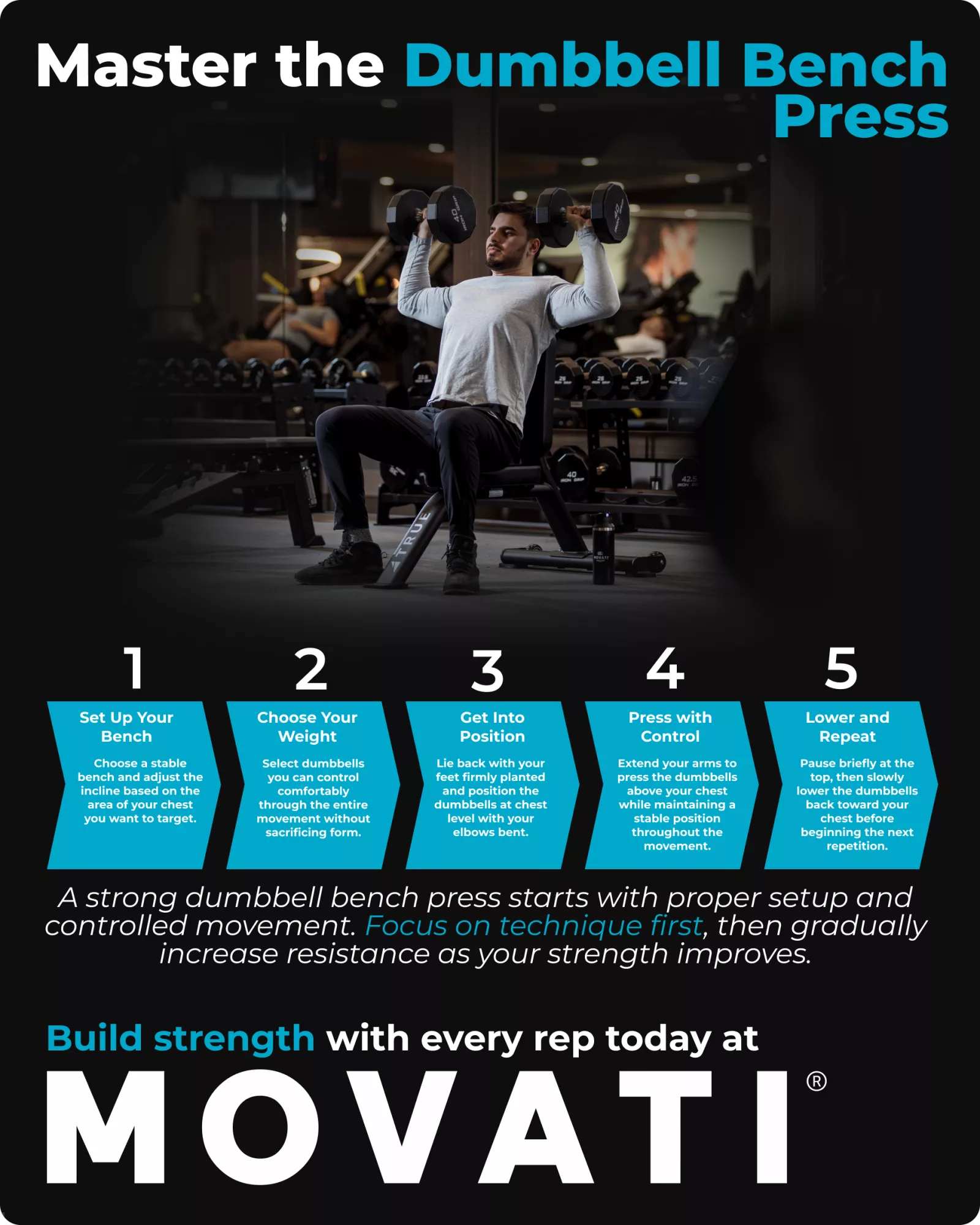
Proper setup is essential for executing a successful dumbbell press. Begin by selecting an appropriate bench. An adjustable bench is ideal as it allows you to modify the incline, targeting different parts of the chest. Ensure the bench is stable and positioned in an open space to allow for safe movement.
Choosing the Right Weights
Select dumbbells that match your current strength level. Beginners should start with lighter weights to focus on form before progressing to heavier loads. It’s crucial to maintain control over the weights throughout the exercise to prevent injury.
Executing the Exercise
- Sit on the bench, holding a dumbbell in each hand with a neutral grip (palms facing each other).
- Lie back on the bench, keeping your feet flat on the floor for stability.
- Position the dumbbells at chest level with your elbows bent at approximately 90 degrees.
- Press the dumbbells upward by extending your arms fully, ensuring the weights are directly over your chest.
- Pause briefly at the top, then lower the dumbbells slowly back to the starting position, maintaining control throughout.
Common Mistakes to Avoid
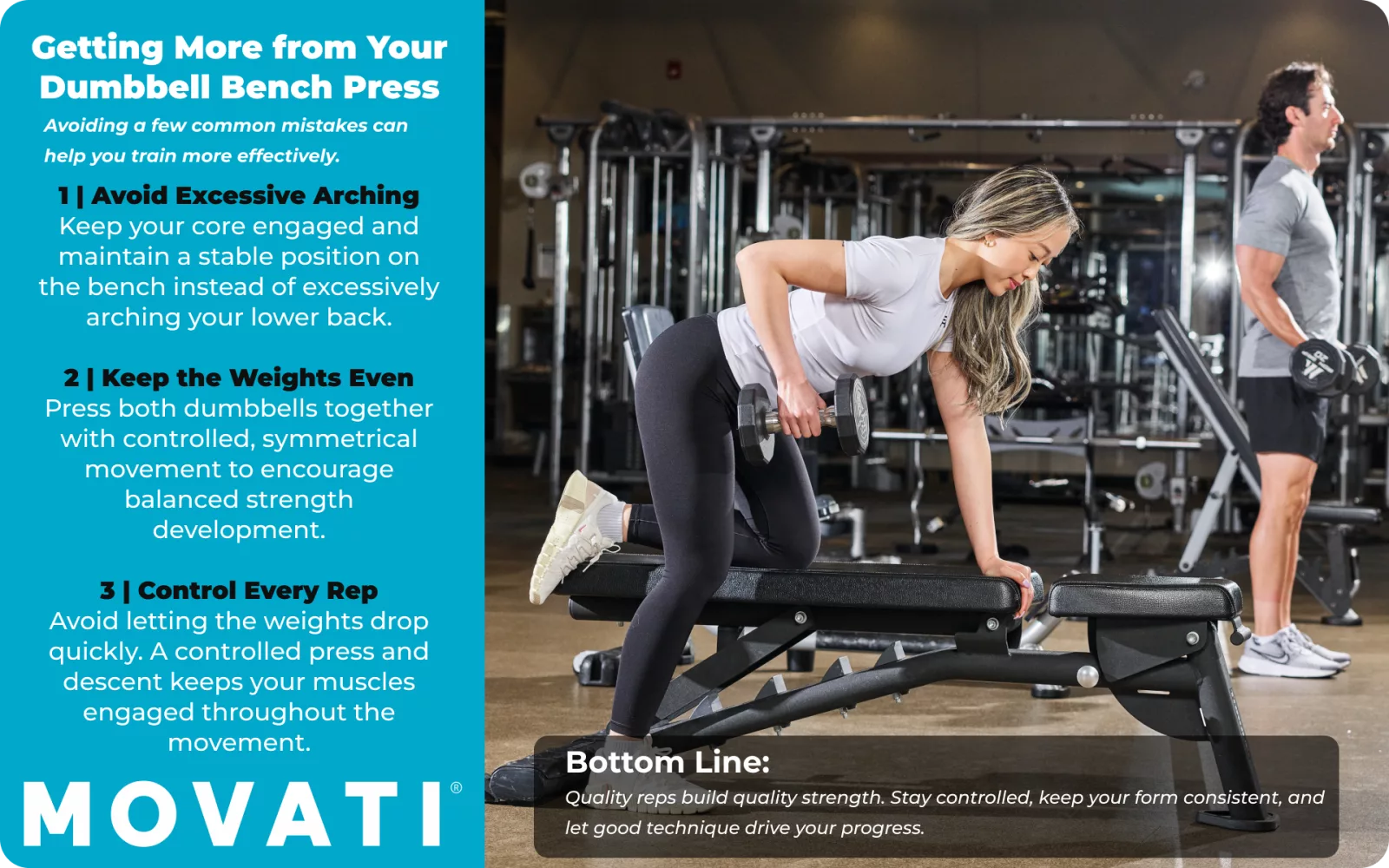
Ensuring proper form is vital to prevent injuries and maximize the effectiveness of the dumbbell press. Here are some common mistakes to watch out for:
Arching the Back Excessively
While a slight arch in the lower back is natural, excessive arching can lead to strain and potential injury. Keep your core engaged and your back against the bench to maintain proper alignment.
Uneven Lifting
It’s crucial to lift both dumbbells evenly to prevent muscle imbalances. Focus on pressing the weights simultaneously and maintaining symmetry throughout the movement.
Failing to Control the Weight
Allowing the weights to drop too quickly can compromise form and increase injury risk. Always control the descent and ascent of the dumbbells for optimal muscle engagement and safety.
Benefits of the Dumbbell Bench Press
The dumbbell press offers numerous advantages that make it a valuable addition to any workout regimen.
1. Enhanced Muscle Activation
The increased range of motion with dumbbells compared to a barbell bench press leads to greater muscle activation, particularly in the chest and stabilizer muscles. This can result in more significant muscle growth and strength gains.
2. Improved Shoulder Stability
By allowing the shoulders to move more naturally, the dumbbell press can improve shoulder joint stability and reduce the risk of injury. This is especially beneficial for athletes and individuals with previous shoulder issues.
3. Balanced Muscle Development
Using dumbbells requires each side of the body to work independently, promoting balanced muscle development. This can help correct asymmetries and improve overall strength and coordination.
Incorporating the Dumbbell Bench Press into Your Routine
To fully reap the benefits of the dumbbell press, consider incorporating it into your regular workout routine. Aim for two to three sessions per week, ensuring adequate rest between workouts for muscle recovery. Combine the dumbbell press with other compound exercises like squats and deadlifts for a well-rounded strength training program.
Conclusion
The dumbbell bench press is an essential exercise for anyone looking to enhance their upper body strength and muscle definition. By mastering the correct form and understanding the nuances of the exercise, you can maximize its benefits while minimizing the risk of injury. Remember to prioritize form, choose appropriate weights, and incorporate the exercise into a balanced workout routine for optimal results.
