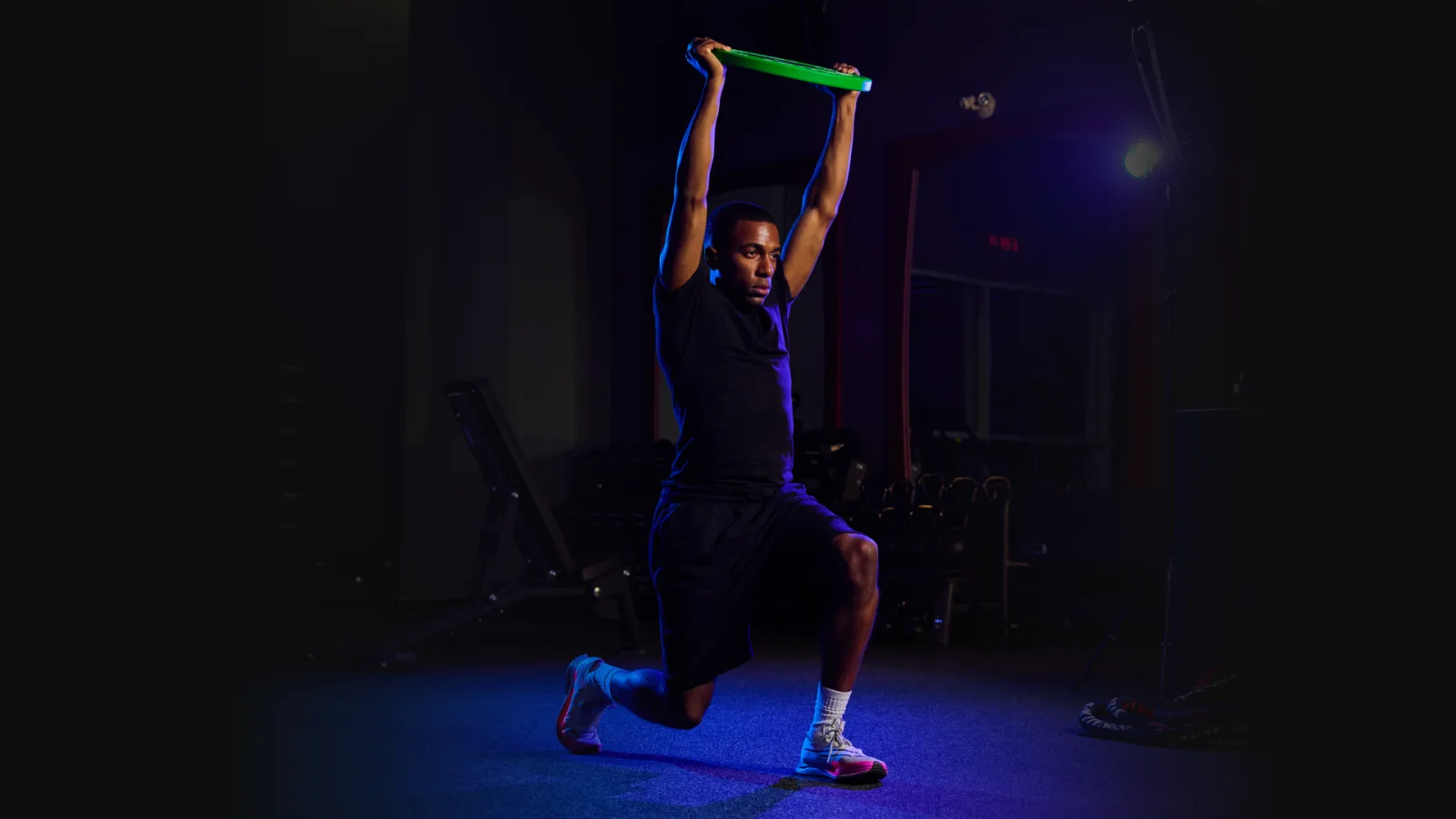
Every time you rise from a chair, climb a flight of stairs or carry groceries home, your legs and glutes are doing the work. Building strength in these muscles can make everyday movement feel steadier and more comfortable. You do not need an elaborate workout to begin; a few well-chosen exercises can give you a strong foundation.
The key is to learn the basic movements, practise them with good form and build on them gradually. Squatting, stepping and bending at the hips each strengthen your lower body in a different way. The exercises below will help you get familiar with those patterns and start putting them into a routine.
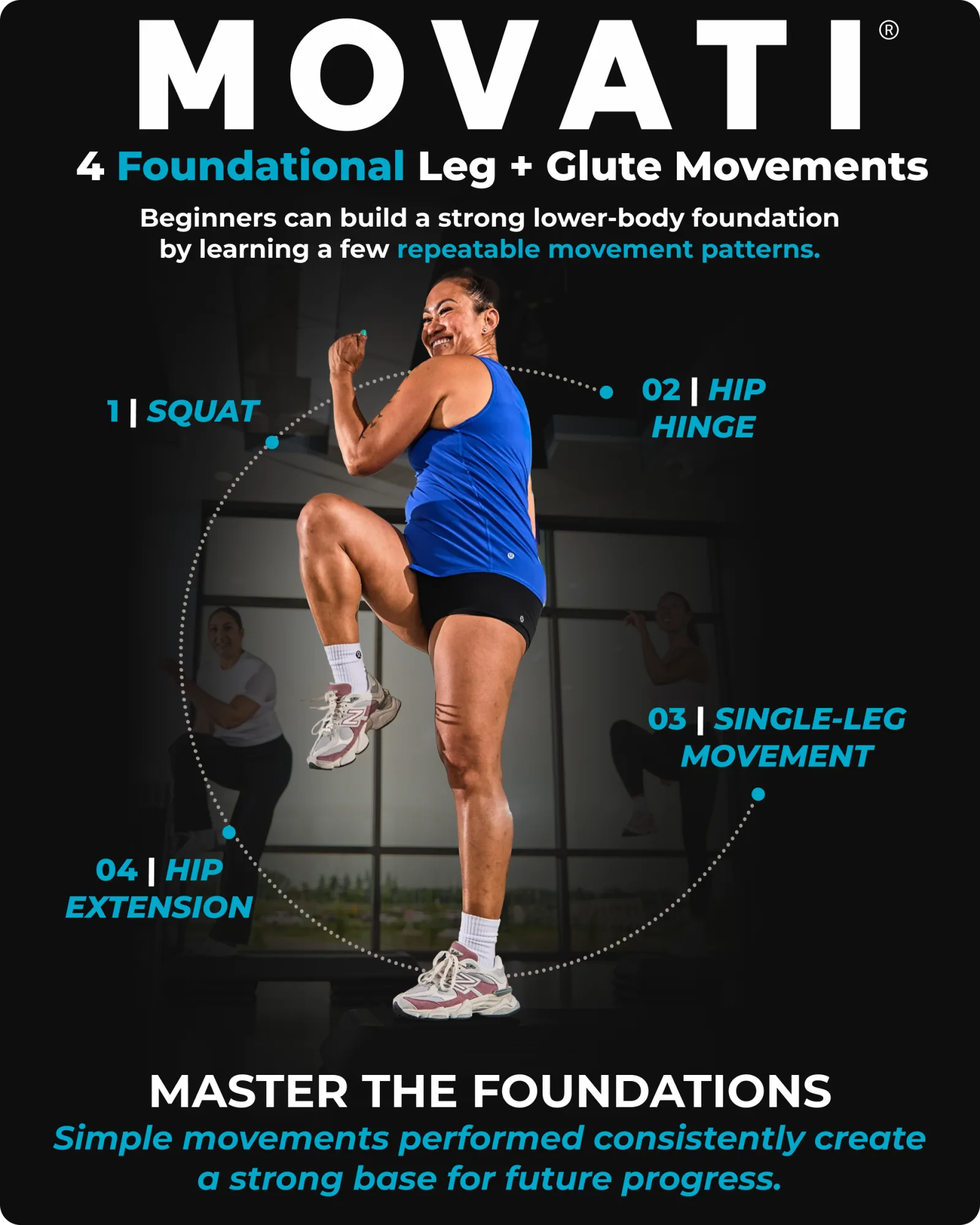
Learn the four foundational patterns
Squat
A squat trains the thighs and glutes as the hips and knees bend together. Begin with a sit-to-stand from a bench or a bodyweight squat to a box. Keep the whole foot grounded and use a depth you can control.
Hip hinge
A hinge trains the back of the legs and glutes by moving the hips backward. Practise with your hands on your hips, then add a light Romanian deadlift or cable pull-through.
Single-leg movement
Step-ups, supported split squats and reverse lunges let each leg work independently. Hold a stable support so balance does not prevent you from learning the movement.
Hip extension
Glute bridges and hip thrusts build strength as the hips extend. Finish by squeezing the glutes, not by arching the lower back.
A simple beginner routine
- Box squat or sit-to-stand: two sets
- Light Romanian deadlift: two sets
- Supported reverse lunge: two sets per side
- Glute bridge: two sets
- Calf raise: two sets
Choose a repetition range that lets you move smoothly and finish with a few good repetitions available. Rest long enough that the next set looks like the first.
What good technique feels like
Good technique is repeatable. Your joints should follow a stable path, the load should remain under control and the target muscles should fatigue before your position falls apart. Bodies move differently, so your stance and range do not need to match someone else’s exactly.
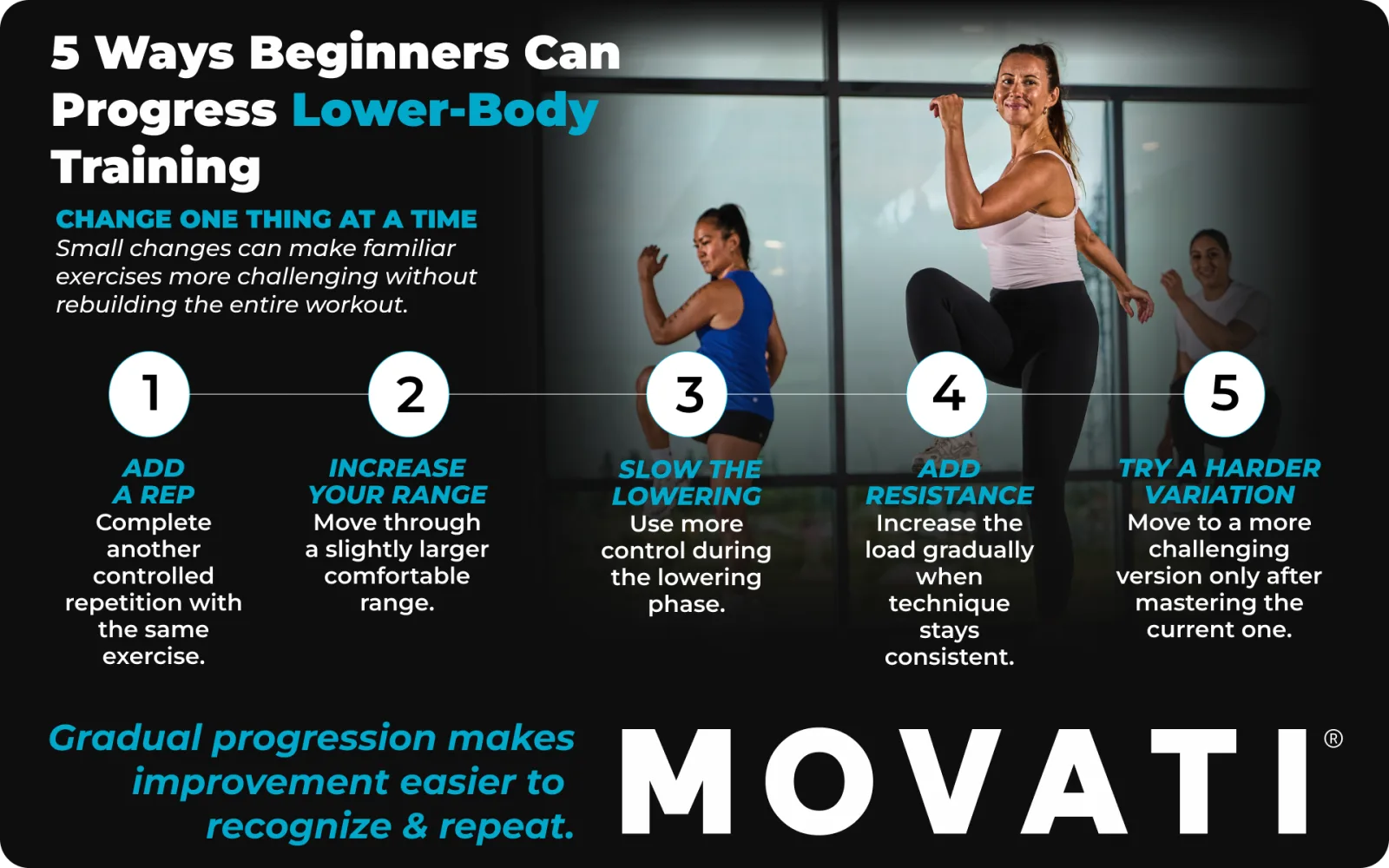
How to make progress
- Add a repetition while maintaining the same control.
- Increase the range gradually.
- Slow the lowering phase.
- Add a small amount of resistance.
- Move to a slightly harder variation.
Change one variable at a time. Keeping notes on exercises, sets and repetitions will make improvements easier to see.
How often should beginners train?
Two full-body strength sessions per week are a practical starting point for many people. Leave recovery time between sessions and consider other activities that challenge the legs. Mild muscle soreness can occur, but sharp or persistent pain is a reason to stop and seek guidance.
Confidence grows through successful repetition. Start with versions you can own, progress patiently and ask a MOVATI Athletic fitness professional for help when you want personalized support.
