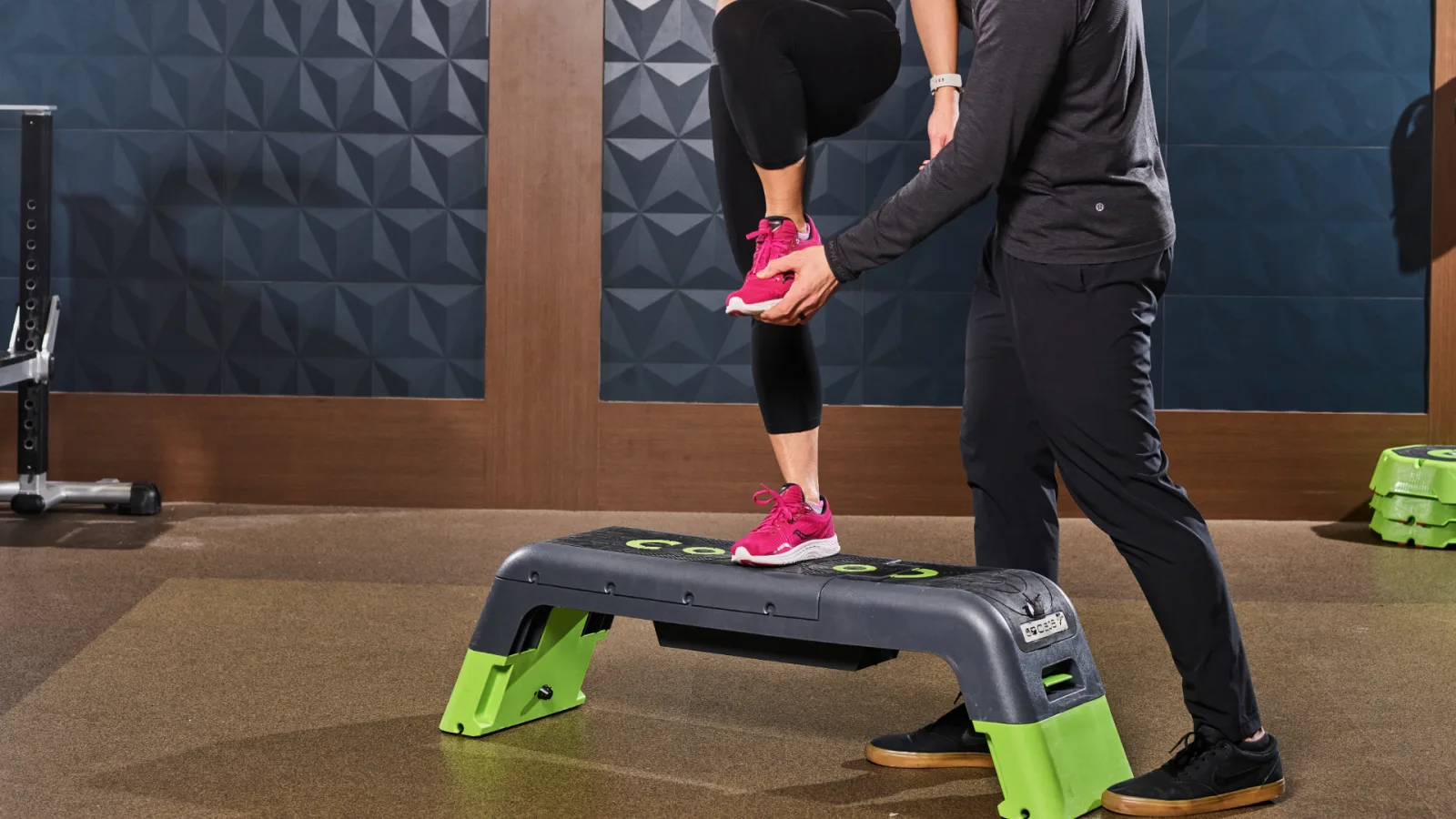
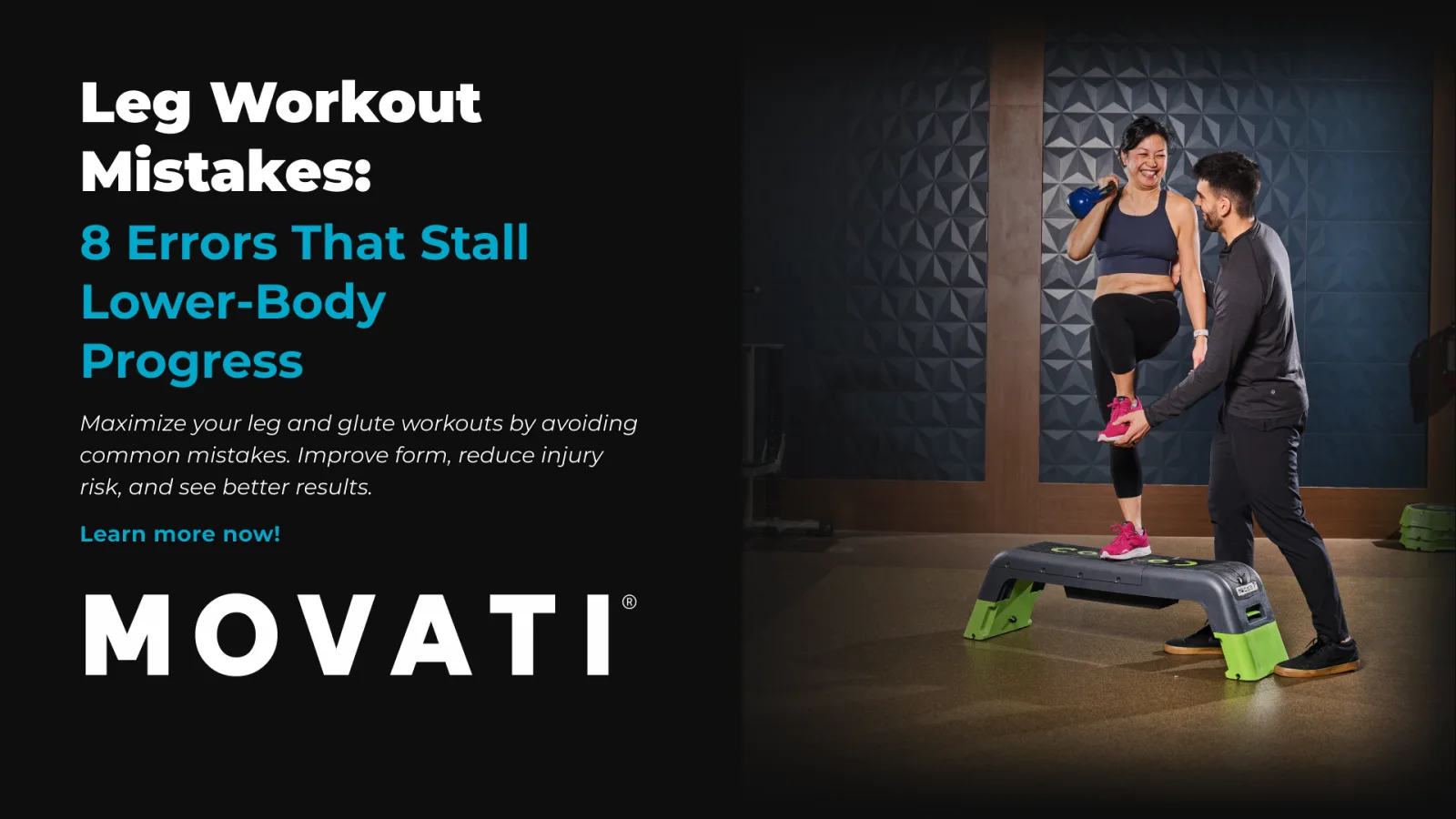
Leg workout mistakes can make a demanding session less effective and may leave your knees, hips or lower back doing more work than intended. The solution is rarely a more complicated routine. Better results usually come from choosing movements you can control, using an appropriate load and allowing enough time to recover.
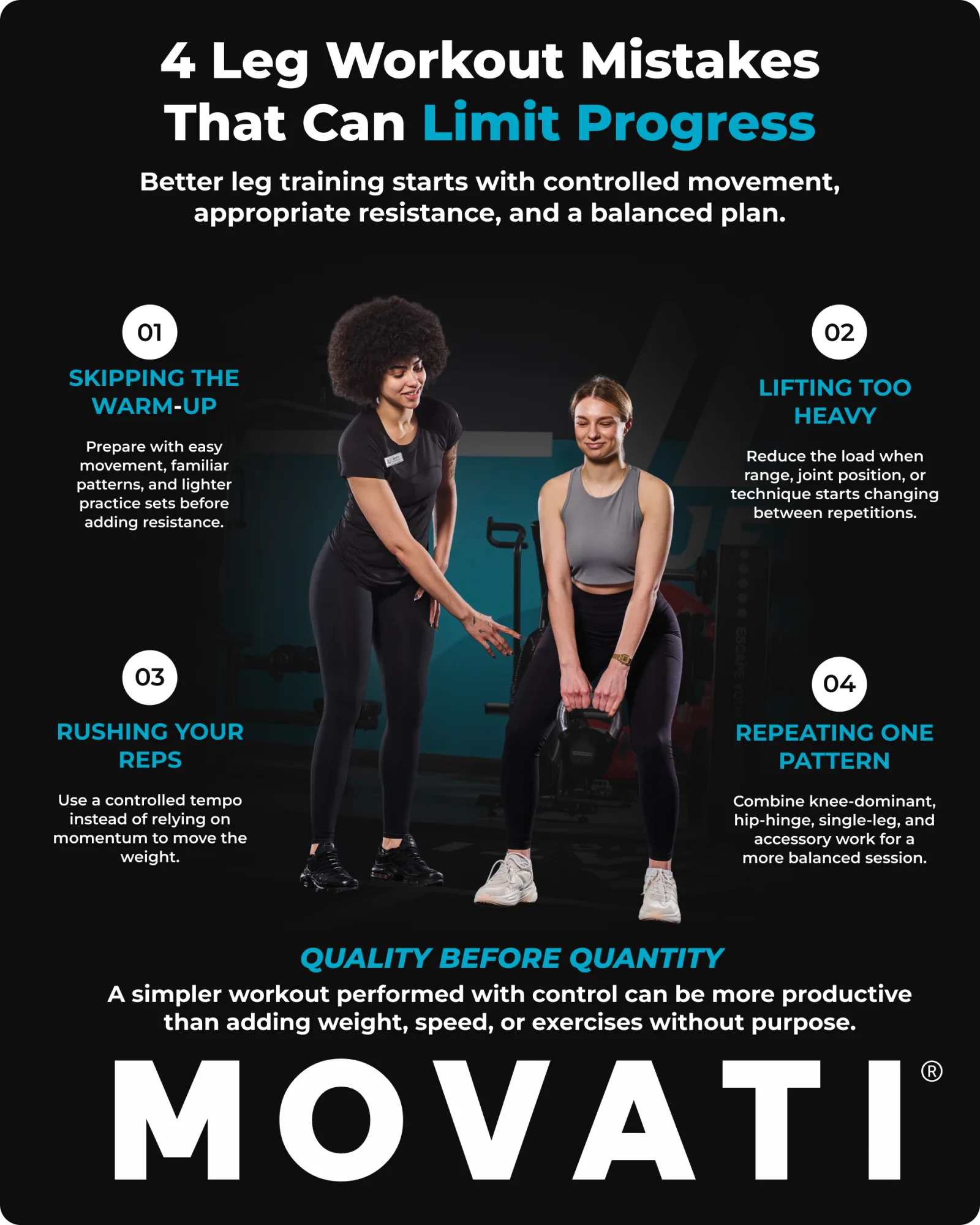
1. Starting without a purposeful warm-up
A good warm-up prepares you for the movements ahead. Begin with a few minutes of easy activity, then practise bodyweight squats, hip hinges and controlled lunges. Finish with lighter sets of your first exercise rather than tiring yourself out with an unrelated circuit.
2. Trading control for heavier weight
A load is productive only when you can move it with stable joints and consistent technique. If your range shortens, your knees collapse inward or your torso position changes from rep to rep, reduce the resistance. Build strength through repeatable movement before adding weight.
3. Rushing every repetition
Moving too quickly can turn a strength exercise into a bounce. Lower with control, pause when appropriate and drive up without losing position. A steady tempo makes lighter loads challenging and helps you feel which muscles are working.
4. Using the same movement pattern all session
Five squat variations do not create a balanced workout. Include a knee-dominant movement such as a squat or split squat, a hip hinge such as a Romanian deadlift, and an accessory exercise for the calves, hamstrings or glutes. This distributes the work more effectively.
5. Ignoring single-leg strength
Step-ups, reverse lunges and supported split squats train each side independently. They can reveal differences in control that bilateral lifts may hide. Begin with support if balance limits your ability to train the working leg.
6. Treating discomfort as a test of toughness
Muscular effort is expected; sharp, sudden or worsening pain is not. Stop the movement and adjust the range, load or exercise. A qualified health professional can assess persistent pain or an injury concern.
7. Adding volume without tracking recovery
More sets are not automatically better. Increase one variable at a time and pay attention to soreness, energy, sleep and performance. If every session feels worse than the last, recovery may be the missing part of the program.
8. Changing the routine too often
Constant novelty makes progress difficult to measure. Keep your main movements consistent for several weeks and track repetitions, load and technique. Small improvements provide clearer evidence than a completely different workout every time.
A quick pre-workout check
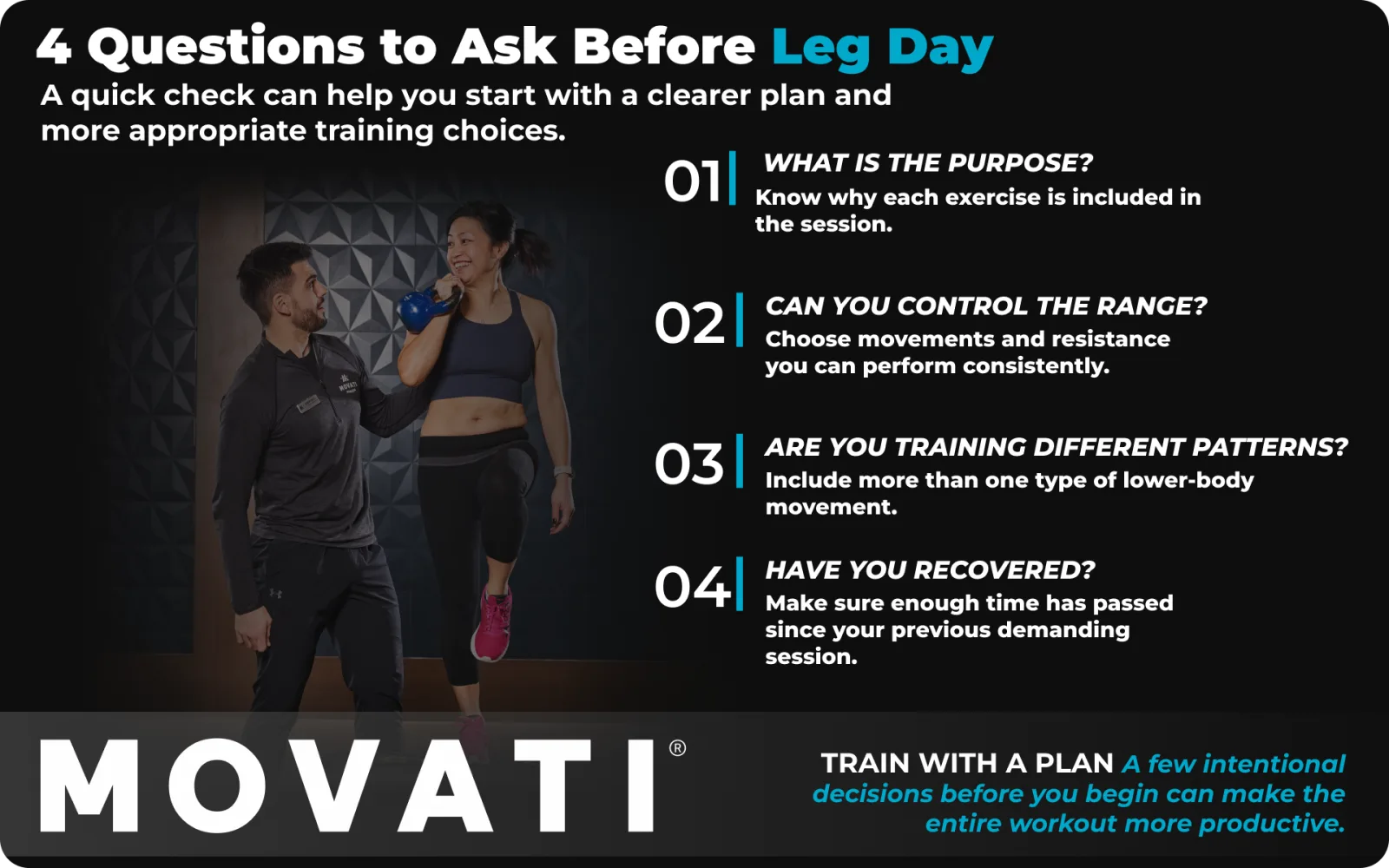
- Can you explain the purpose of each exercise?
- Can you complete the planned range with control?
- Are you training more than one lower-body movement pattern?
- Have you allowed enough recovery since the previous hard session?
Correcting these common errors turns effort into measurable progress. If you are unsure how to adapt a movement, a MOVATI Athletic fitness professional can help you find an option that fits your experience and goals.
