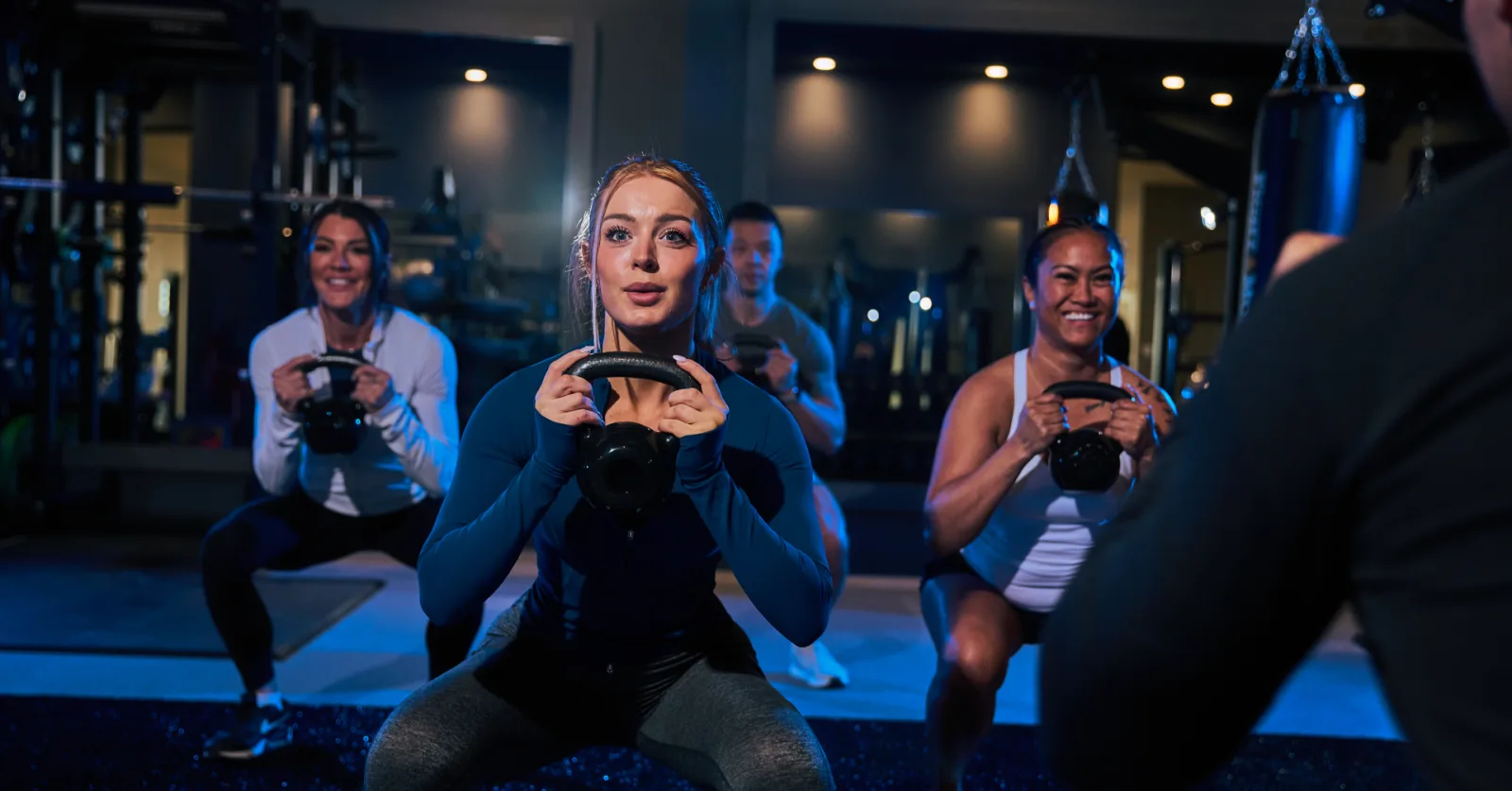
Squats are one of the most effective exercises for developing lower-body strength, improving balance, and supporting everyday movement. Whether you’re new to strength training or have years of experience, maintaining proper squat form is essential for getting the most out of this fundamental exercise. However, seemingly small mistakes in technique can make squats uncomfortable, reduce their effectiveness, and potentially increase the risk of injury.
Understanding how to perform a squat correctly can help you build strength with greater confidence. By focusing on body positioning, controlled movement, and gradual progression, you can make squats a valuable part of your fitness routine.
Why Proper Squat Technique Matters
Squatting is a natural movement used throughout daily life, from sitting in a chair to lifting objects from the floor. However, performing squats with additional resistance requires coordination between several muscle groups, including the quadriceps, glutes, hamstrings, and core.
Many beginners struggle with maintaining balance, controlling their knees, or achieving a comfortable depth. Limited ankle or hip mobility can also make the movement more challenging.
Without understanding proper technique, individuals may develop movement habits that make it difficult to progress safely and effectively.
Common Squat Mistakes to Avoid
Incorrect technique can place unnecessary stress on the knees, hips, and lower back, particularly when lifting heavier weights or performing repeated movements.
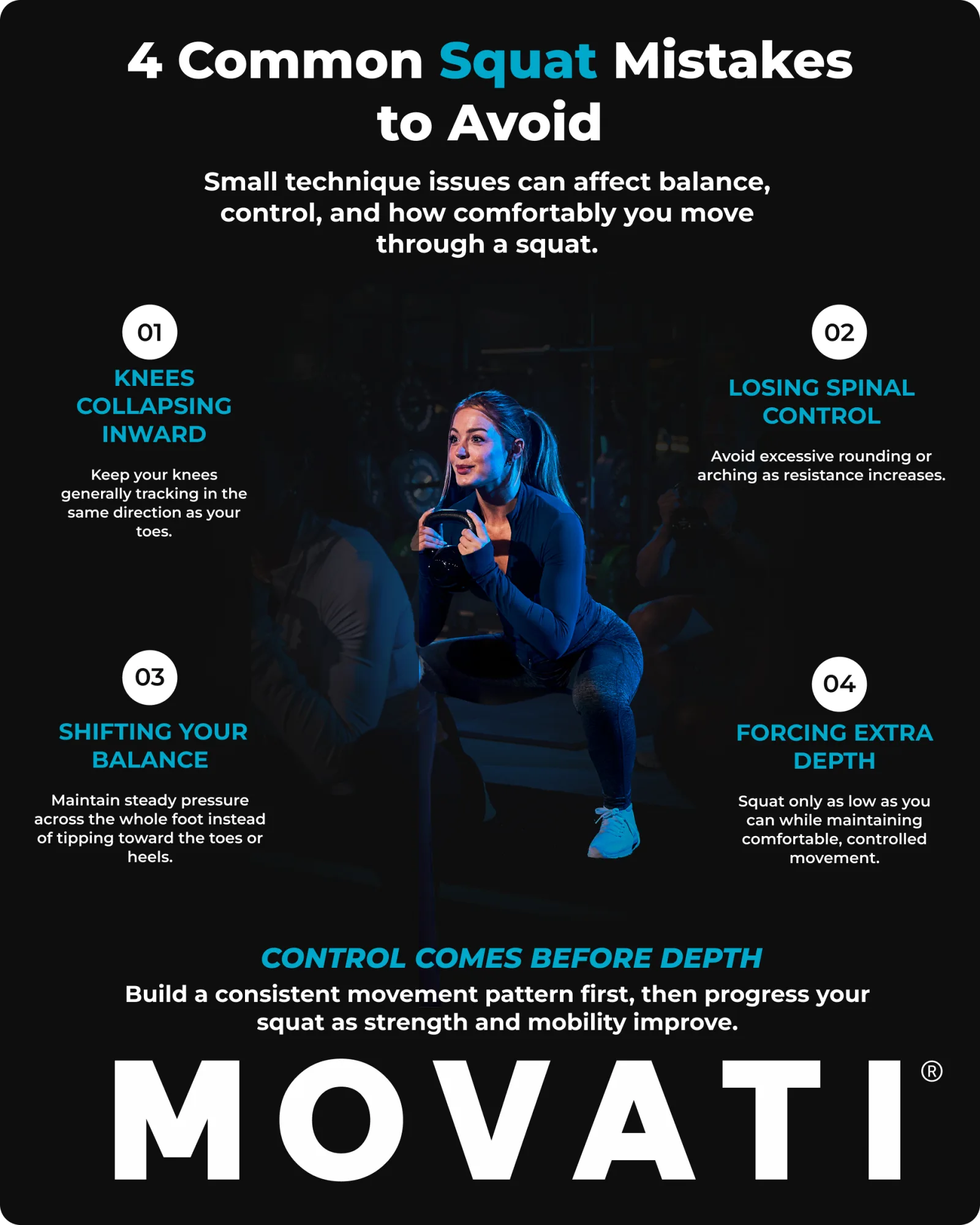
Poor Knee Alignment
Allowing the knees to collapse inward excessively during a squat can affect stability and control. Ideally, your knees should generally follow the direction of your toes throughout the movement.
Excessive Lower Back Movement
Losing control of your spinal position, whether through excessive arching or rounding, can make it more difficult to maintain stability under load. Some natural pelvic movement is normal, but excessive movement under heavy resistance may require adjustments to technique, depth, or weight.
Losing Balance
Shifting too much weight toward the toes or heels can reduce stability. Maintaining balanced pressure across the entire foot helps support controlled movement.
Squatting Beyond Your Comfortable Range
Attempting to reach a specific depth without sufficient mobility or control can lead to compensations. Squat depth should reflect your individual abilities, comfort, and training goals.
These challenges can become more noticeable as resistance increases, making it important to develop consistent movement patterns before progressing to heavier weights.
How to Perform a Proper Squat
Developing good technique begins with understanding the three main phases of the movement: positioning, lowering, and standing.
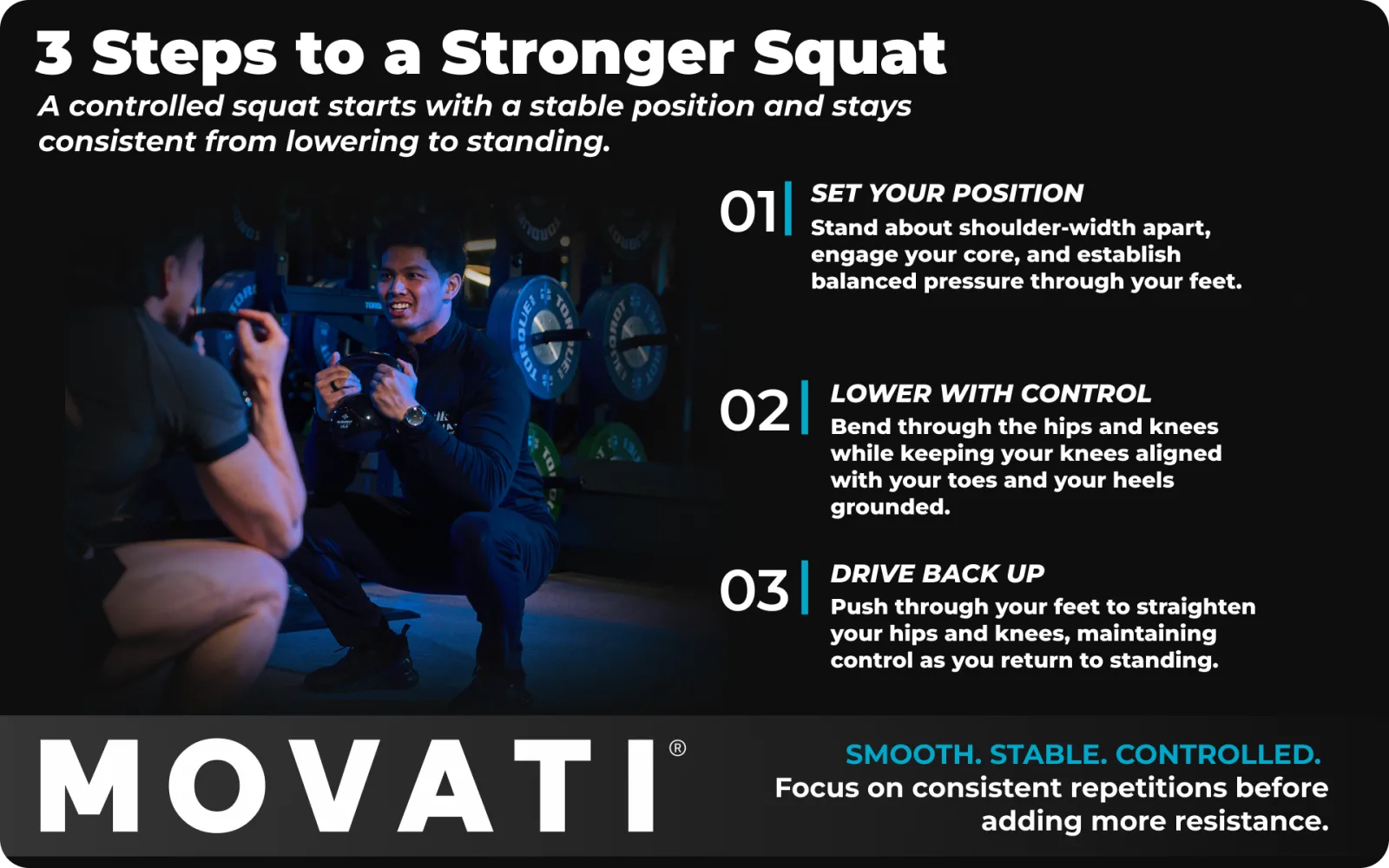
Step 1: Establish Your Starting Position
Begin by standing with your feet approximately shoulder-width apart, with your toes pointing slightly outward.
Keep your chest comfortably lifted, your spine neutral, and your abdominal muscles engaged. Distribute your weight evenly across your feet to establish a stable foundation.
Step 2: Lower Your Body With Control
Begin bending at your hips and knees, lowering your body as though sitting into a chair.
Keep your knees generally aligned with your toes and maintain contact between your heels and the floor. Lower yourself to a depth that allows you to maintain balance and comfortable movement.
Your knees may naturally move forward beyond your toes, which is not inherently incorrect.
Step 3: Return to Standing
Push through your feet to straighten your hips and knees, returning to your starting position.
Maintain control throughout the movement and avoid allowing your knees to collapse inward.
Focus on smooth, consistent repetitions rather than rushing through the exercise.
Improving Your Technique With Squat Variations
Once you’re comfortable performing basic squats, several variations can help develop additional strength, stability, and movement control.
Box Squats
Box squats involve lowering yourself toward a sturdy box or bench. They provide a consistent depth reference and can help beginners practice controlled movement.
Resistance Band Squats
Placing a light resistance band above the knees can provide feedback about knee positioning and encourage awareness of hip muscle engagement. However, bands are optional and aren’t necessary for correct technique.
Split Squats
Split squats involve exercising one leg more independently while maintaining support from the opposite leg. They can help develop balance, coordination, and lower-body strength.
Start with bodyweight movements before introducing additional resistance.
Building Strength Through Consistent Practice
Improving your squat technique takes patience and repetition. Begin with a manageable number of bodyweight squats, focusing on movement quality before increasing resistance.
As your confidence and strength develop, gradually introduce dumbbells, kettlebells, or other equipment appropriate for your experience level.
If you experience persistent pain or difficulty maintaining control, a qualified fitness professional can help assess your movement and recommend suitable modifications.
Conclusion
Developing proper squat form is an important step toward building lower-body strength, improving stability, and supporting functional movement. By recognizing common mistakes, practicing controlled technique, and gradually increasing exercise difficulty, you can make squats a safe and effective part of your training routine. Whether your goal is improving everyday mobility or developing greater muscular strength, consistent practice and attention to technique will help support long-term fitness progress.
*MOVATI’s trainers and/or consultants are not health care providers, and do not provide any medical diagnosis, treatment or advice, and any trainer and/or consultant tips are not intended to replace the advice of a health care professional.
