
Few exercises combine strength, cardiovascular endurance, and functional movement quite like the sled push and sled pull. These increasingly popular conditioning exercises challenge multiple muscle groups while helping athletes develop the power and stamina needed for demanding physical activities. Whether you’re preparing for a HYROX competition, improving your athletic performance, or simply looking for a new way to build strength, sled training can be a valuable addition to your fitness routine.
Despite their straightforward appearance, pushing and pulling a weighted sled requires proper technique, body positioning, and controlled movement. Understanding how to perform these exercises effectively can help you train more confidently, improve your conditioning, and avoid common mistakes that may limit your progress.
Why Sled Training Is More Challenging Than It Looks
Moving a weighted sled may appear simple, but the exercise places significant demands on the legs, core, and upper body.
Unlike traditional weightlifting, where resistance is lifted and lowered, sled training requires continuous force to overcome friction and move a load across the floor.
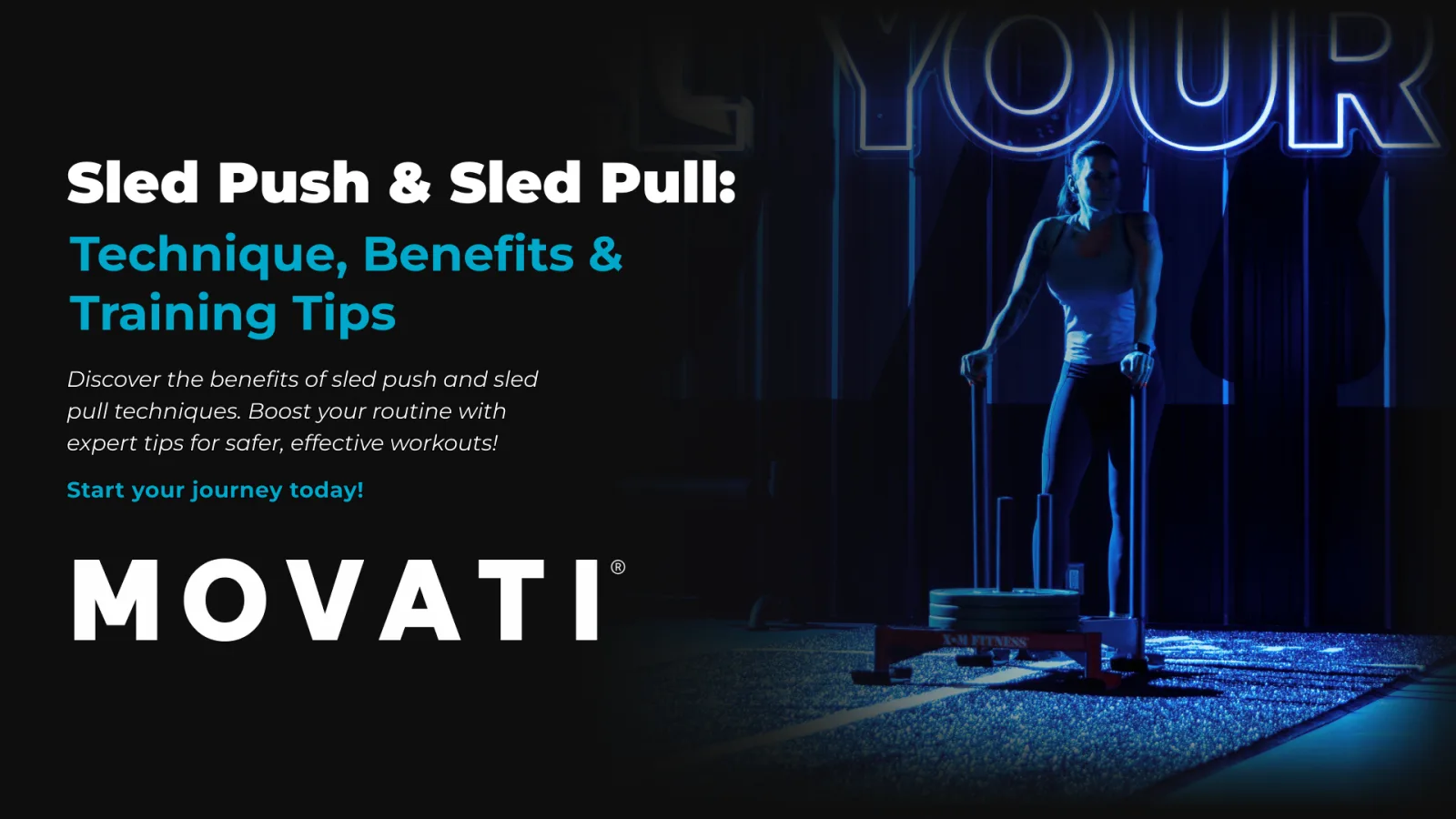
As resistance increases, athletes must generate more force while maintaining stability and forward or backward movement.
This combination makes sled training particularly effective for developing strength and muscular endurance.
The Challenge of Maintaining Proper Technique
One of the most common difficulties beginners experience is maintaining consistent body positioning throughout the exercise.
Leaning too far forward, taking excessively long steps, or losing core stability can make the movement less efficient.
With heavier loads, poor technique may also increase unnecessary stress on the lower back, shoulders, or knees.
Learning proper positioning before increasing resistance helps establish a stronger foundation for progress.
Why Sled Exercises Matter for HYROX
In HYROX competitions, athletes complete both a 50-metre sled push and a 50-metre sled pull, with each station following a 1-kilometre run.
These exercises are particularly demanding because participants must generate strength while already experiencing cardiovascular fatigue.
Training with sleds can help athletes become more comfortable producing force under fatigue and managing the transitions between running and resistance-based movements.
How to Perform a Proper Sled Push
The sled push primarily challenges the quadriceps, glutes, calves, and core while also requiring upper-body stability.
The objective is to move the sled forward using controlled, powerful steps while maintaining consistent pressure against the handles.
Step-by-Step Sled Push Technique
Establish your position. Stand behind the sled and place your hands securely on the handles.
Lean forward naturally. Position your body at an angle that allows you to drive force into the sled while maintaining a stable torso.
Engage your core. Brace your abdominal muscles to support your trunk throughout the movement.
Drive through your legs. Push against the floor using controlled, powerful steps.
Maintain momentum. Continue moving forward with a consistent rhythm rather than repeatedly stopping and restarting.
Control your breathing. Avoid holding your breath for extended periods, particularly during longer efforts.
Your body angle will vary depending on sled resistance, handle height, and individual mechanics.
Common Sled Push Mistakes
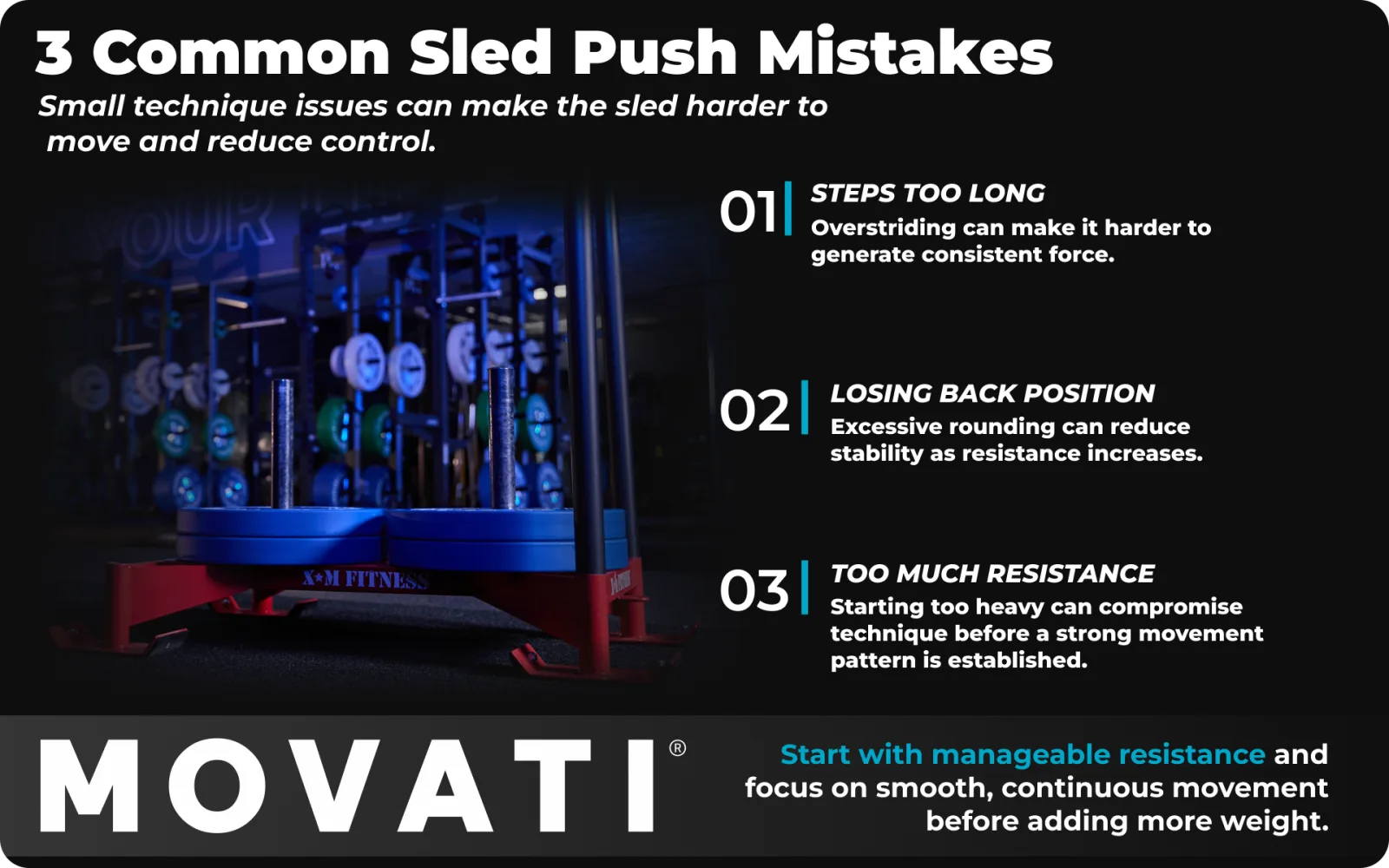
Taking steps that are too long can make it difficult to generate consistent force, while excessive rounding through the back may reduce stability.
Another common mistake is beginning with too much resistance before developing proper technique.
Start with a manageable load and focus on smooth, continuous movement.
How to Perform a Proper Sled Pull
The sled pull challenges the back, arms, shoulders, grip, and core while requiring lower-body stability.
There are several variations of sled pulling, including harness-assisted backward drags and rope pulls. The appropriate technique depends on your training objective.
For HYROX preparation, the rope-based sled pull is particularly relevant because it closely resembles the competition movement.
Step-by-Step Rope Sled Pull Technique
Establish a stable stance. Position yourself within the designated pulling area with your feet comfortably apart.
Grip the rope securely. Maintain control of the rope while keeping your shoulders stable.
Engage your core. Brace your torso to support controlled pulling movements.
Pull the rope toward your body. Use your arms and back muscles while maintaining a stable lower-body position.
Continue with a consistent rhythm. Alternate your hands as needed to bring the sled toward you.
Manage the rope carefully. Keep loose rope organized to avoid stepping on it or creating a tripping hazard.
For general conditioning, backward sled drags offer another useful variation that places greater emphasis on the lower-body muscles.
Common Sled Pull Mistakes
Relying entirely on the arms without maintaining trunk stability can make the exercise unnecessarily difficult.
Using excessive resistance may also encourage uncontrolled pulling or awkward body positioning.
Begin with lighter loads and focus on maintaining consistent technique before increasing resistance.
The Benefits of Sled Push and Sled Pull Training
Sled exercises offer several advantages because they combine resistance training with sustained physical movement.
Build Lower-Body Strength and Power
Sled pushes develop the muscles responsible for extending the hips, knees, and ankles.
These movements support activities such as sprinting, climbing stairs, and accelerating during sports.
By gradually increasing resistance, athletes can develop greater force production and muscular strength.
Improve Muscular Endurance
Moving a weighted sled over repeated distances challenges the ability of muscles to sustain effort.
This can be particularly useful for athletes participating in events that combine resistance exercises with running or other endurance activities.
Develop Cardiovascular Conditioning
Repeated sled pushes and pulls can elevate heart rate and create a demanding conditioning workout.
When performed in intervals, these exercises challenge both muscular endurance and cardiovascular fitness.
However, sled training should complement rather than completely replace other aerobic activities such as running, cycling, or rowing.
Support Functional Strength
Pushing and pulling movements are common in everyday activities.
Sled exercises develop coordinated strength across several muscle groups, making them useful for individuals interested in improving practical movement capabilities.
Adapt to Different Fitness Levels
Sled resistance, distance, speed, and recovery periods can all be adjusted.
Beginners may start with lighter loads and shorter distances, while experienced athletes can introduce heavier resistance or more demanding intervals.
The amount of resistance experienced also depends on the sled, floor surface, and friction, so the same weight may feel different between training facilities.
How to Incorporate Sled Training Into Your Workout Routine
Sled exercises can be included in strength sessions, conditioning workouts, or HYROX-specific training programs.
The appropriate approach depends on whether your primary goal is developing strength, muscular endurance, or cardiovascular conditioning.
For Strength Development
Use heavier resistance over shorter distances while allowing adequate recovery between sets.
Focus on maintaining consistent technique and producing controlled force throughout each effort.
For Cardiovascular Conditioning
Use lighter or moderate resistance over repeated intervals.
For example, perform a 15- to 20-metre sled push, rest, and repeat for several rounds.
You can also alternate sled pushes with other exercises such as rowing or walking.
For HYROX Preparation
Combine sled training with running to become more familiar with the demands of competition.
A simple training session might include:
500 metres of running.
20 metres of sled pushing.
A short recovery period.
500 metres of running.
A controlled rope sled pull.
Adjust the distance, resistance, and number of rounds according to your fitness level.
Sample Beginner Sled Training Workout
For individuals new to sled training, a short introductory session can help develop technique and confidence.
| Exercise | Suggested Volume | Focus |
|---|---|---|
| Warm-up | 5–10 minutes | Walking, cycling, and mobility |
| Light Sled Push | 3 × 15 metres | Controlled movement and leg drive |
| Rope Sled Pull | 3 × 10–15 metres | Upper-body coordination and stability |
| Backward Sled Drag | 2 × 15 metres | Lower-body endurance |
| Cool-down | 5 minutes | Easy walking and gentle mobility |
Rest as needed between sets to maintain proper technique.
Beginners should prioritize movement quality rather than completing every exercise as quickly as possible.
Progressing Safely With Sled Training
As your strength and endurance improve, gradually increase the difficulty of your workouts.
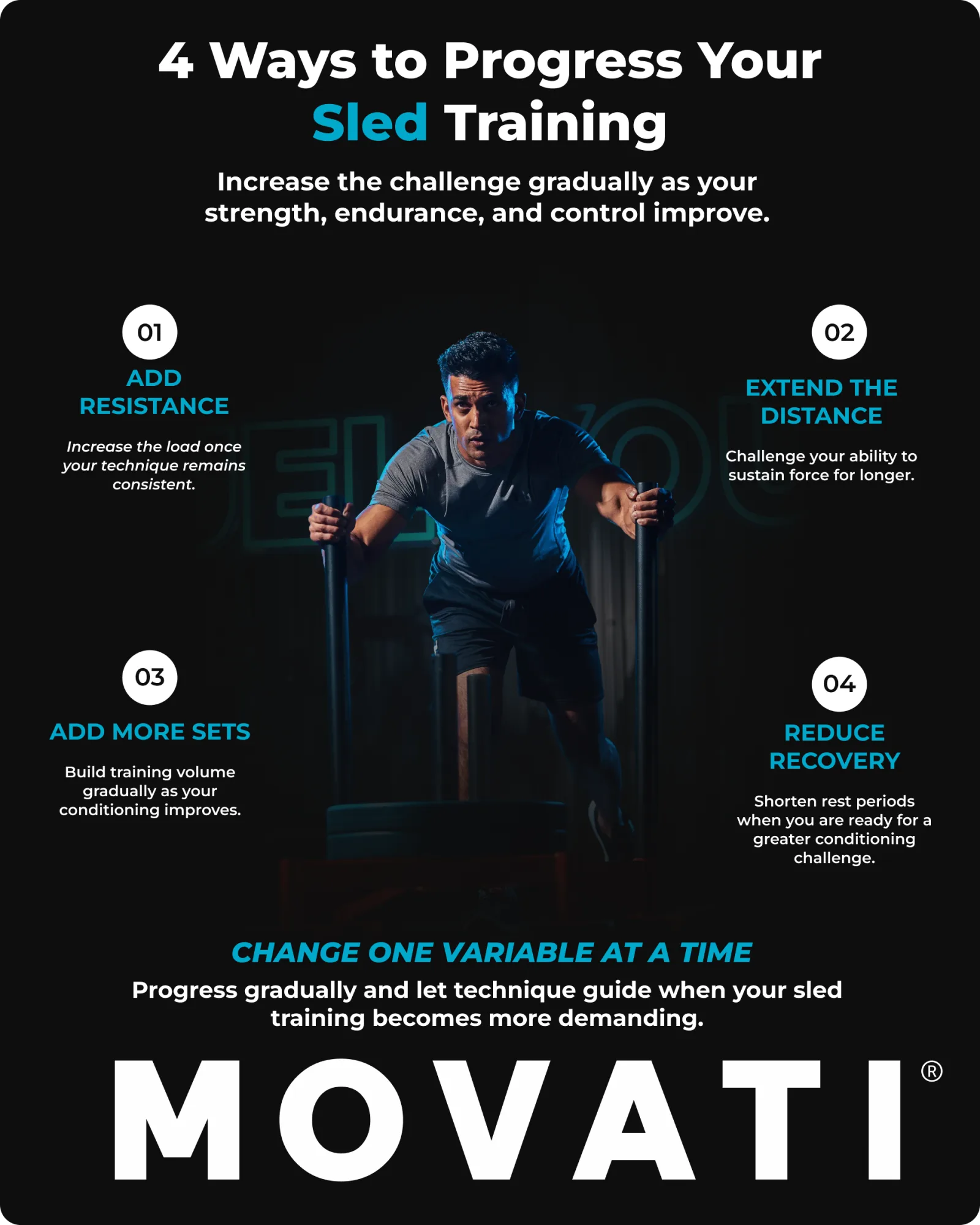
You can progress by adding resistance, extending the distance, increasing the number of sets, or reducing recovery periods.
However, avoid changing all of these variables simultaneously.
Pay attention to your technique and how your body responds to each session.
Persistent pain, unusual discomfort, or difficulty maintaining control may indicate that the resistance or training volume needs to be adjusted.
Working with a qualified fitness professional can help you establish appropriate progressions and develop confidence with unfamiliar equipment.
Training for HYROX at MOVATI Athletic
Preparing for HYROX requires a combination of strength training, cardiovascular conditioning, and familiarity with functional movements.
MOVATI Athletic provides members with opportunities to develop these physical capabilities through resistance training, cardiovascular equipment, and available personal training services.
Depending on the equipment available at your location, a fitness professional can help you incorporate sled exercises or suitable strength and conditioning alternatives into your routine.
Combining lower-body strength exercises, rowing, running, and functional movements can help support your preparation for the demands of HYROX.
For members interested in improving their technique or establishing a structured training program, personal training can provide guidance based on individual fitness levels and goals.
Conclusion
The sled push and sled pull are effective exercises for developing muscular strength, cardiovascular conditioning, and functional movement capabilities. Their versatility makes them valuable for athletes preparing for HYROX competitions as well as individuals looking to improve their overall fitness.
By learning proper technique, starting with manageable resistance, and gradually increasing training demands, you can incorporate sled exercises into a balanced workout routine.
Whether your goal is building lower-body power, improving endurance, or preparing for competition, consistent sled training can help you develop the strength and confidence needed to take on new physical challenges.
*MOVATI’s trainers and/or consultants are not health care providers, and do not provide any medical diagnosis, treatment or advice, and any trainer and/or consultant tips are not intended to replace the advice of a health care professional.
