
HYROX has quickly become one of the most exciting challenges in functional fitness, bringing together cardiovascular endurance, muscular strength, and mental determination in a single competition. Unlike traditional running events or strength competitions, HYROX requires athletes to transition between running and demanding exercise stations while managing fatigue throughout the race. Whether you’re preparing for your first event or looking to improve your previous performance, following effective HYROX training tips can help you develop the strength, stamina, and confidence needed to compete successfully.
The challenge isn’t simply completing individual exercises. It’s learning how to maintain your performance when your legs are tired, your heart rate is elevated, and another running segment is waiting. With the right preparation, a structured training schedule, and consistent practice, athletes of different experience levels can build the physical conditioning needed to approach race day with confidence.
Understanding the HYROX Challenge
HYROX is a standardized indoor fitness competition that combines eight 1-kilometre runs with eight functional workout stations. Participants complete a total of 8 kilometres of running, with an exercise station following each running segment.
The workout stations include:
SkiErg: 1,000 metres of upper-body and cardiovascular conditioning.
Sled Push: 50 metres of pushing a weighted sled.
Sled Pull: 50 metres of pulling a weighted sled using a rope.
Burpee Broad Jumps: 80 metres of repeated burpees and forward jumps.
Rowing: 1,000 metres on a rowing machine.
Farmer’s Carry: 200 metres carrying weighted kettlebells.
Sandbag Lunges: 100 metres of walking lunges with a sandbag.
Wall Balls: 100 repetitions of squatting and throwing a medicine ball toward a target.
Equipment weights and certain movement standards vary according to competition division.

The combination of running and resistance-based activities creates a unique physical challenge. Athletes must develop enough cardiovascular endurance to sustain repeated running efforts while maintaining the muscular strength and coordination required to complete each station efficiently.
Why Traditional Training May Not Be Enough
Many individuals enter HYROX with experience in running, weightlifting, or general fitness. While these backgrounds provide valuable foundations, the competition introduces demands that aren’t always addressed through traditional exercise programs.
A strong runner may struggle with heavy sled movements, while an experienced weightlifter may find repeated running segments particularly challenging.
Even athletes who perform well at individual workout stations can experience unexpected fatigue when those exercises are combined with running.
Managing Fatigue Between Stations
One of the most challenging aspects of HYROX is maintaining consistent performance throughout the race.
Completing a demanding sled push, for example, can leave the quadriceps and glutes fatigued before the next running segment begins. Similarly, sandbag lunges can make the final stages of the race particularly demanding.
Learning to transition between different movement patterns is an important part of preparation.
Training sessions that combine running with functional exercises can help athletes become more comfortable performing under fatigue.
Balancing Strength and Endurance
Developing strength and endurance simultaneously requires thoughtful programming.
Focusing too heavily on resistance training may leave insufficient time for aerobic conditioning, while excessive running volume can interfere with recovery from demanding strength sessions.
An effective program should distribute training demands throughout the week, allowing sufficient time for both physical development and recovery.
Build Your Aerobic Foundation
Running accounts for a substantial portion of the HYROX race, making cardiovascular conditioning one of the most important areas of preparation.
Improving aerobic endurance allows athletes to sustain physical activity over longer periods while managing fatigue more effectively.
Incorporate Steady-State Running
Steady-state running involves maintaining a comfortable, consistent pace over an extended period.
These sessions help develop aerobic capacity and improve the body’s ability to sustain continuous activity.
Begin with distances appropriate for your current fitness level and gradually increase duration as your conditioning improves.
For beginners, alternating walking and jogging can provide an accessible starting point.
Introduce Interval Training
Interval training alternates periods of faster running with slower recovery intervals.
This approach can help improve running speed, cardiovascular capacity, and the ability to recover between demanding efforts.
A simple interval workout might involve:
Five to ten minutes of easy jogging to warm up.
Four to six repetitions of 400 metres at a challenging but controlled pace.
Walking or easy jogging between intervals.
Five minutes of easy movement to cool down.
As your fitness improves, interval distances and intensity can be adjusted to reflect your training goals.
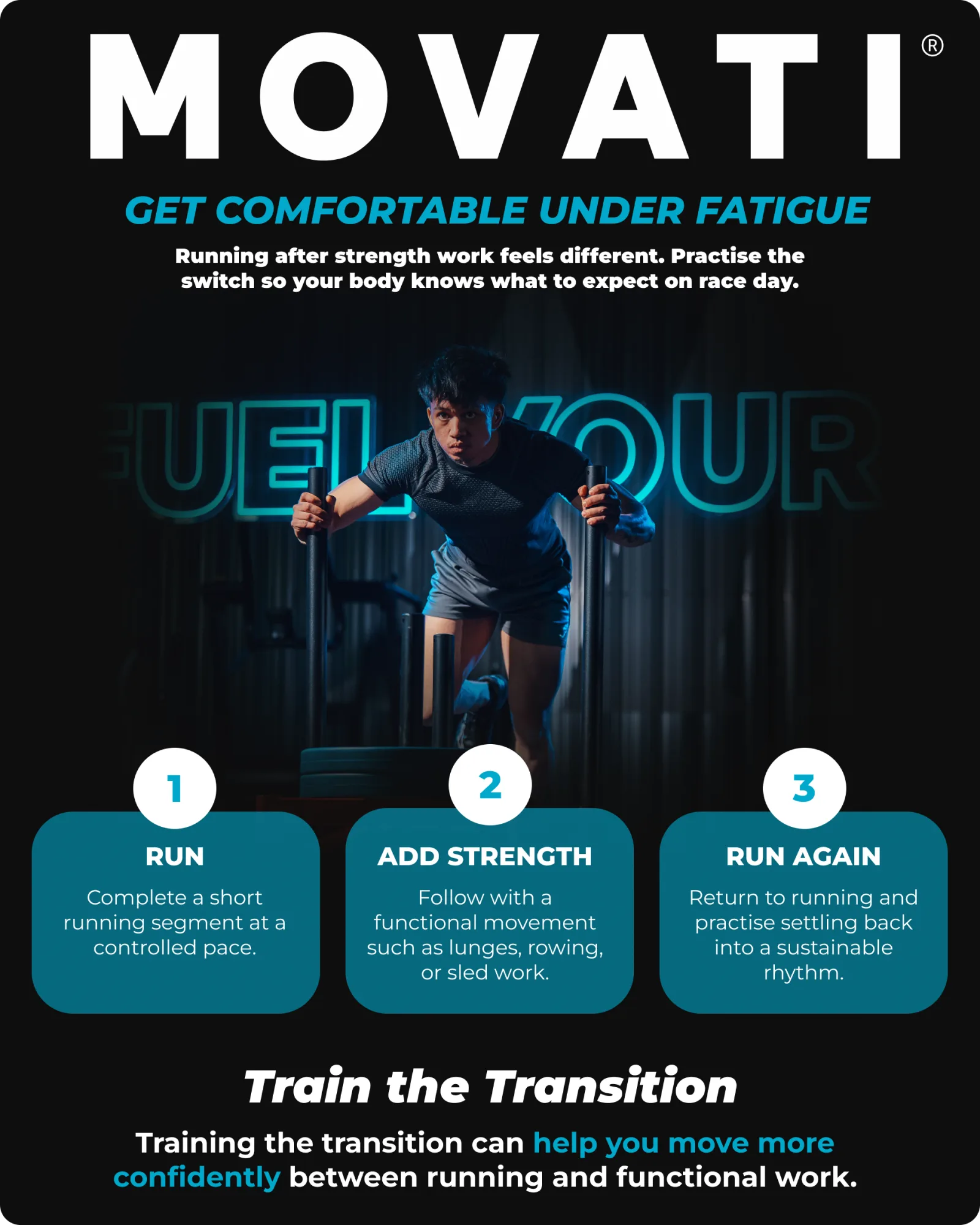
Practice Running After Strength Exercises
Running immediately after a demanding strength movement feels different from running with fresh legs.
To prepare for these transitions, occasionally combine short running segments with exercises such as lunges, rowing, or sled pushes.
For example, complete a 500-metre run, followed by a set of walking lunges, and then return to running.
This helps develop familiarity with the physical demands of moving between different activities.
Develop Functional Strength for Race-Day Performance
Strength training supports the muscular endurance and power required for HYROX workout stations.
Although the competition emphasizes endurance, athletes must also move weighted equipment, maintain stable body positions, and perform repeated resistance exercises.
Focus on Compound Strength Exercises
Compound exercises engage several muscle groups simultaneously, making them useful for developing overall strength.
Squats, deadlifts, lunges, rows, and presses can help strengthen muscles involved in HYROX movements.
For example, squats and lunges develop lower-body strength that supports sled pushes and sandbag lunges, while rows and pulling exercises can contribute to the muscular development needed for sled pulls.
Begin with manageable resistance and gradually increase training demands while maintaining proper technique.
Practice the Official Workout Stations
Familiarity with the competition movements is essential.
Regularly practicing SkiErg, rowing, sled movements, farmer’s carries, burpee broad jumps, sandbag lunges, and wall balls helps develop movement efficiency and confidence.
However, every training session doesn’t need to reproduce the full race.
Shorter, focused workouts allow athletes to improve technique and gradually develop the muscular endurance needed for longer efforts.
Improve Movement Efficiency
Efficient movement can make a significant difference when completing repeated exercises under fatigue.
Maintaining a consistent rowing rhythm, using controlled steps during sled pushes, and developing a sustainable pace for wall balls can help conserve energy.
A qualified fitness coach can provide guidance on technique, particularly for individuals unfamiliar with certain movements.
Create a Training Schedule That Supports Progress
A structured weekly routine helps balance strength development, aerobic conditioning, functional exercise practice, and recovery.
The following example provides a general starting point for individuals who already have a foundation of regular physical activity.
| Day | Training Focus | Suggested Activity |
|---|---|---|
| Monday | Strength | Squats, lunges, sled push, and sled pull |
| Tuesday | Running endurance | Comfortable 30–45 minute run |
| Wednesday | Functional conditioning | SkiErg, rowing, and farmer’s carry |
| Thursday | Recovery | Walking, mobility exercises, or rest |
| Friday | Running intervals | Controlled speed and endurance intervals |
| Saturday | HYROX simulation | Short running segments combined with workout stations |
| Sunday | Rest | Full recovery |
Training frequency and intensity should be adjusted according to individual experience, available time, and recovery needs.
Beginners may benefit from fewer sessions, while experienced athletes may incorporate additional training volume.
Make Recovery and Nutrition Part of Your Preparation
Consistent training creates the physical demands needed for improvement, but recovery allows the body to adapt.
Without adequate rest and nutrition, fatigue can accumulate and interfere with performance.
Prioritize Sleep and Rest
Getting sufficient sleep supports muscle recovery, energy levels, and overall physical well-being.
Schedule easier training days between demanding sessions and avoid treating every workout as a maximum-effort challenge.
Gentle activities such as walking, swimming, or mobility exercises can provide movement without adding substantial training stress.
Fuel Your Workouts Properly
HYROX training requires energy to support both endurance activities and resistance exercises.
A balanced diet should include adequate carbohydrates, protein, and healthy fats.
Carbohydrates help fuel demanding exercise sessions, while protein supports muscle repair and maintenance.
Hydration is equally important, particularly during longer workouts or training in warm environments.
Individual nutrition requirements vary depending on training volume, body size, and personal health considerations.
Prepare Mentally for Race Day
Physical conditioning is essential, but HYROX also challenges an athlete’s ability to remain focused during prolonged effort.
Developing a realistic race strategy can help manage expectations and reduce the temptation to begin too aggressively.
Practice Pacing and Energy Management
Starting the race at an unsustainable pace can create fatigue that becomes increasingly difficult to manage.
During training, practice maintaining consistent running speeds and controlled effort during functional stations.
Understanding your strengths and limitations can help you establish realistic pacing expectations.
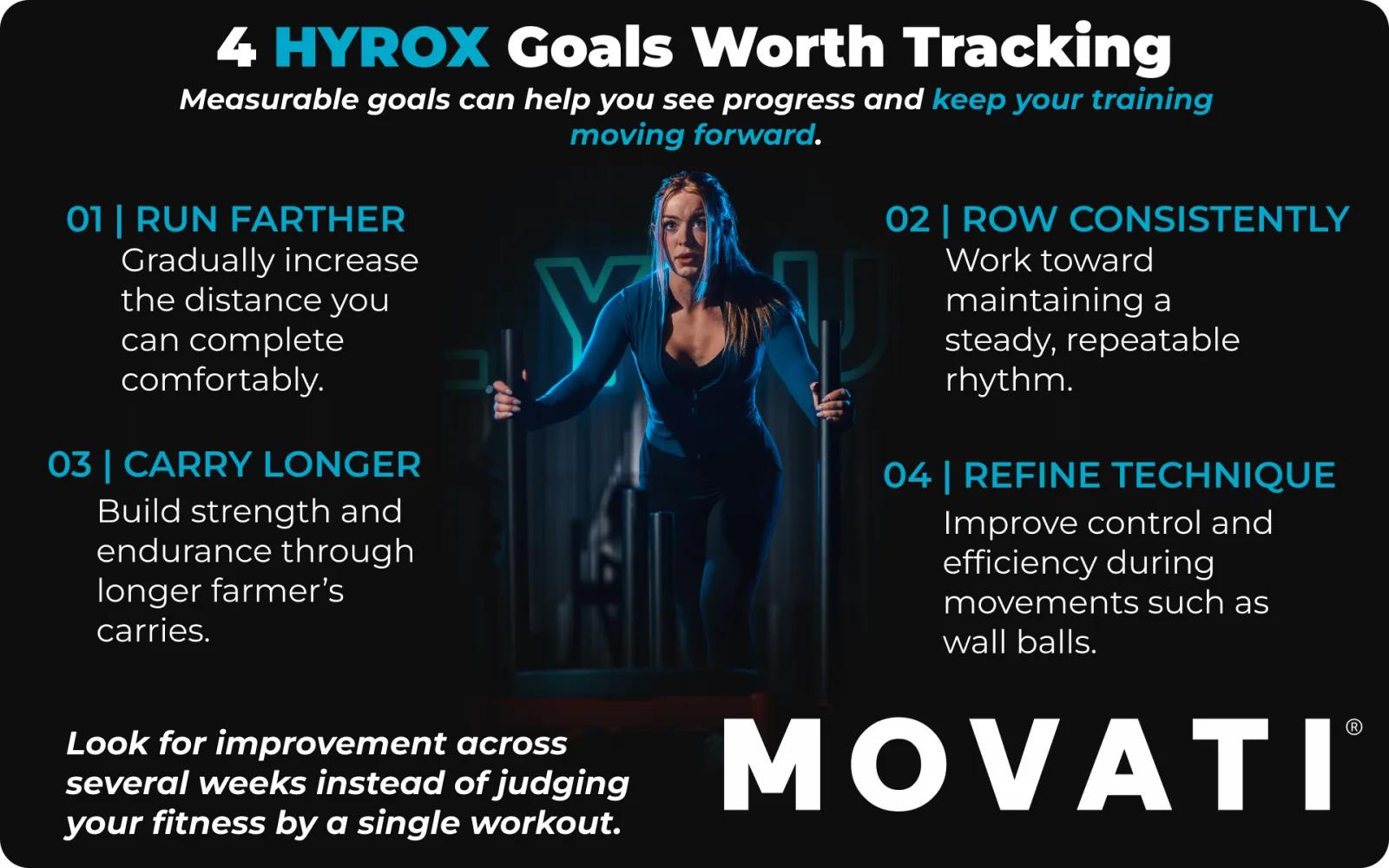
Set Measurable Training Goals
Clear goals provide direction and make it easier to monitor improvement.
Examples include increasing comfortable running distance, improving rowing consistency, completing longer farmer’s carries, or developing better technique during wall balls.
Track progress over several weeks rather than judging performance based on individual workouts.
Build Confidence Through Practice
Confidence often develops through familiarity.
Practicing race-specific movements, completing shorter simulations, and gradually increasing training difficulty can help reduce uncertainty before competition.
Visualization may also help some athletes prepare mentally by rehearsing movement transitions and pacing strategies.
Preparing for Your First HYROX Event
If you’re entering your first competition, focus on developing a solid foundation rather than attempting to match the training volume of experienced athletes.
Begin by assessing your running endurance, general strength, and familiarity with the eight workout stations.
Choose a competition division appropriate for your abilities and review the official movement standards before race day.
As your event approaches, incorporate occasional race-specific sessions that combine running with functional movements.
Avoid introducing unfamiliar exercises or dramatically increasing training volume immediately before the competition.
During the final days leading up to the event, reducing training demands can help manage fatigue and support recovery.
The objective is to arrive feeling prepared rather than exhausted from excessive training.
Conclusion
Preparing for HYROX requires a balanced approach that develops cardiovascular endurance, functional strength, movement efficiency, and mental confidence. By combining consistent running, resistance training, race-specific exercises, and adequate recovery, athletes can gradually build the physical conditioning needed to meet the demands of competition.
Whether you’re preparing for your first event or working toward a personal best, these HYROX training tips provide a foundation for developing a sustainable training routine. Focus on measurable improvements, practice the movements you’ll encounter on race day, and allow sufficient time for your body to adapt. With consistent preparation and realistic expectations, you can approach the starting line with greater confidence and the ability to perform at your best.
*MOVATI’s trainers and/or consultants are not health care providers, and do not provide any medical diagnosis, treatment or advice, and any trainer and/or consultant tips are not intended to replace the advice of a health care professional.
