
Preparing for a HYROX competition involves months of building strength, improving cardiovascular endurance, and developing the ability to perform demanding functional exercises under fatigue. However, even the most carefully structured training program can fall short if your body isn’t receiving the nutrition it needs. HYROX nutrition plays an important role in supporting energy levels, muscular endurance, hydration, and recovery, both during training and on competition day.
I’ve come to appreciate the importance of nutrition through my own experience of returning to physical activity after years of working behind a desk. When you’ve spent a significant portion of your life being sedentary, rebuilding fitness isn’t simply about exercising more. It’s a recovery process that involves changing habits, understanding how your body responds to activity, and recognizing that what you eat can influence how you feel and perform. For me, developing a healthier relationship between nutrition, exercise, and recovery has become an important part of building a more sustainable lifestyle.

Whether you’re preparing for your first HYROX race or looking to improve your performance, understanding how to fuel your body before, during, and after competition can help you approach training with greater confidence.
Why Nutrition Matters for HYROX Performance
HYROX combines eight 1-kilometre runs with eight functional workout stations, including sled pushes, rowing, burpee broad jumps, farmer’s carries, sandbag lunges, and wall balls.
This combination places considerable demands on the cardiovascular system and major muscle groups. Athletes must repeatedly transition between running and resistance-based movements, often while managing significant muscular fatigue.
Unlike a traditional strength workout, where rest periods allow for recovery between sets, HYROX requires sustained physical effort over an extended period.
Your body needs sufficient energy to support these demands.
Carbohydrates: Fuel for Endurance and Intensity
Carbohydrates are particularly important during sustained, high-intensity exercise because they help replenish glycogen, the stored form of carbohydrate used by muscles and the liver.
During a HYROX competition, your body draws on these energy stores to support running and demanding workout stations.
When carbohydrate availability becomes limited, maintaining exercise intensity can become more difficult.
Foods such as rice, pasta, potatoes, oatmeal, bread, and fruit can help provide the carbohydrates needed for training and competition.
Protein: Supporting Muscle Repair and Recovery
Protein provides amino acids that support muscle repair, maintenance, and adaptation following exercise.
HYROX training places considerable demands on the legs, back, shoulders, and core. Consuming adequate protein throughout the day helps support recovery from these workouts.
Common protein sources include eggs, fish, poultry, lean meats, dairy products, tofu, legumes, and protein shakes.
Healthy Fats: Supporting Overall Nutrition
Healthy fats contribute to normal bodily functions and provide an important source of dietary energy.
Foods such as nuts, seeds, olive oil, and avocados can be included as part of a balanced diet.
Although fat is an important nutrient, consuming large amounts immediately before intense exercise may slow digestion and contribute to gastrointestinal discomfort.
The objective is to balance carbohydrates, protein, and fats according to your training demands rather than emphasizing one nutrient at the expense of the others.
What to Eat in the Days Before a HYROX Competition
Nutrition planning should begin before race morning.
The days leading up to competition provide an opportunity to maintain adequate energy stores, stay hydrated, and avoid unnecessary digestive problems.
48–72 Hours Before Competition
As your training volume decreases before race day, focus on maintaining regular meals that provide sufficient carbohydrates, protein, and fluids.
Athletes expecting a longer race duration may benefit from increasing carbohydrate intake during the final day or two, depending on their usual diet and anticipated effort.
This doesn’t necessarily require excessive eating or dramatically changing your routine.
Instead, consider incorporating familiar carbohydrate-rich foods such as:
Rice or pasta with lean protein.
Oatmeal with fruit.
Potatoes or sweet potatoes.
Whole-grain bread or bagels.
Bananas and other familiar fruits.
For shorter events or athletes already consuming sufficient carbohydrates, aggressive carbohydrate loading may offer little additional benefit.
The Night Before Your Race
Your evening meal should be satisfying, familiar, and easy to digest.
A practical option might include grilled chicken with rice and cooked vegetables, or pasta with a lean protein source.
Avoid experimenting with unfamiliar foods, unusually large meals, or ingredients that have previously caused digestive discomfort.
The goal is to arrive at race day feeling comfortable and adequately fueled.
Race Morning: Eat for Energy Without Feeling Heavy
The morning of a HYROX competition is not the ideal time to experiment with a new nutrition strategy.
Your pre-race meal should provide energy while allowing sufficient time for digestion.
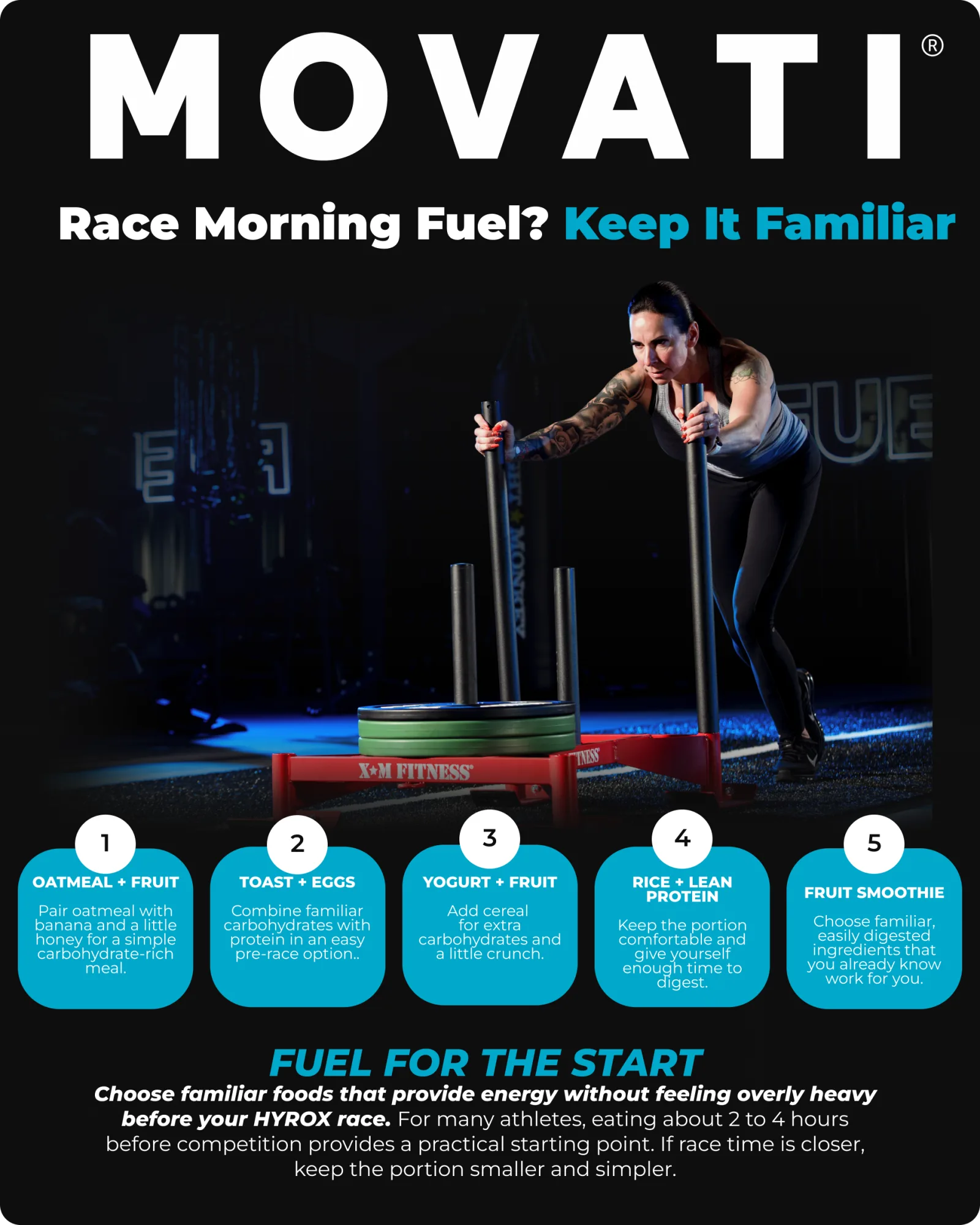
For many athletes, eating approximately two to four hours before the event provides a practical starting point.
Good Pre-Race Meal Options
Consider familiar meals such as:
Oatmeal with a banana and a little honey.
Toast or a bagel with eggs.
Greek yogurt with fruit and cereal.
Rice with a small portion of lean protein.
A smoothie containing fruit and other easily digested ingredients.
The appropriate portion depends on your body size, digestive tolerance, and the time remaining before the race.
If you’re eating closer to the start, a smaller carbohydrate-rich snack may be more comfortable than a large meal.
What Should You Avoid?
Large amounts of fat, fibre, or unfamiliar foods immediately before competition can cause digestive discomfort for some individuals.
Highly concentrated supplements or excessive caffeine may also create unwanted effects, particularly if they haven’t been tested during training.
Practice your pre-race breakfast before demanding workouts so you know how your body responds.
Staying Fueled During Your HYROX Race
One of the unique challenges of HYROX is that participants must manage both cardiovascular and muscular fatigue while moving between workout stations.
Depending on your fitness level and competition division, race duration can vary considerably.
For shorter efforts, a well-planned pre-race meal and appropriate hydration may be sufficient. Athletes expecting to compete for longer periods may benefit from consuming additional carbohydrates during the event.
Hydration During Competition
Fluid requirements vary according to body size, sweat rate, temperature, and exercise duration.
Begin your race adequately hydrated and use available drinking opportunities according to your needs.
Water may be sufficient for some participants, while sports drinks containing carbohydrates and electrolytes can be useful during longer or particularly demanding efforts.
Avoid drinking excessive amounts of fluid in an attempt to prevent dehydration. Overhydration can also create health risks.
Quick Energy Sources
For athletes competing over longer durations, easily digested carbohydrates may help maintain energy availability.
Options include sports drinks, energy gels, or carbohydrate chews.
However, consuming these products during high-intensity exercise can be challenging.
Test any race-day fueling strategy during training rather than trying it for the first time during competition.
Recovery Nutrition: What to Eat After HYROX
Crossing the finish line is a major accomplishment, but recovery begins as soon as the competition ends.
After sustained running and functional exercise, your body needs fluids, carbohydrates, protein, and rest to support recovery.
Prioritize Protein and Carbohydrates
Protein supports muscle repair, while carbohydrates help replenish the glycogen used during exercise.
A recovery snack or meal containing both nutrients is a practical option after competition.
Examples include:
A protein shake paired with a banana.
Greek yogurt with fruit and granola.
A chicken or turkey sandwich.
Eggs with toast and fruit.
Rice with lean protein and vegetables.
Although eating soon after competition can be convenient, there is no universal requirement to consume protein within exactly 30 minutes. Total daily intake and regular meals are generally more important, particularly if you’ve eaten before exercising.
MOVATI Protein Shakes: A Convenient Post-Workout Option
After a demanding workout, preparing a complete meal isn’t always the first thing on your mind.
This is where convenience can make a meaningful difference.
MOVATI Athletic offers protein shakes as a convenient option for members looking to incorporate protein into their post-workout routine.
A protein shake can help support your daily protein intake, particularly when you’re transitioning from training to work, home, or other responsibilities.
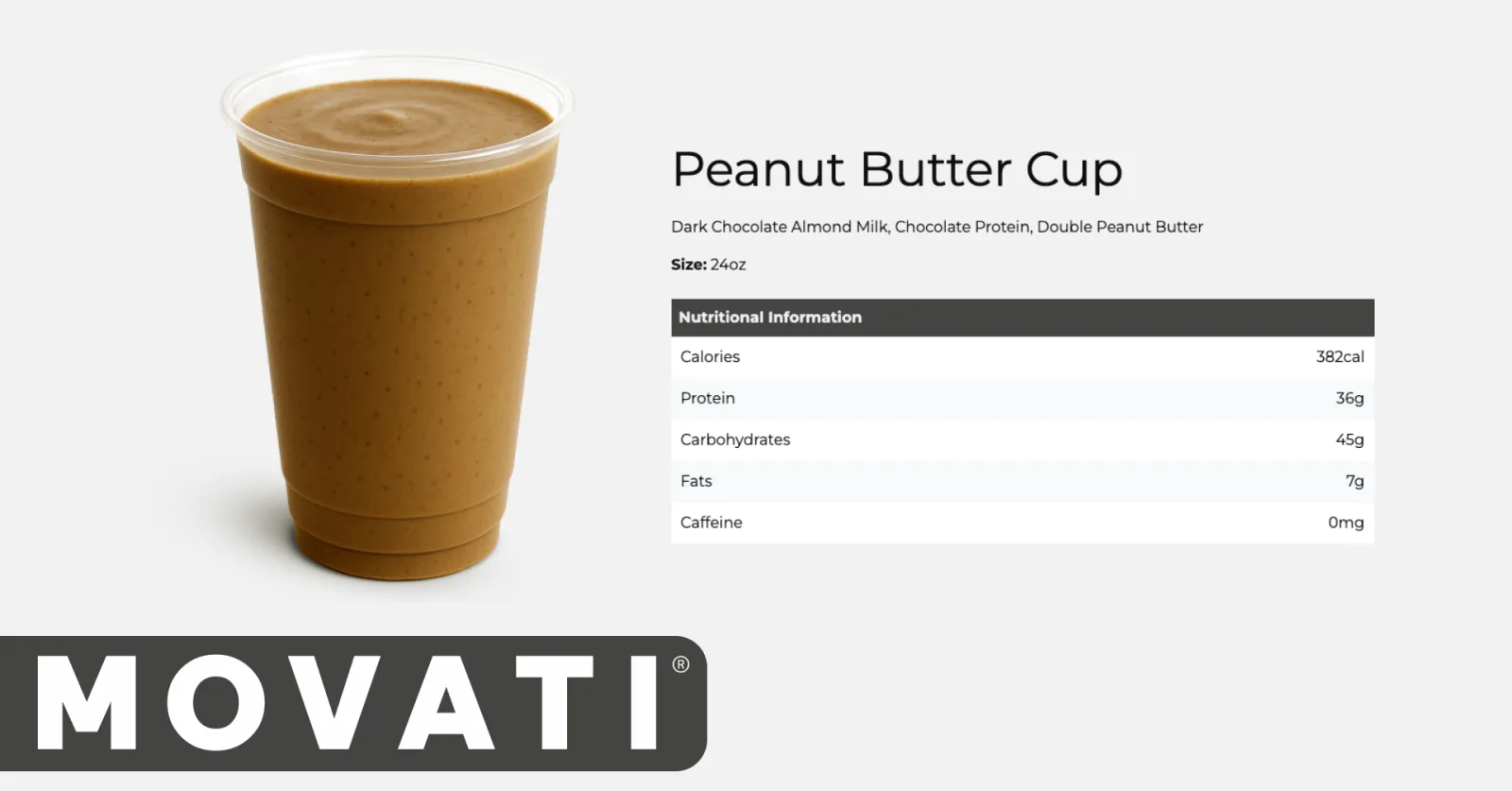
Depending on the shake’s ingredients, pairing it with a carbohydrate source such as fruit can provide additional energy to support recovery.
For individuals developing more consistent fitness habits, having convenient nutritional options available at the club can make it easier to maintain a routine.
Don’t Forget Your Next Meal
A recovery shake or snack can be useful, but it doesn’t replace the importance of balanced meals throughout the day.
Following competition, aim to consume a meal containing carbohydrates, protein, vegetables or fruit, and healthy fats.
Continue drinking fluids according to thirst and recovery needs, particularly if you’ve experienced significant sweating.
My Experience: Why Nutrition Has Become Part of My Fitness Recovery
After spending years working at a desk, I’ve learned that returning to exercise involves much more than simply increasing physical activity.
When your body has become accustomed to a sedentary lifestyle, rebuilding endurance, strength, and mobility takes time. Recovery becomes an important consideration because the body is adapting to physical demands that may have been absent for years.
I’ve also become more aware of the connection between nutrition and how I feel throughout the day.
For me, the challenge isn’t following a perfect diet or adopting an overly restrictive approach to eating. It’s about developing consistent habits that support exercise, recovery, and long-term health.
That means paying greater attention to balanced meals, getting adequate protein, staying hydrated, and recognizing that food is an important part of supporting physical activity.
Convenience matters, too. When balancing work, personal responsibilities, and exercise, practical options such as a protein shake after training can help make healthier routines easier to maintain.
While preparing for a HYROX competition involves specific nutritional demands, many of these principles are equally valuable for anyone returning to fitness or trying to establish a more active lifestyle.
The goal is to develop habits that can be sustained long after a particular workout or competition.
Practice Your Nutrition Strategy During Training
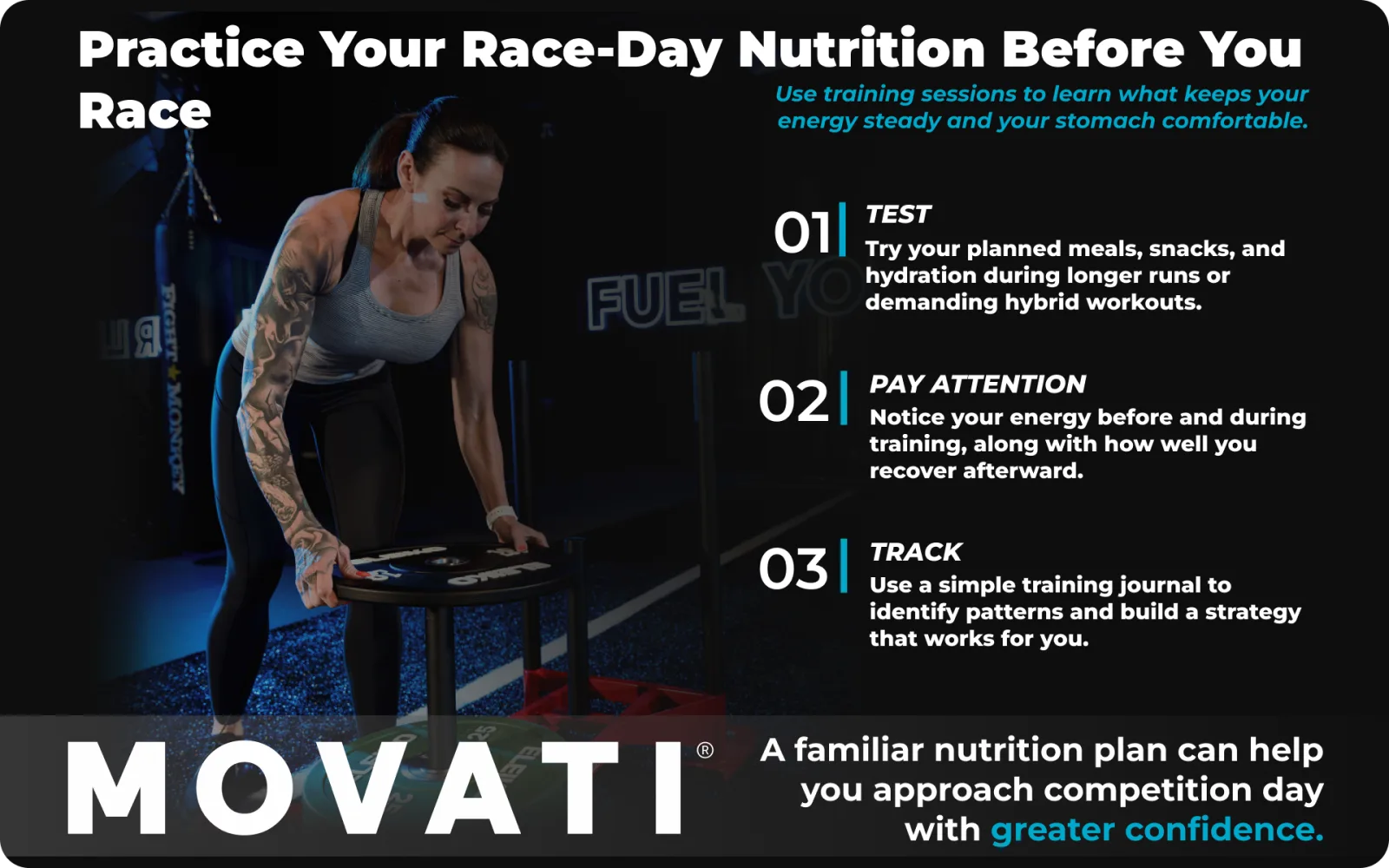
One of the most effective ways to prepare for race-day nutrition is to test your approach during training.
Use longer runs and demanding hybrid workouts to evaluate how different meals, snacks, and hydration strategies affect your energy and comfort.
Pay attention to how you feel before exercise, whether your energy remains consistent, and how well you recover afterward.
A simple training journal can help you identify patterns.
| Training Stage | Nutrition Priority | Practical Approach |
|---|---|---|
| Daily training | Consistent energy and recovery | Balanced meals with adequate carbohydrates and protein |
| 1–2 days before competition | Maintain energy stores | Familiar carbohydrate-rich meals and regular hydration |
| 2–4 hours before racing | Pre-race fueling | Easily digested carbohydrate-rich meal |
| During competition | Fluids and energy as needed | Water, sports drinks, or tested carbohydrate products |
| After competition | Muscle recovery and replenishment | Protein, carbohydrates, fluids, and a balanced meal |
Individual nutritional needs can vary considerably. Athletes with medical conditions, dietary restrictions, or complex fueling requirements may benefit from guidance from a registered dietitian with sports nutrition experience.
Fuel Your Training and Recovery at MOVATI Athletic
Preparing for HYROX requires a consistent commitment to exercise, nutrition, and recovery.
MOVATI Athletic provides an environment where members can work toward their fitness goals through cardiovascular exercise, strength training, and available personal training services.
Combining these opportunities with practical nutrition habits can help support a more complete approach to physical conditioning.
Whether you’re preparing for a competition or simply working toward greater strength and endurance, building a routine that fits your lifestyle is an important part of long-term success.
For a convenient post-workout option, explore MOVATI’s protein shakes and see how they can fit into your recovery routine.
Conclusion: Fuel Your Body for Performance and Long-Term Progress
Effective HYROX nutrition involves more than choosing what to eat on race day. It’s about providing your body with the energy and nutrients needed to train consistently, perform under demanding conditions, and recover afterward.
Carbohydrates help support endurance, protein contributes to muscle repair, and appropriate hydration helps maintain normal physical function during exercise. Together, these elements form an important part of competition preparation.
From my own experience of rebuilding fitness after years of inactivity, I’ve come to appreciate that exercise and nutrition work together. Progress requires patience, consistency, and habits that support recovery rather than focusing exclusively on workout intensity.
Whether you’re preparing for your first HYROX event or working toward a new personal best, developing a practical nutrition strategy can help you train with greater confidence. And with convenient options such as MOVATI Athletic’s protein shakes, supporting your post-workout recovery can become a simple part of your regular fitness routine.
*MOVATI’s trainers and/or consultants are not health care providers, and do not provide any medical diagnosis, treatment or advice, and any trainer and/or consultant tips are not intended to replace the advice of a health care professional.
