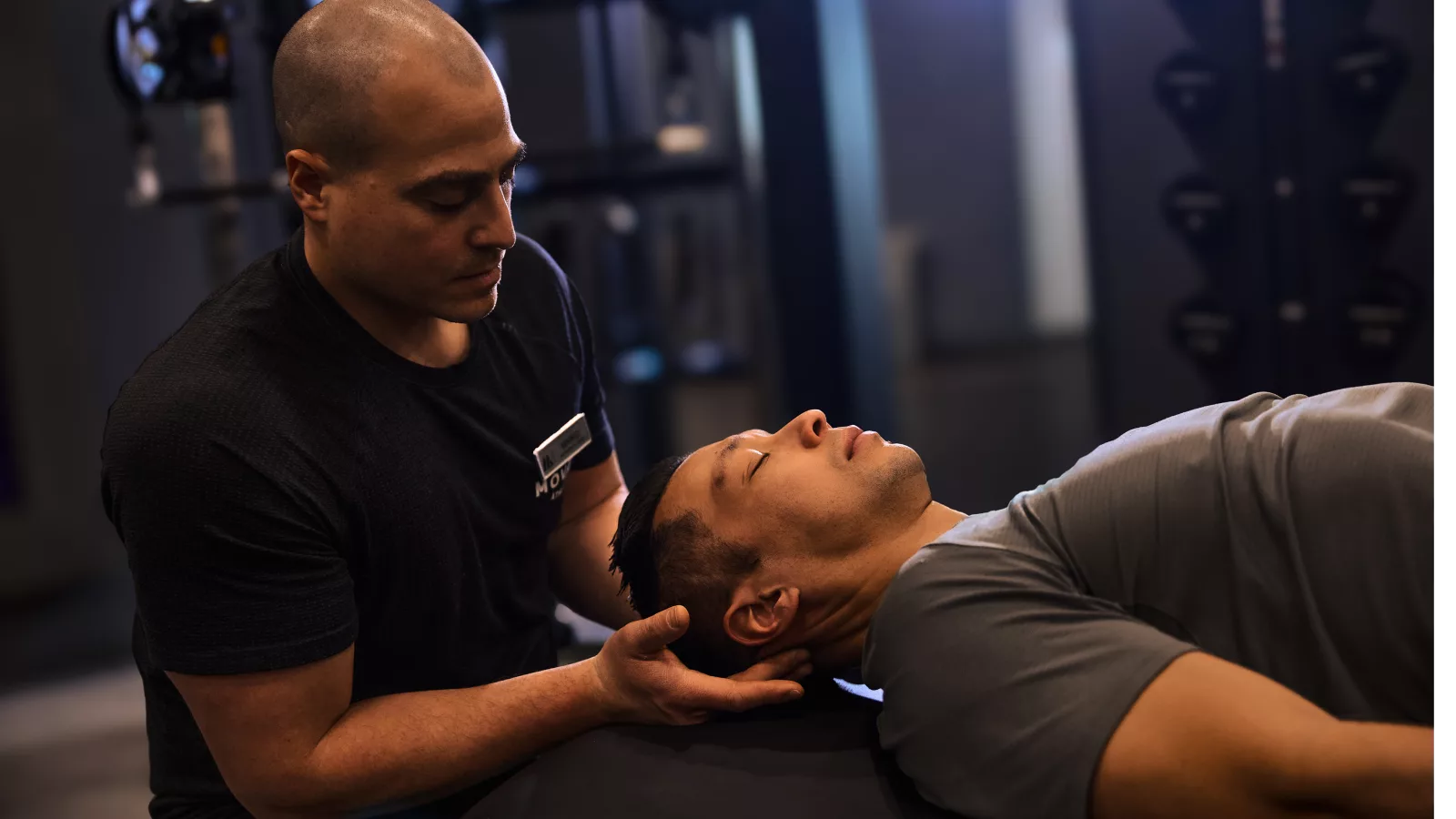
Why Stretching and Mobility Training Can Benefit Everyone Regardless of Fitness Level
When people hear “Performance Stretch,” they often assume it is designed exclusively for athletes, advanced exercisers, or highly flexible individuals. The word “performance” can suggest a program built for elite training. In practice, Performance Stretch can be a strong starting point for beginners.
Whether you are new to exercise, returning after a long break, dealing with stiffness from a sedentary lifestyle, or simply looking to move more comfortably, Performance Stretch can help improve mobility, flexibility, recovery, and overall quality of life.
Performance Stretch for Beginners?
So is Performance Stretch suitable for beginners? For most people, the answer is yes. It helps to be clear about why, and to be honest about what the research does and does not show.
A frequently cited review on this topic is “A review of the acute effects of static and dynamic stretching on performance” by Behm and Chaouachi (2011), published in the European Journal of Applied Physiology.
Source: https://pubmed.ncbi.nlm.nih.gov/21373870/
One point up front, because it is often misread. Most of that paper is about a narrow question: what happens to strength, power, and speed when you static-stretch immediately before an athletic effort. Its main finding there is that long, intense static stretching right before performance tends to reduce force and power output. That is a caution about timing. It is not a knock on stretching itself, and it is not the part of the paper that speaks to a beginner mobility class. The parts that actually apply to a program like Performance Stretch are these:
- Static stretching reliably increases range of motion and flexibility, and carries real health and functional benefits.
- Because static stretching can briefly reduce force and power, the authors recommend doing it as a separate session rather than immediately before strength or speed work. A dedicated stretch class is exactly that separate session.
- Dynamic stretching, meaning controlled movement through a joint’s active range, either has no negative effect or improves performance. The authors consider it the preferred warm-up activity.
- Most of the impairment risk comes from very long holds (more than 90 seconds per muscle) and stretching to the point of discomfort. Short, gentle static stretching is low-risk, and as little as roughly 36 seconds of stretching can improve range of motion.
In short, when static stretching is used the way a Performance Stretch class uses it, as its own session focused on mobility and flexibility rather than as a last step before heavy lifting or sprinting, the research is supportive. It is worth noting that this paper studied acute effects on athletic performance, mostly in younger or trained populations, so it offers guiding principles rather than direct proof about beginners.
What the numbers show
The review’s clearest practical lesson is about how you stretch, not whether you stretch. When researchers averaged the change in strength and power output across many studies, the effect depended heavily on the type of stretch and how long each hold lasted.
| Stretching approach | Average change in strength and power output |
|---|---|
| Static, up to 30 seconds per muscle | -0.5% |
| Static, 30 to 90 seconds per muscle | -4.7% |
| Static, over 90 seconds per muscle | -5.9% |
| Dynamic stretching | +4.1% |
Source: Behm and Chaouachi (2011). Static values from Table 4, dynamic values from Table 5.
The pattern is straightforward. Short, comfortable static holds barely move the needle. The measurable losses only show up with long, forced holds. Dynamic stretching, which involves controlled movement rather than long static holds, slightly improves output. This is exactly why a beginner-friendly session uses short, gentle stretches and dynamic movement, and saves any longer static work for its own separate session rather than the moments before intense activity.
What Is Performance Stretch?
Performance Stretch is a guided mobility and flexibility program designed to improve the way the body moves.
Unlike routines that focus only on increasing flexibility, Performance Stretch typically combines several elements:
- Joint mobility
- Muscle flexibility
- Movement quality
- Recovery
- Posture
- Balance
- Range of motion
Sessions are usually led by a qualified coach or mobility specialist who helps participants improve movement patterns and reduce physical limitations. The goal is not simply to become more flexible, but to move more efficiently, comfortably, and confidently.
Why Beginners Often Need Stretching and Mobility Training
Many beginners assume they need to build fitness before focusing on mobility. In reality, mobility is often one of the first things worth addressing.
Modern routines contribute to movement restrictions through:
- Prolonged sitting
- Desk work
- Driving
- Limited physical activity
- Repetitive movement patterns
- Previous injuries
As a result, many people experience tight hips, stiff shoulders, lower back discomfort, poor posture, and reduced range of motion. Performance Stretch helps address these gradually, by improving how the body moves.
What Makes Performance Stretch Beginner-Friendly?
One of the biggest advantages of Performance Stretch is that it adapts to almost any fitness level. Unlike forms of exercise that demand strength, endurance, or technical skill up front, stretching and mobility work can be scaled to meet participants where they are.
Individualized Progressions
A quality program recognizes that everyone starts from a different point. Some people arrive with good flexibility, others with years of stiffness from sedentary work, past injuries, or inactivity.
As someone who spends much of the day at a desk, I learned firsthand that mobility limitations can build gradually without you noticing. When I began adding more stretching and mobility work to my routine, I found that my hips, shoulders, and upper back were much tighter than expected. Over time, consistent stretching improved my range of motion and made everyday movement feel more comfortable.
The point is not to compare participants to each other, but to help each person improve relative to where they started.
Low Impact on the Body
Many beginners feel intimidated by high-intensity workouts. Performance Stretch offers a low-impact alternative that places minimal stress on the joints while still delivering meaningful benefits. That makes it accessible for beginners, older adults, people returning to exercise, and anyone using it for active recovery.
From my experience, the low-impact approach also makes it easier to stay consistent. Rather than feeling wiped out after every session, I usually leave feeling refreshed and more mobile.
Focus on Movement Quality
Instead of emphasizing speed or intensity, Performance Stretch focuses on how well you move. Participants develop greater awareness of posture, alignment, and mobility.
One thing I found valuable was noticing how certain restrictions were affecting other areas of my training. As my mobility improved, so did my posture and my comfort during strength work. This educational element is especially useful for beginners, since it builds body awareness and confidence.
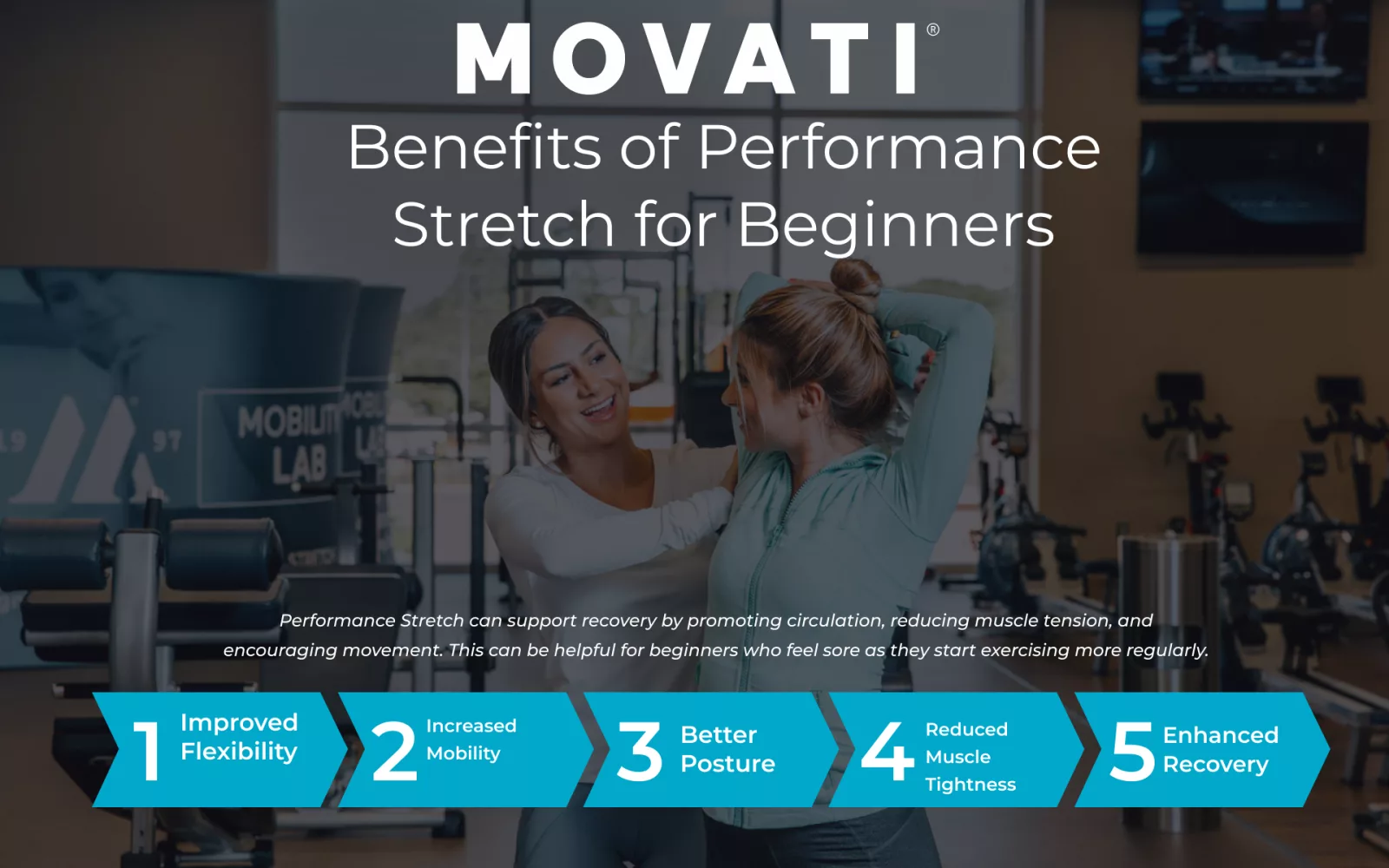
Benefits of Performance Stretch for Beginners
1. Improved Flexibility
Increased flexibility is one of the clearest benefits, and it is well supported by the research: static stretching is an effective way to increase range of motion. Better flexibility can help you move more comfortably, use better technique, and reduce stiffness. Gains are often noticeable within a few weeks of consistent practice.
2. Increased Mobility
Flexibility refers to a muscle’s ability to lengthen. Mobility refers to a joint’s ability to move through its full range. Performance Stretch targets both, which can improve squatting, walking, lifting, reaching, and everyday movement.
3. Better Posture
Hours spent sitting, looking at screens, or driving can contribute to poor posture over time. Performance Stretch commonly includes work that addresses rounded shoulders, forward head posture, tight hip flexors, and upper back stiffness. As posture improves, many participants feel more comfortable and less tense.
4. Reduced Muscle Tightness
Tightness is a common complaint among beginners and inactive people. Targeted stretching and mobility work can relieve tension in the hips, hamstrings, calves, chest, shoulders, and lower back. Many participants feel more relaxed and mobile after a single session.
5. Enhanced Recovery
Performance Stretch can support recovery by promoting circulation, reducing muscle tension, and encouraging movement. This can be helpful for beginners who feel sore as they start exercising more regularly.
Can Performance Stretch Help Prevent Injuries?
This is an area where it pays to be honest. The evidence on stretching and injury prevention is mixed, and the Behm and Chaouachi review notes that several studies found no clear effect of stretching on injury prevention. What improved mobility and movement quality can more reasonably offer is better joint function, cleaner movement mechanics, and greater body awareness. Those improvements may support safer participation in other activities, but no stretching program should be sold as a guarantee against injury.
Is Performance Stretch Only for Flexible People?
A common misconception is that you need to be flexible before joining. The opposite is closer to the truth. Performance Stretch is often most useful for people who feel tight, stiff, restricted, or uncomfortable during movement. The purpose is to improve mobility, not to show off existing flexibility. Many participants begin with real limitations and improve gradually.
How Performance Stretch Supports Other Fitness Goals
Performance Stretch can complement almost any program. For beginners working toward weight loss, strength training, running, or general fitness, better mobility can improve technique, reduce discomfort, and build confidence.
There is an important timing point here that comes straight from the research. Long, intense static stretching immediately before strength, sprint, or explosive work can temporarily reduce power output. That is why a dedicated stretch session, done separately from heavy training, is the sensible way to use it. Before a workout, dynamic movement is the better warm-up. Performance Stretch fits neatly into this model as its own focused session.
What Can Beginners Expect During a Session?
Programs vary, but a typical session may include:
- Mobility drills: exercises to improve joint movement and control.
- Dynamic stretching: controlled movements that prepare the body for activity.
- Static stretching: positions held for a period of time to improve flexibility, used in short, comfortable holds rather than long, forced ones.
- Breathing techniques: methods that support relaxation and movement quality.
- Recovery-based exercises: gentle movements that reduce tension.
Sessions are generally structured to challenge participants without overwhelming them.
Example: Sarah’s Journey with Performance Stretch
Sarah, a 30-year-old office worker, had been dealing with lower back pain and stiffness from prolonged sitting. She joined a Performance Stretch class to improve her mobility and ease the discomfort. Within a few weeks she noticed better flexibility and posture, her back pain eased, and she felt more energized through the day. The low-impact format let her progress at her own pace, which suited her busy schedule.
Who Benefits Most from Performance Stretch?
- Beginners: people new to exercise who want to improve movement quality.
- Office workers: those who sit for long hours and feel stiff.
- Active adults: anyone wanting to move better and recover faster.
- Older adults: people looking to maintain mobility, balance, and independence.
- Athletes: those seeking better movement efficiency, ideally in a session separate from explosive training.
- Returning exercisers: people easing back into movement after a break.
Final Thoughts
Performance Stretch is not just suitable for beginners, it is often one of the most accessible ways to start. By focusing on mobility, flexibility, posture, recovery, and movement quality, it helps build a foundation for long-term health and fitness. The research is clear that stretching improves range of motion and carries genuine health benefits, and that when static stretching is used as its own session rather than as a pre-workout warm-up, it fits comfortably into a well-rounded routine.
Whether your goal is to move more comfortably, reduce stiffness, improve flexibility, support recovery, or prepare for other activities, Performance Stretch can help you take meaningful steps toward better movement.
All it takes is the willingness to begin from where you are and work to improve.
