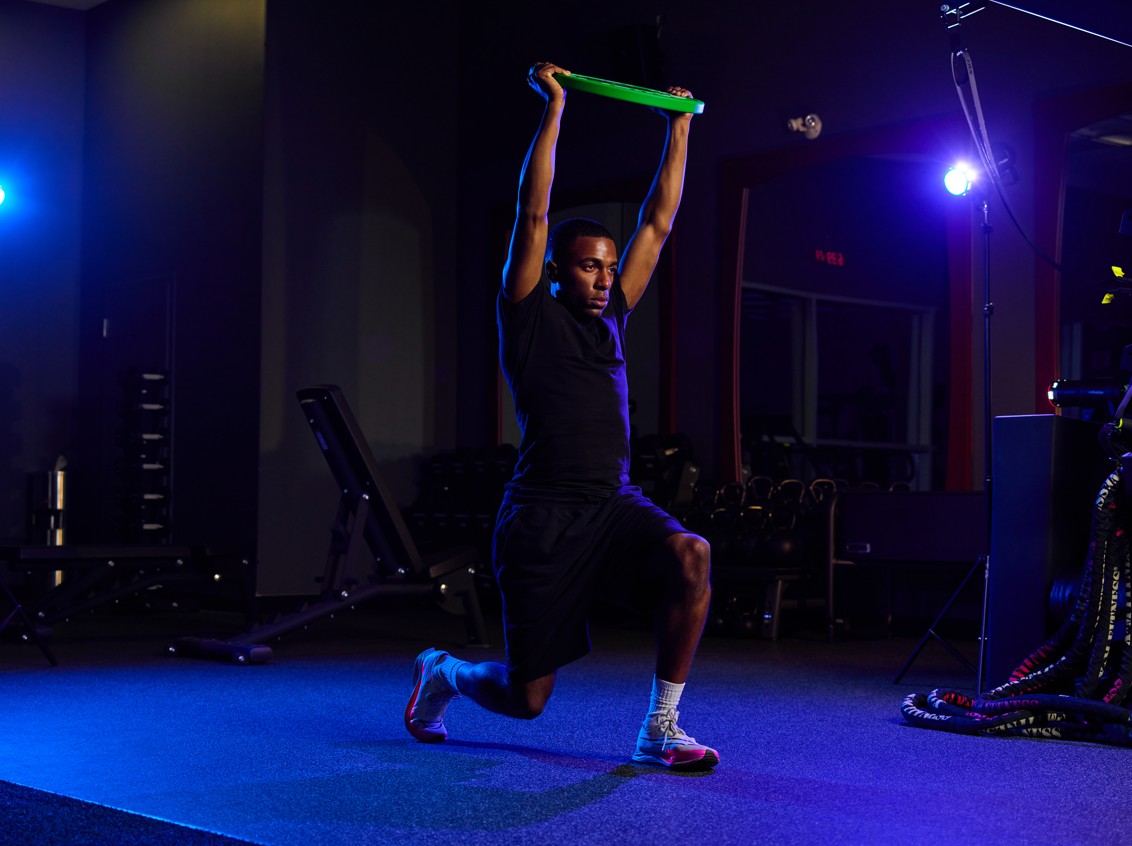
This soccer workout is built around three core movement drills that develop the speed, agility, and change-of-direction control field sport demands, and it works for any athlete, not just soccer players. Our performance coaches use those three drills as the foundation, then add strength, power, and a mobility routine to round out a complete session you can run with minimal equipment. A full video walkthrough sits at the end.
A Complete Soccer Workout for Speed, Power, and Injury Resilience
Soccer rewards the athlete who can accelerate, stop, turn, and do it again for ninety minutes. Those same qualities, explosive speed, lateral quickness, and the strength to slow down without breaking down, carry over to almost any field or court sport. You don’t need a team or a field to train them.
At the center of this session are three drills that build the way you move. Master these, and the strength and mobility work that surrounds them has something to attach to. Run the mobility and activation block in Pre-Game Prep first to warm up, then move into the three core drills while you are fresh, then finish with strength and power.
You will need an agility ladder, two cones, a set of gliders, a trap bar, a pair of kettlebells, and a medicine ball. Here is the breakdown.
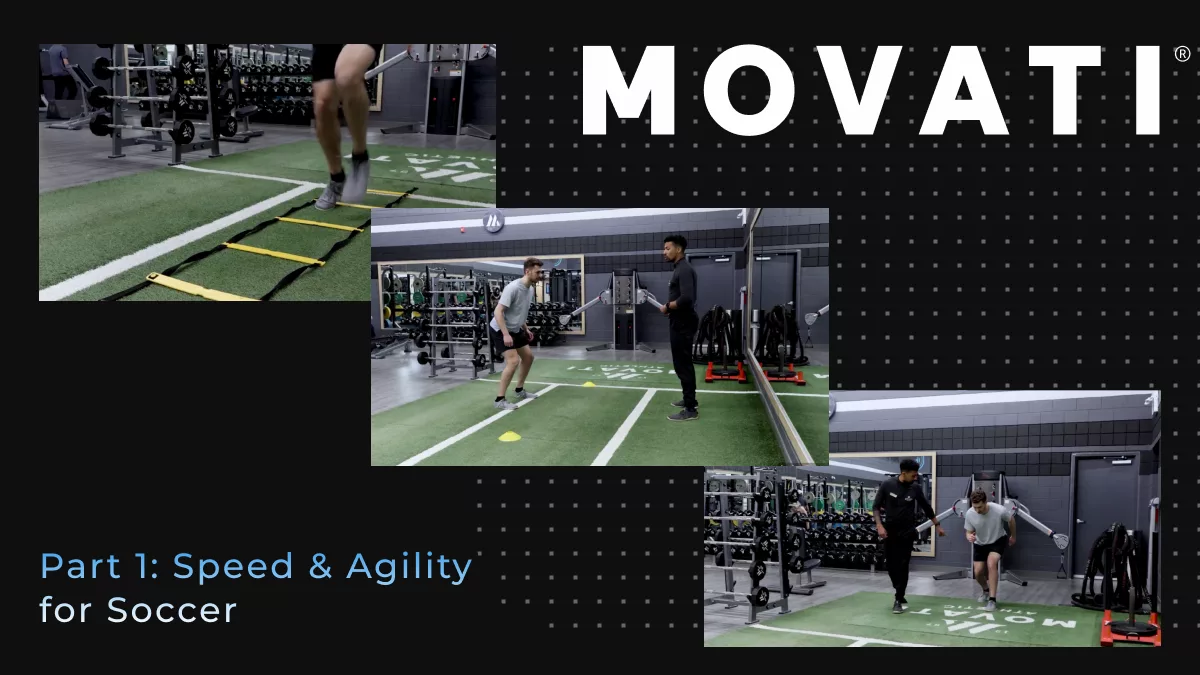
Part 1: Speed & Agility for Soccer
These three movements are the heart of the workout. Do them in order, with full effort and clean technique, before you touch the strength work. Keep the volume low and the quality high. Speed and reactive work train the nervous system, so you want full recovery between efforts rather than a burn.
1. Quick Feet & Agility Drills (Ladder Work)
Start with ladder drills to sharpen foot speed and coordination. Stay tall, stay on the balls of your feet, and drive your arms in time with your steps.
- One foot in each square: Move quickly and cleanly while swinging your arms in a controlled manner.
- Two feet in: Build on that rhythm to train quicker ground contacts.
The ladder will not make you faster on its own, but it teaches the crisp, coordinated footwork that lets you reposition and react under pressure, which is essential for changing direction and reacting on the field.
Sets and reps: 3 to 4 passes of each pattern, resting as needed to keep every pass sharp. Coaching cue: Light, quick ground contacts. Think of the floor as hot. Common mistake: Looking down at your feet. Keep your eyes up, the way you would in a game.
2. Lateral Reactive Drills
Set two cones a few yards apart, drop into an athletic stance with your hips back, knees soft, and weight balanced, and react to the call. On “Cone 1” or “Cone 2,” shuffle laterally with quick, powerful steps and touch the named cone.
Reacting to an external cue, rather than running a pattern you already know, trains the reactive agility and lateral quickness that real game scenarios require, where you need to respond instantly.
Sets and reps: 3 to 4 sets of 4 to 6 reactions, resting 30 to 45 seconds between sets. Coaching cue: Push the ground away with the trailing leg rather than reaching with the lead leg. Common mistake: Crossing your feet or standing tall between shuffles, which kills your ability to change direction.
3. Sprint-Decelerate-Accelerate
Sprint forward a few steps, lower your hips and chest to decelerate into a backpedal while staying low, then explosively accelerate through.
The deceleration is the point. Most non-contact injuries to the knee and hamstring happen during braking and changes of direction rather than straight-line running, so learning to slow down under control builds change-of-direction power and protects you at the same time.
Sets and reps: 4 to 6 reps with 60 to 90 seconds of rest, so every rep is run at full speed. Coaching cue: Shorten your steps and sink your hips to brake, then drive out hard. Common mistake: Braking with stiff, straight legs. Bend the knees and absorb the stop.
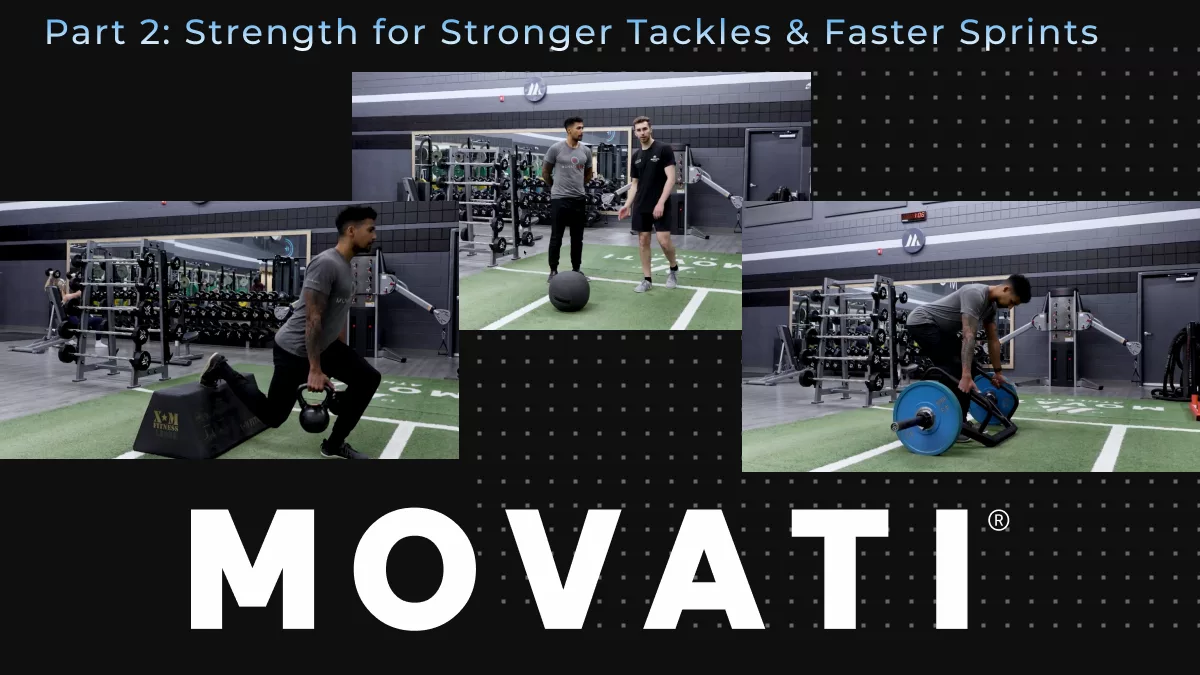
Part 2: Strength for Stronger Tackles & Faster Sprints
With the three core drills handled while you are fresh, move into the strength block. Prioritize clean technique over heavier loads, and rest fully between sets so each one is strong.
Explore Strength & Cardio
1. Bulgarian Split Squats
Great for single-leg strength, which matters in a sport played almost entirely on one leg at a time. Set up in a staggered stance with your rear foot elevated, keep your front knee tracking over your foot, and keep your weight in the heel and mid-foot. Hold kettlebells at your sides for added resistance.
Sets and reps: 3 sets of 6 to 8 reps per leg. Coaching cue: Drive through the front heel and keep your torso tall. The back foot is for balance, not for pushing off. Common mistake: Letting the front knee cave inward or shifting your weight onto the back leg.
2. Trap Bar Deadlifts
Hinge at the hips, keep tension through your back and lats, and drive the floor away. Keep the weight balanced over your mid-foot. The trap bar is friendlier on the lower back than a straight bar and develops the hip-driven power behind sprinting and jumping.
Sets and reps: 3 to 4 sets of 4 to 6 reps. Coaching cue: Take the slack out of the bar before you pull, then stand up tall and lock out with your glutes. Common mistake: Rounding the lower back or letting the hips shoot up first, which turns it into a back lift instead of a leg drive.
3. Medicine Ball Rotational Slams
Rotate from the hips and core to throw the ball hard into the ground or a wall, then reset. This builds the rotational explosiveness behind powerful kicks and sharp turns.
Sets and reps: 3 sets of 5 to 6 reps per side, thrown with full intent. Coaching cue: Pivot your back foot and turn your hips into the throw, letting the arms follow the body. Common mistake: Throwing with the arms alone and skipping the hip rotation that creates the power.
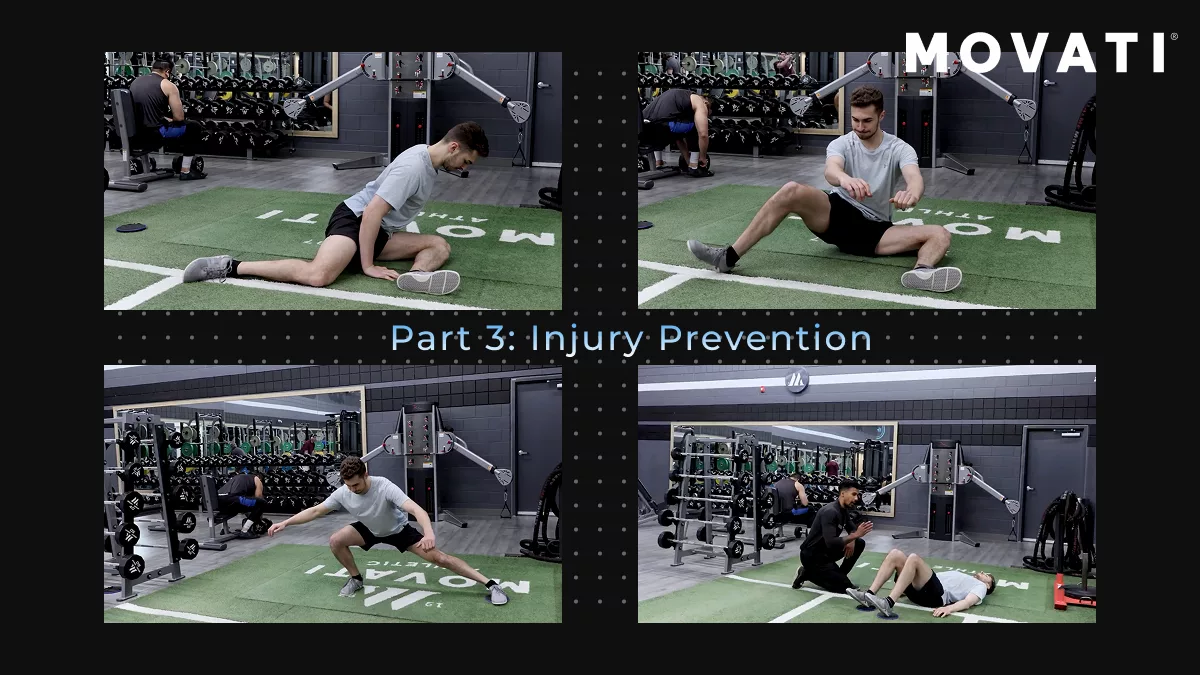
Part 3: Injury Prevention
Run this block before any sprinting or lifting to prepare the joints and muscles you’ll be loading. It takes about 10 minutes and helps improve movement quality while reducing the risk of injury. Complete 1 to 2 rounds of 5 to 8 reps for each exercise, stopping well before fatigue.
1. 90/90 Hip Stretches
Sit with one leg bent in front of you and the other behind, both at roughly 90 degrees. Rotate slowly from side to side while keeping your chest tall and your spine long. This mobility drill improves both internal and external hip rotation, which is essential for planting, cutting, changing direction, and accelerating.
2. Windshield Wipers
Lie on your back with your knees bent and your feet set wider than shoulder-width apart. Let both knees drop slowly from one side to the other while keeping your shoulders on the floor. This movement loosens the hips and lower back, increases blood flow, and prepares the body for more demanding athletic movements.
| Day | Focus |
|---|---|
| Monday | Full session: prep, three core drills, strength |
| Tuesday | Rest or light mobility |
| Wednesday | Speed focus: prep plus the three core drills |
| Thursday | Rest |
| Friday | Full session: prep, three core drills, strength |
| Weekend | Game, recovery, or active rest |
3. Lateral Lunges with Gliders
Place one foot on a glider and slowly slide it out to the side as you sit back into the standing leg. Pull yourself back to the starting position using your inner thigh and groin muscles. This exercise develops lateral strength, stability, and control through the side-to-side movement patterns that are critical in soccer and other field sports.
4. Glider Hamstring Curls & Glute Bridges
Lie on your back with your heels on the gliders and lift your hips into a bridge. Slowly extend your legs by sliding your heels away, then pull them back under control. Follow this with glute bridges, driving through your heels to activate the glutes.
Together, these exercises strengthen the posterior chain, including the hamstrings and glutes, which are responsible for sprinting speed and explosive power. Eccentric hamstring exercises, such as glider curls, have some of the strongest evidence in sports medicine for reducing the risk of hamstring strains. Once fully warmed up, progress these movements to plyometric variations to further develop power and athletic performance.
People Often Ask
Is this soccer workout suitable for beginners? Yes. Start with bodyweight only on the strength moves, keep the drill volume low, and add load once your technique is solid.
How often should I do this soccer workout? Two to three times a week works for most athletes. Leave at least a day between hard sessions so your speed work stays sharp.
Do I need a lot of equipment? No. An agility ladder, two cones, gliders, a trap bar, kettlebells, and a medicine ball cover everything. You can substitute cones for the ladder and dumbbells for kettlebells if needed.
Is Movati available in my area? This depends. Movati has several locations in Alberta and Ontario. Check out our membership page to see if we are in your area.
Can non-soccer players use it? That is the point of it. The speed, deceleration, and rotational power it builds transfer to nearly any field or court sport.
Should I do separate conditioning too? This session develops speed, strength, and movement quality rather than aerobic fitness. If your sport demands endurance, add conditioning on a separate day so it does not blunt your speed work.
Watch the Full Workout
The video below walks through each drill with full demonstrations, so you can see the technique cues in action before you add them to your own training.
